Total Solar Eclipse 2026 Map - Why the Moon’s Shadow Crosses Europe
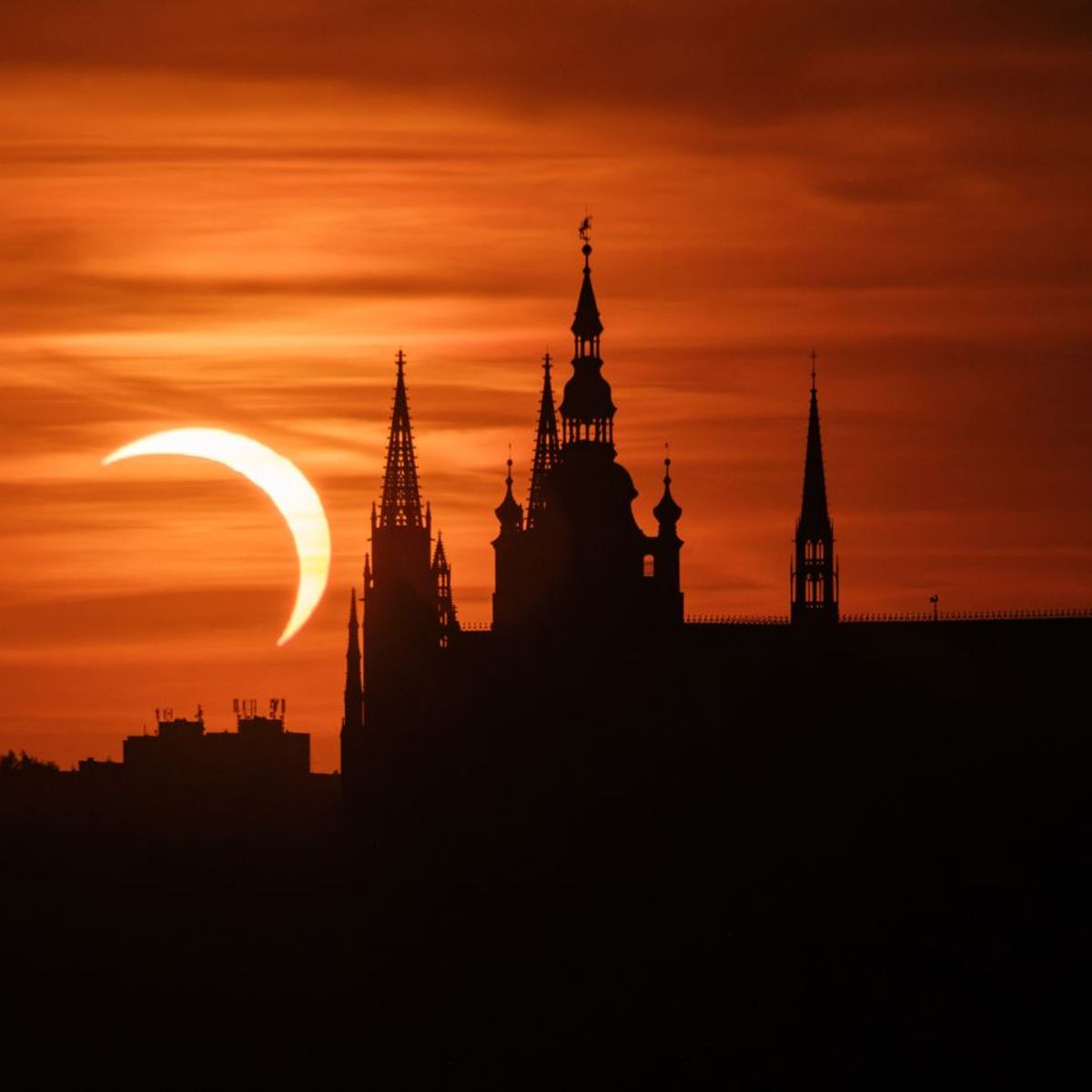
The total solar eclipse of 12 August 2026 will be one of the most significant astronomical events of the decade for Europe. Its path of totality sweeps from the Arctic, across Greenland and Iceland, and finally reaches Spain before ending over the Mediterranean.
Much of Europe, including the United Kingdom, will witness a deep partial eclipse. The geometry behind this event is a precise interplay among the Moon’s orbit, Earth's axial tilt, and the Sun's alignment along the ecliptic.
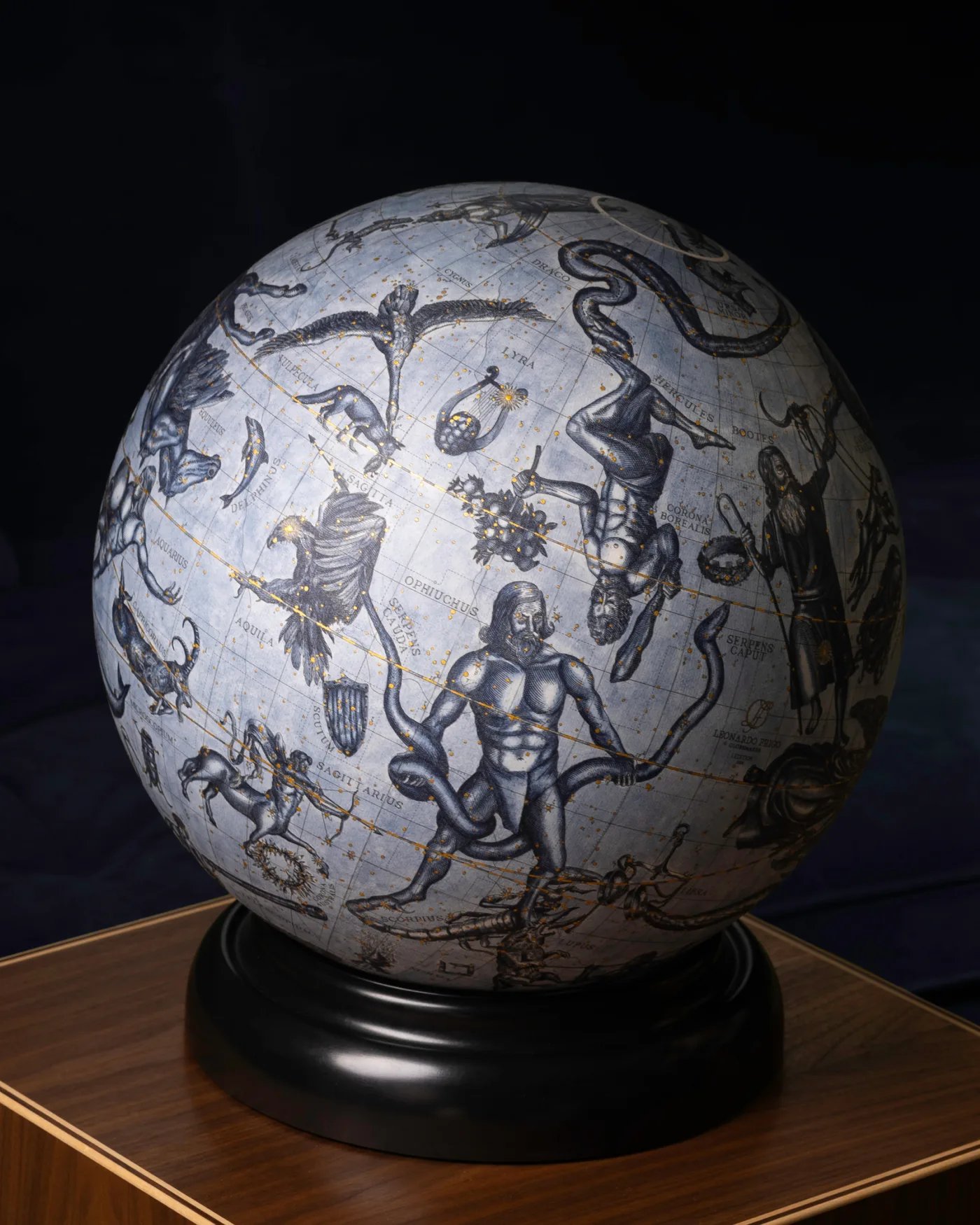
Understanding why the shadow bends, curves, and crosses Europe requires looking at both a terrestrial globe and a celestial globe, because the eclipse is not just a geographical event but a celestial one.
The Path of Totality Across Europe
According to NASA’s global map of the 12 August 2026 eclipse, the Moon’s umbra first touches Earth in the high Arctic, near northern Siberia, before sweeping across the Arctic Ocean and descending toward Greenland and Iceland.
The path then curves southeastward, crossing northern Spain late in the afternoon before ending near the Balearic Sea at sunset. This trajectory is confirmed by NASA’s Scientific Visualisation Studio, which shows the red central line of totality and the blue limits marking the narrow corridor where the Sun will be completely covered.
The ExoAtlas eclipse map further refines this view, noting that the greatest eclipse occurs over the North Atlantic at 17:45:54 UTC, with up to 2 minutes and 18 seconds of totality.
It also highlights major European cities inside the path: Reykjavík in Iceland, Bilbao and Zaragoza in Spain, Valencia on the Mediterranean coast, and Palma de Mallorca in the Balearic Islands. Madrid and Barcelona lie just outside the path but will experience more than 99 % obscuration. London will see about 91% coverage, and Paris around 92%.
These maps show a curved band, not a straight line. The curvature is not arbitrary: it reflects the geometry of Earth’s spherical surface, the Moon’s orbital motion, and the angle at which the shadow intersects the rotating planet.
Spain - The Final Stage of Totality
Spain will be the last major landmass to experience totality before the eclipse path ends at sunset. The shadow arrives from the northwest, crossing the Cantabrian coast and sweeping across regions such as Bilbao, León, Burgos, Zaragoza, Valencia, and the Balearic Islands. The event occurs late in the day, with the Sun low on the horizon, creating dramatic lighting conditions.
TimeAndDate’s eclipse data for Spain shows that in locations such as La Drova, the partial eclipse begins at 19:39 CEST, reaches maximum at 20:33, and ends at sunset around 21:00. Although La Drova is just outside the path of totality, the timing illustrates how the eclipse interacts with local sunset.
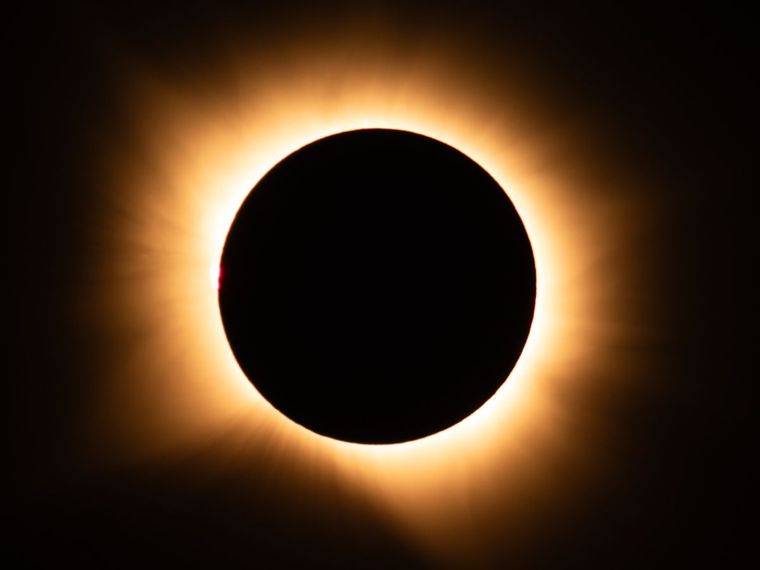
In areas inside the path, totality will occur shortly before the Sun sets, producing a rare combination of twilight and eclipse darkness. The Spanish segment of the eclipse is particularly notable because the shadow arrives at a shallow angle.
This creates a longer stretch of near-total coverage for regions close to the path limits. It also means that atmospheric refraction near the horizon slightly alters the apparent geometry of the eclipse, a phenomenon NASA notes in its description of sunrise and sunset loops on the global map.
UK - A Deep Partial Event
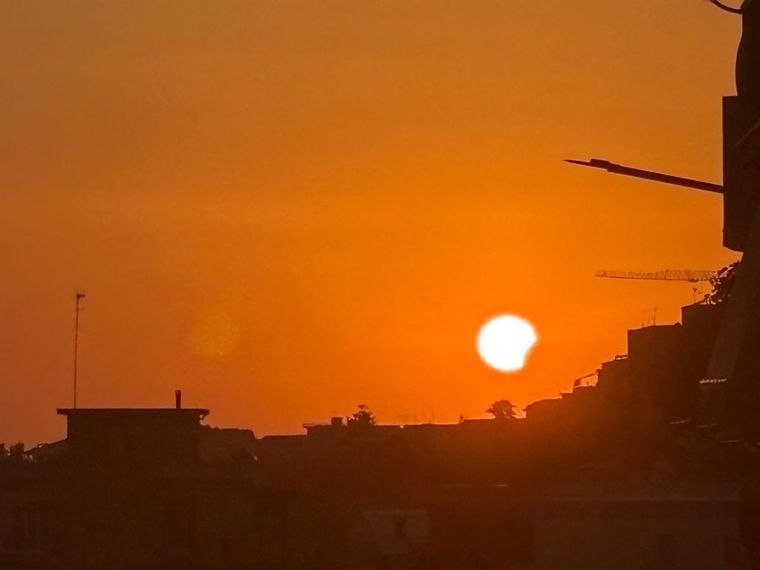
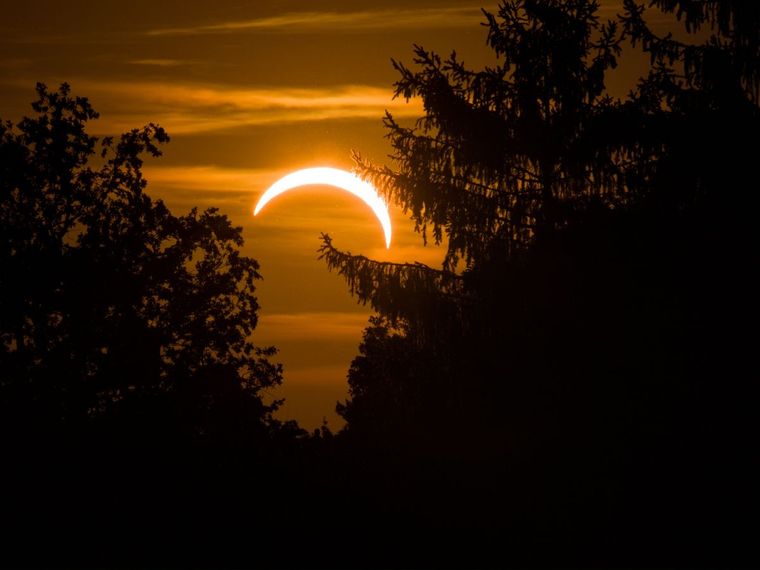
The United Kingdom lies outside the path of totality, but the eclipse will still be impressive. London will experience about 91% obscuration, and other parts of the UK will see similar or slightly higher values depending on latitude. The Sun will appear as a thin crescent at maximum coverage, and the sky will noticeably dim.
Although the UK does not experience totality, the event is still significant because deep partial eclipses are rare. The geometry of the Moon’s shadow means that the penumbra covers a much wider region than the umbra.
NASA’s map shows yellow curves marking the extent of the penumbra, with percentages indicating maximum coverage. These curves sweep across all of Europe, including the UK, demonstrating how the partial eclipse is part of the broader shadow geometry.
Understanding the Eclipse Through a Terrestrial Globe
A terrestrial globe helps explain why the shadow path curves across Europe. When the Moon’s umbra touches Earth, it does so on a rotating sphere. The shadow moves in a straight line relative to space, but Earth’s curvature and rotation distort the path when projected onto a map.
The eclipse begins near the North Pole, where lines of longitude converge. As the shadow moves southward, it crosses regions where Earth’s surface curves away from the incoming shadow. This causes the path to appear bent when drawn on a flat map.
The orthographic projection used by NASA shows this clearly: the shadow’s trajectory is smooth and continuous, but its apparent curvature depends on the projection.
Latitude also plays a role. At high latitudes, the Sun’s apparent motion across the sky is shallow, and the angle between the Sun and the horizon is small. As the eclipse moves toward mid-latitudes, the Sun’s altitude increases, changing the geometry of the shadow’s intersection with Earth.
This shift contributes to the curved appearance of the path as it approaches Spain.
Earth’s rotation adds another layer. The planet rotates eastward, while the Moon’s shadow moves generally west-to-east. The combination of these motions causes the shadow to sweep across the surface in a diagonal pattern rather than a straight east-west line.
Understanding the Eclipse Through a Celestial Globe
A celestial globe reveals the deeper reason the eclipse occurs at all: the alignment of the Sun, Moon, and Earth along the ecliptic. The ecliptic is the apparent path of the Sun across the sky, which corresponds to the plane of Earth’s orbit.
The Moon’s orbit is tilted about five degrees relative to this plane. Most of the time, the Moon passes above or below the Sun from our perspective, but when the Moon crosses the ecliptic at the same time it is new, an eclipse occurs.
The 2026 eclipse belongs to Saros cycle 126, a repeating pattern of eclipses separated by 18 years, 11 days, and 8 hours.
The geometry of this cycle determines the approximate latitude where the shadow will fall. In 2026, the alignment occurs such that the Moon’s shadow intersects Earth at high northern latitudes before descending toward Europe.
ExoAtlas notes that the path is about 294 kilometers wide at greatest eclipse, reflecting the precise alignment of the Moon’s apparent diameter relative to the Sun.
On a celestial globe, the eclipse path corresponds to the point where the Moon crosses the ecliptic near its descending node. Because the node is positioned such that the alignment occurs during northern summer, the Sun is high in the sky for northern latitudes. This geometry causes the shadow to fall across the Arctic and then sweep into Europe.
The celestial globe also explains why the shadow arrives in Spain late in the day. The Sun’s position along the ecliptic in mid-August places it in the western sky during the afternoon. As the Moon moves between Earth and Sun, the shadow follows the Sun’s apparent motion, arriving in Spain when the Sun is already descending toward the horizon.
Why the Shadow Curves
The curved shadow path is the result of three combined factors: Earth’s curvature, Earth’s rotation, and the geometry of the Moon’s orbit. NASA’s map shows yellow ovals marking the umbra’s intersection with Earth at 15‑minute intervals. These ovals trace a curved line because the shadow is moving across a spherical surface that is rotating beneath it.
The Moon’s orbit is not perfectly circular, and its distance from Earth changes. This affects the apparent size of the Moon and the width of the shadow. The path’s curvature also reflects the tilt of the Moon’s orbit relative to the ecliptic.
When the Moon crosses the ecliptic at an angle, the shadow does not fall in a straight line but follows a curved trajectory determined by the orbital geometry.
Finally, the projection of the path onto a flat map exaggerates curvature. On a terrestrial globe, the path is smoother, but when flattened, it bends because map projections distort distances and angles.
Eclipse Times Before 12 August 2026
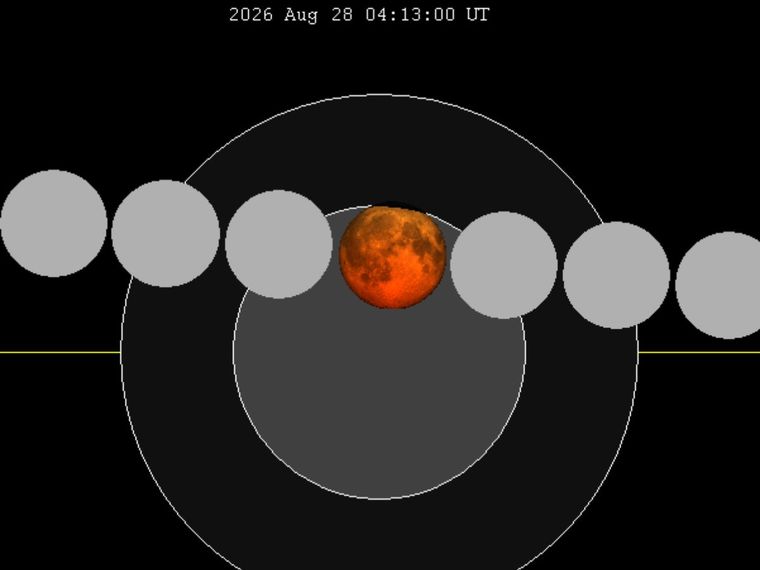
The eclipse does not occur in isolation. It is part of a sequence of eclipses leading up to the event. TimeAndDate notes that earlier in 2026, Europe will experience a partial lunar eclipse on 27–28 August, and in 2027, a major total solar eclipse will cross southern Europe and North Africa.
These events illustrate how the Moon’s orbit produces a rhythm of eclipses over time.
The August 2026 eclipse is the first total solar eclipse visible from mainland Europe since 1999, marking a significant return of totality to the continent. The total solar eclipse of 12 August 2026 is a striking example of celestial mechanics made visible on Earth.
Its path across Europe is the result of precise alignments along the ecliptic, the tilt of the Moon’s orbit, Earth’s rotation, and the curvature of the planet. By examining both terrestrial and celestial globes, the curved shadow path becomes understandable: it is the natural consequence of three bodies moving in space, intersecting at just the right moment to cast a narrow corridor of darkness across Europe.
Related Topics
If the solar eclipse has intrigued you enough, feel free to read about other interesting topics here!