Perseid Meteor Shower 2026: Perseus, Medusa and the Myth Behind the Shooting Stars
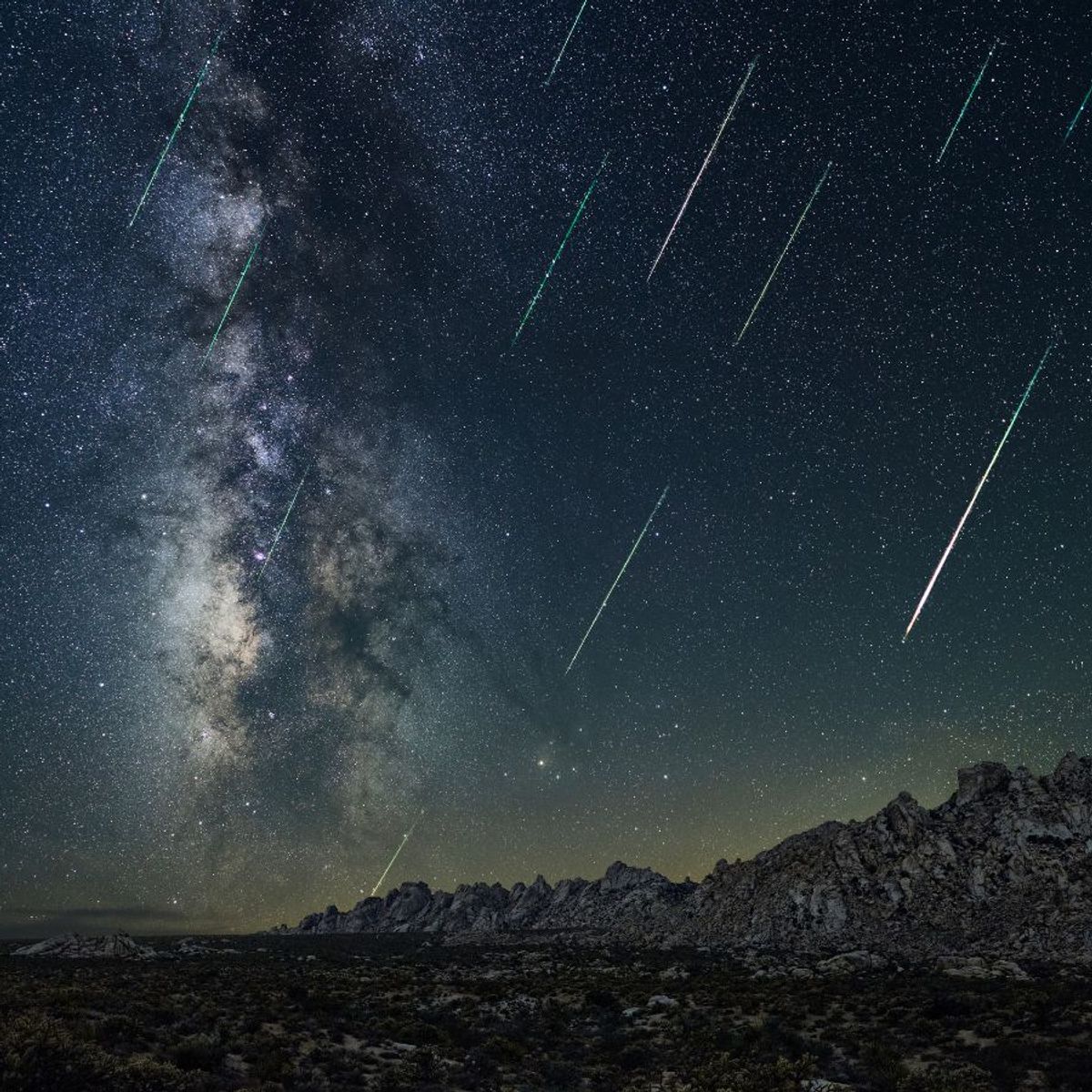
Every summer between late July and the first weeks of August, the Earth passes through the Perseids, a meteor shower whose peak visibility occurs around the night of August 12th.
With an average of about a hundred naked-eye light trails per hour, this year viewing conditions should be excellent thanks to the early moonset.
The phenomenon has fascinated various cultures over time: in Italy, for instance, it is known as the “Night of Saint Lawrence” (Italian: Notte di San Lorenzo), but its term came from Greece, as the Perseids (Greek: Περσείδαι) represent the sons of Perseus in Greek mythology.
From an astronomical perspective, the name Perseids derives from the radiant point where the meteors appear to originate. We'll see about 80-100 meteors per hour, which appear to originate from the constellation Perseus because, if traced backwards, their trajectories converge precisely there.
This year will therefore be an opportunity to explore both astronomy and mythology.
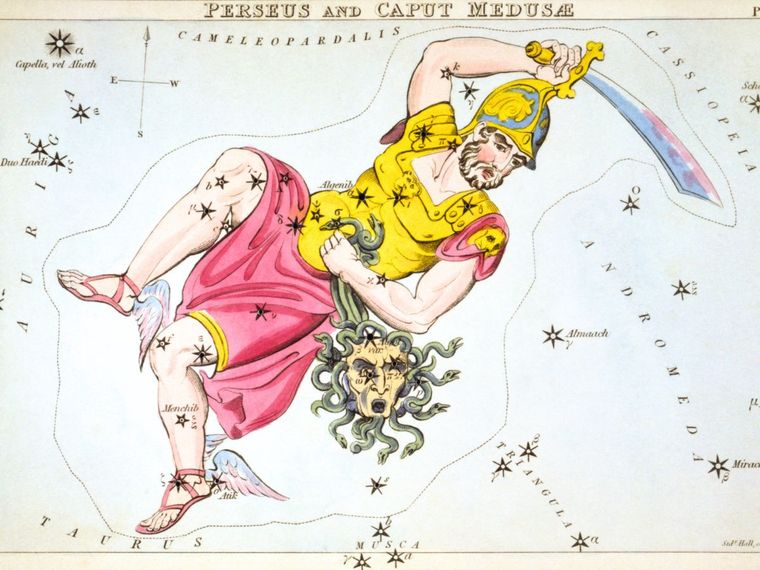
The Hero and the Gorgon
As mentioned, the Perseids are closely linked to the myth of Perseus, whose story begins with his grandfather, Acrisius, King of Argos, fearing he lacked male children.
The oracle Delphi had predicted the king's death at the hands of his grandson, the son of his only daughter, Danae. Fearful, Acrisius had her locked away in a tower to avoid any human contact, but Zeus, in love with her, managed to sneak into the room in the form of a golden shower, which impregnated her.
From this union Perseus was born. Afterwards, the king, lacking the heart to kill his daughter and grandson together, had them locked in a chest set adrift on a ship.
Zeus' protection allowed them to reach an island where they were found and taken in by Dictys, brother of the local tyrant, Polydectes, who provided them with a safe place to live and grow up.
Perseus thus grew into a strong and courageous boy, beloved above all by his mother, who, out of love for him, rejected every suitor, first and foremost King Polydectes. Tired of Danae's constant refusals, the king devised a plan to rid himself of the boy, asking him for the head of the Gorgon Medusa as a wedding gift.
Perseus turned to Athena, who provided him with the helmet that would make him invisible and a shining shield, advising him to look at Medusa only through his reflection. Hermes also gave him winged sandals with which he could fly to the Gorgons' dwelling.
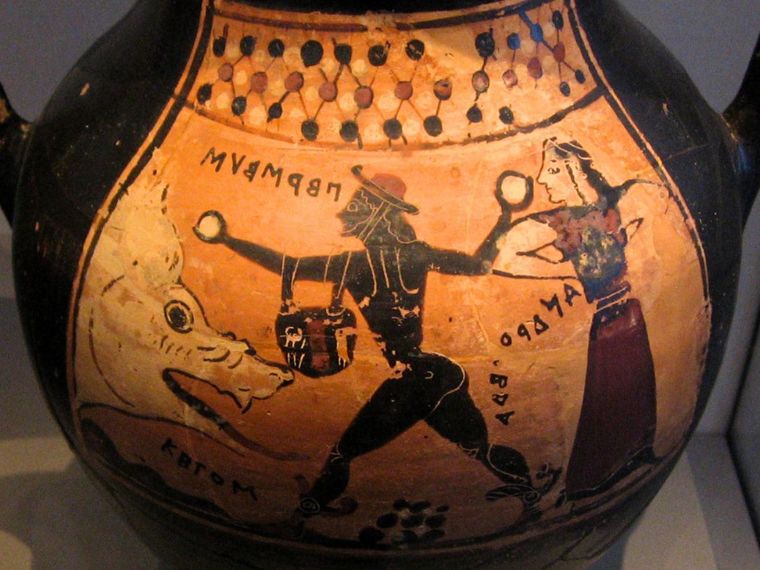
Reaching the terrifying place, the boy found Medusa and managed to cut off her head while she slept, placing it in a magical bag. Flying home victorious with the requested gift, he spied a beautiful girl chained in the middle of the sea: it was Andromeda, princess of Ethiopia and daughter of Cepheus and Cassiopeia, sacrificed to Poseidon to free her city from a ferocious sea monster.
With a trick, he managed to free the girl and slay the monster, and once she was safe, he asked her parents for her hand in marriage. At the wedding feast, however, a former suitor of the princess appeared, claiming his right to marry her. In an attempt to kill Perseus, he was petrified by Medusa's head, which the hero pulled from his bag.
The newlyweds returned to the island together, and it didn't take long for Perseus to discover the deception Polydectes had concocted to free himself and continue tormenting Danae. Her anger was then implacable, so much so that she hurled the wedding gift at its recipient, who was then petrified by the Gorgon's gaze.
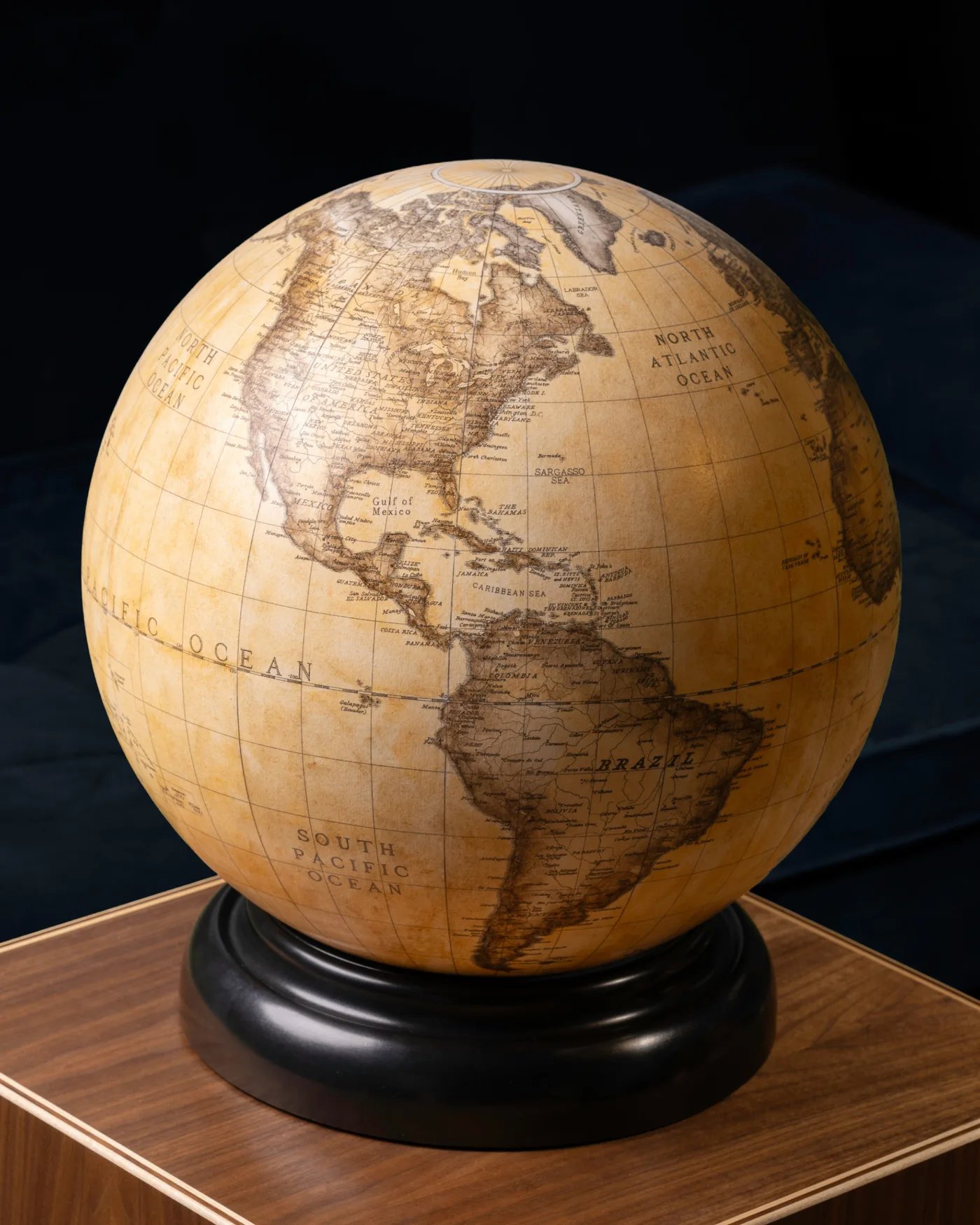
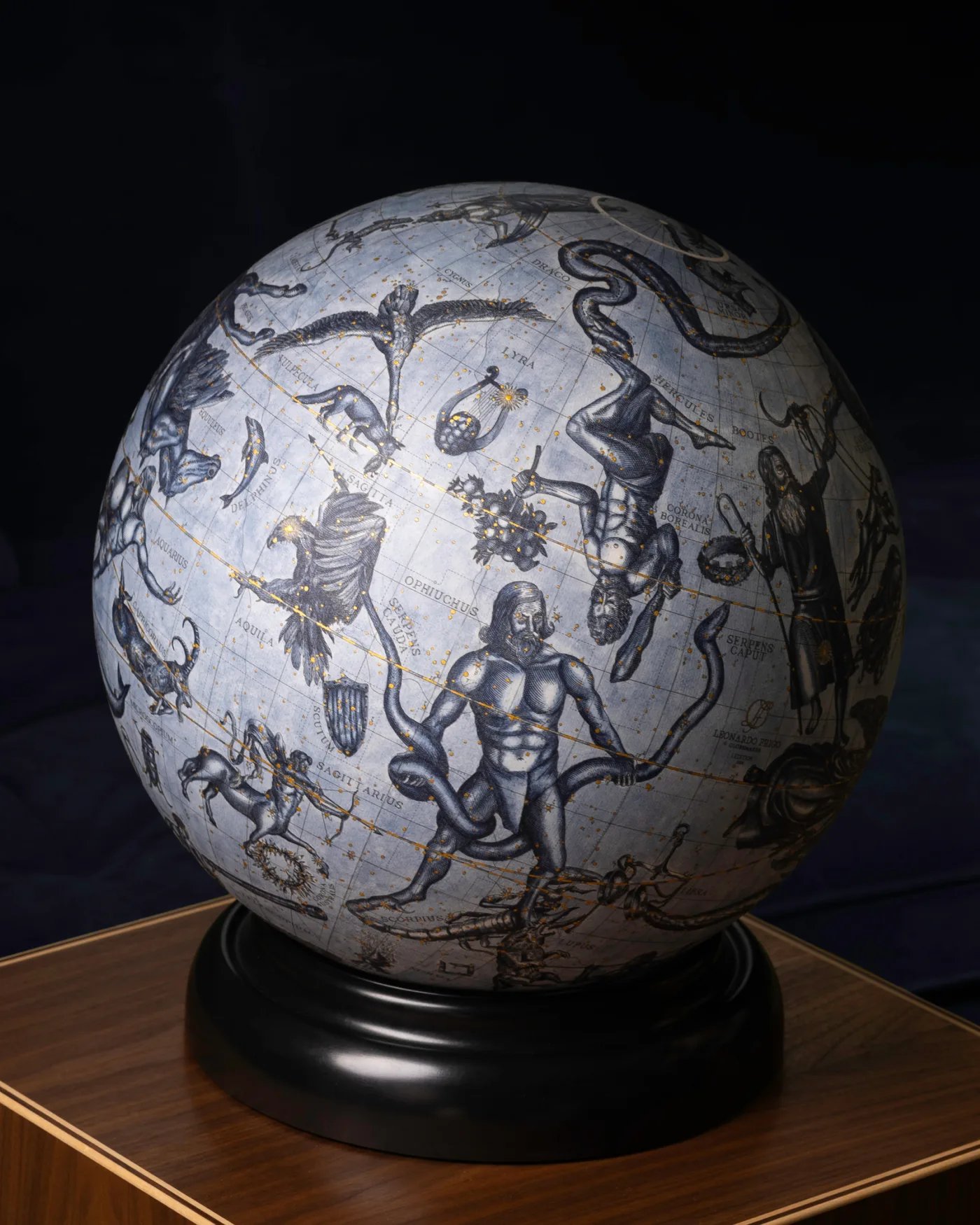
The sky preserves this story. Perseus stands near Andromeda, Pegasus and Cetus, forming a celestial tale of heroism and danger. When you look at the constellation on a celestial globe, the figure appears frozen mid‑stride, arm extended, trophy held aloft. The globe becomes a bridge between science and myth.
Why the Perseids Belong to Perseus
The Perseids take their name both from the myth and from the point from which they appear to originate. The star Eta Persei is in fact the exact point from which the shower can be observed backwards as if it were part of it.
This is why ancient observers linked these meteors to the myth. Some saw images like the sword of Perseus, others like the head of Medusa. Today we know that they are grains of dust burning in the Earth's atmosphere, but we certainly cannot ignore the myth that made this experience a story worth telling.
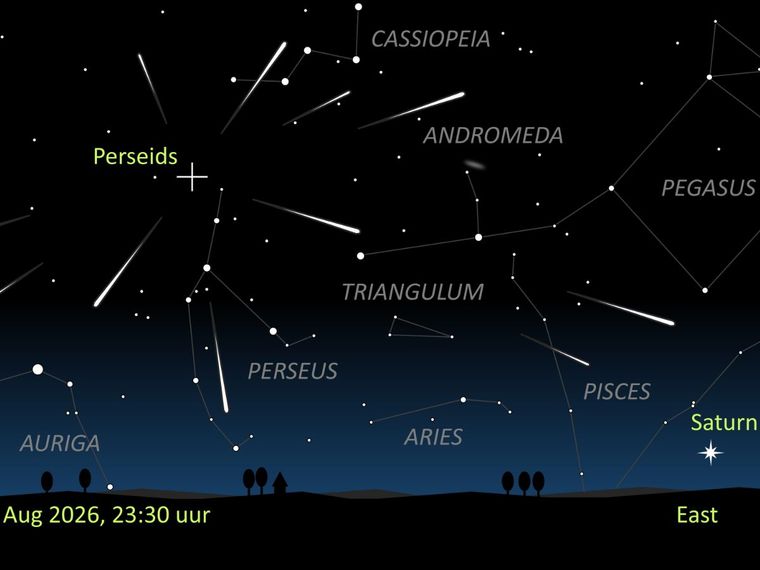
Watching the Perseids in 2026
Myth aside, the meteor shower is certainly a stunning sight to catch, and we’re lucky enough to be able to see it every year in all its forms. This year in particular, their peak visibility will occur between August 11th and 13th, with sunrise offering a greater frequency of sightings.
The most interesting part however, always occurs after midnight, when Perseus rises higher, positioning the Earth's rotation in the direction of the comet's debris trail, thus increasing the frequency of meteors.
In reality, it's not necessary to look directly at Perseus, but it's ideal to observe slightly away from the radiant to spot the longest trails.
To do this, it's recommended to choose a location with a wide view of the sky and minimal artificial lighting: a natural setting represents the perfect spot. Rural areas are perfect, and if you sit in a deck chair, waiting patiently with friends or family, the evening will be even more magical.
Note: unfortunately, even a few thin clouds can hide the meteors, so it's best to check your city's weather forecast carefully; otherwise, move to places where the sky remains clear.
It's not necessary to bring a telescope, but a mini celestial globe would be useful to initially locate the meteor shower with the naked eye thanks to the position of the various constellations. Let the globe guide you to witness this breathtaking phenomenon.
The Globe as a Bridge Between Worlds
The idea of watching shooting stars with a globe nearby isn't bad at all. You could pick it up and rotate it until the part you're observing coincides with the stars you're searching for. The constellations of Perseus, Cassiopeia, and Andromeda stretch across the dark sky, making it shine brighter than ever.
The mini globe that stretches between your fingers thus becomes a tool of understanding, a brief but intense education on the universe you're addressing, to mentally review the position of the constellations so you can calmly observe the trails.
To recognise them, you must mentally draw Perseus, whose Medusa's head shines faintly, or Pegasus leaping out of the hero's shadow. By memorising the constellations as characters, when a meteor streaks across the sky, you can visualise it passing through ancient history.
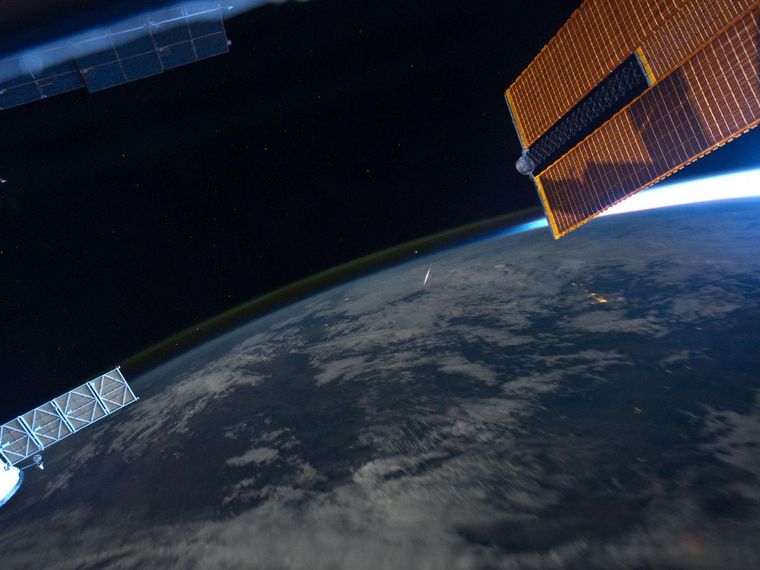
The Perseids originate along the orbit of Comet Swift-Tuttle, a cloud composed of particles expelled from it during its 133-year orbit.
The majority of these have been part of the cloud for about a thousand years, but they aren’t alone because there is also a filament of relatively young dust present there, which can give rise to an early mini-peak the day before the meteor shower's peak.
It's not uncommon for many people to notice trails appearing a few days before the supposedly official date. A little-known fact is that most Perseids' meteors are tiny, no larger than grains of sand, and every time it approaches the Sun, the comet releases dust and debris. Even though its last close approach to Earth was in 1992, its dust continues to produce intense meteor showers.
A Night with Perseus
When reading articles, research, or studies on sky observation, the Perseids represent, like many others, a meeting point between mythology, history, and reality. Science intertwines with the gaze of those who observe nature simply taking its course, wondering what hidden meanings might still lie beneath.
We can only wonder what early humans thought when they saw these trails. Perhaps, or more likely, they took them as signals from the sky, something that required their presence at that moment, and that would then disappear shortly after.
It was thanks to their curiosity that the stories of the hero Perseus were later born. And it is thanks to this myth that astronomers were later able to map them on paper with incredible precision, while scientists began to recognize their importance for our galaxy, tracking the meteors all the way to Comet Swift-Tuttle and transforming this phenomenon into a tool for education and knowledge.
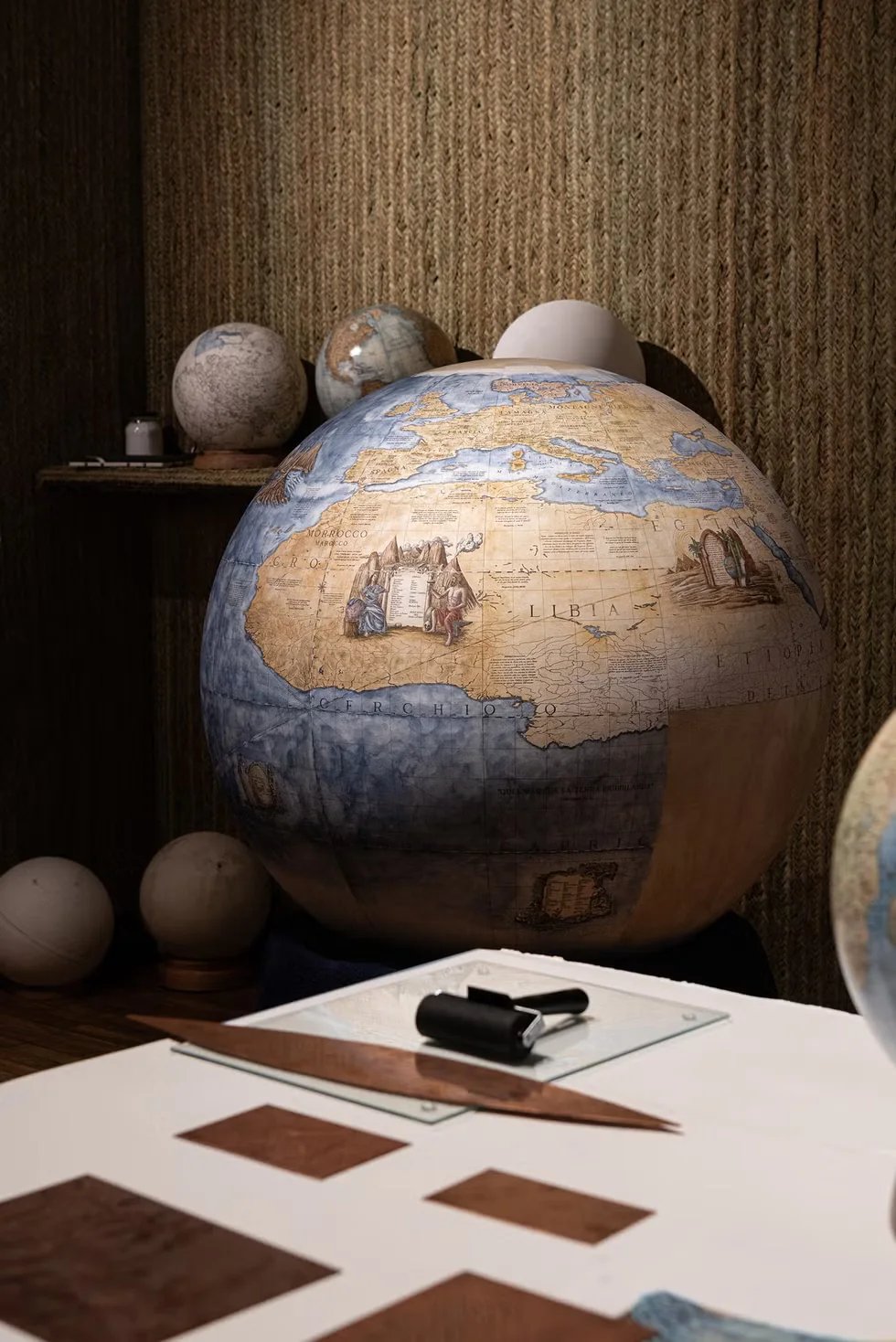
Yet the myth has never faded, as it remains engraved on the celestial globes, those elegant spheres that guard both the real and imaginary skies. A world apart, intertwining history, science, and human vision, whose figures remind us that every meteor shower is part of a much older story, passed down through the centuries by storytellers, navigators, and astronomers.
This, then, symbolises that observing the Perseids continues this tradition, witnessing the physical laws of dust and velocity, and also inheriting the symbolism of destiny and transformation.
Related Topics
Enjoyed this journey into the stars? If you loved exploring the myths behind the 2026 Perseids, you’ll be fascinated by this next read!