From Ithaca to Hell - Ulysses Between the Odyssey and the Divine Comedy
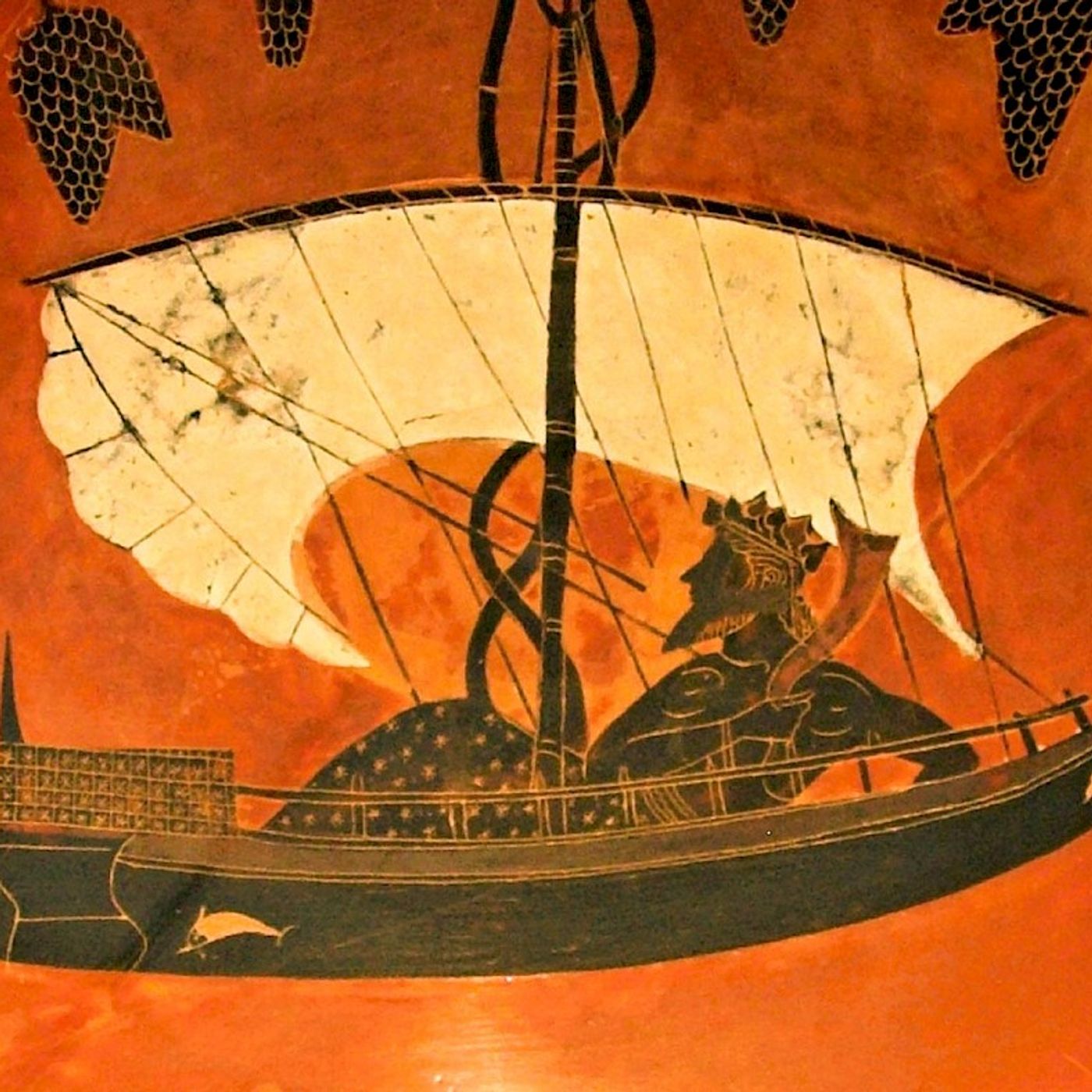
Ulysses, known in his epic poem as Odysseus, occupies a fundamental role in Greek culture for the themes he addresses, such as journey, internal struggle, temptation, and the desire to return to one's roots.
The character originates as King of Ithaca in the Odyssey, a 24-book work composed in Homeric Greek around the 8th or 7th century BC by the renowned author Homer. Its origins, or even whether a single author created it, remain unknown to this day.
Odysseus has been an immediate inspiration for papers, illustrations, and sculptures, and among celebrated figures of the past, we find the renowned Dante Alighieri.
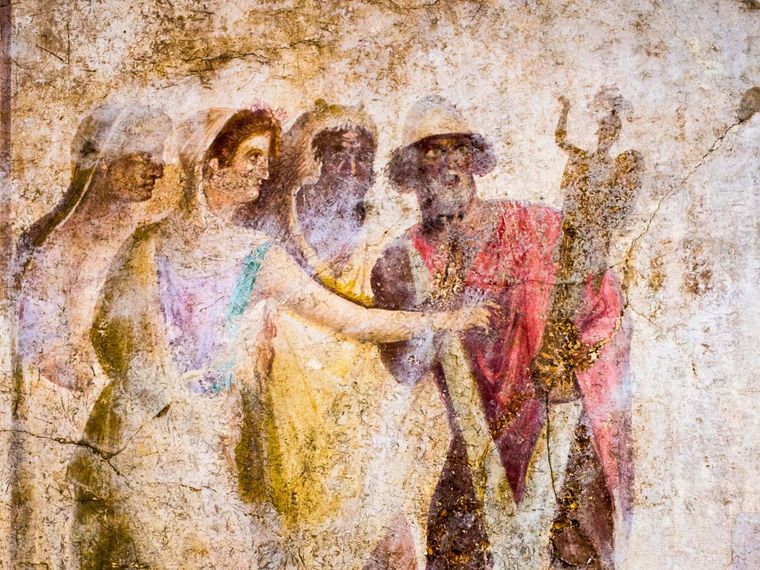
The Florentine linguist and philosopher included the character in his Divine Comedy, transforming him into a symbol of transgression for pushing the intellect beyond its limits, rather than following the values of strength and endurance demonstrated in the original work.
First, Odysseus becomes Ulysses because Dante employs his Latin version, and it’s exactly this interpretation of the name that has enjoyed great success throughout the world.
It’s interesting to see a change in Dante's work, as the contrast reflects paradigms between pagan and christian culture, highlighting the morality of his century.The author's reinterpretation suggests a different vision of the ancient hero, transforming it into one of the central themes of the Divine Comedy.
The Purpose Guiding Each Character’s Journey
The striking difference between the two pieces is the character's motivation. In the Odyssey, Odysseus has a strong desire to return home. Ithaca represents his kingdom but also his family, including his wife Penelope and his son Telemachus.
The story revolves around his return home after the Trojan War, which he and his men won. This journey is significant for its time: they spend ten years fighting, and another ten returning, even though geographically speaking, they weren’t even that far from their destination.
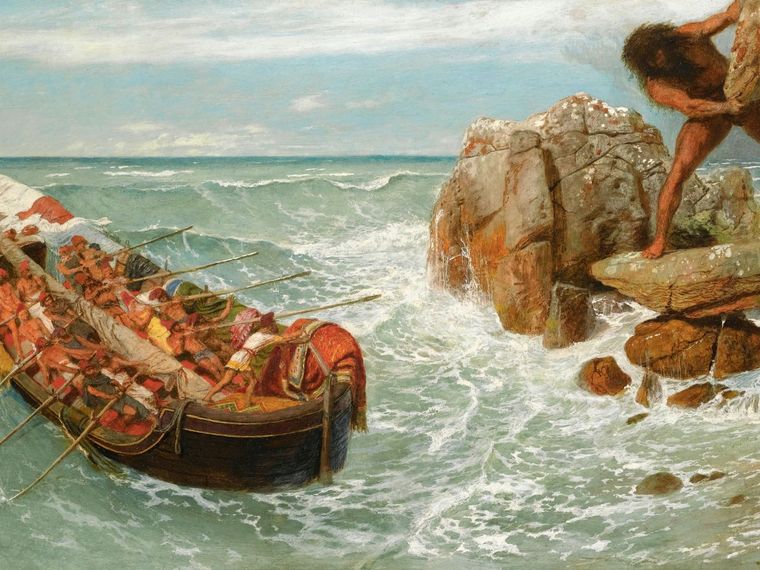
His journey becomes a pilgrimage around the Mediterranean as he encounters various obstacles along the way, such as his clash with the Cyclops and his imprisonment at the hands of Calypso.
His travels are involuntary. He doesn't choose when to pick up and leave, but are forced upon him by a series of unfortunate events, which, however, also provoke reflection on the essence of humanity and its values.
Odysseus tries to survive, and in doing so he learns to be resourceful and resilient, concluding his journey with a powerful moral.
Dante's Ulysses on the other hand, travels by choice, and in his final destination, explored in Canto XXVI of the Inferno, he chooses to rebel against human limitations. An unexpected gesture compared to the original story.
This happens because the character reinterpreted by Dante doesn’t desire a return home, but knowledge. The motivation changes, and with it, the moral.
Ulysses insists on knowing what lies beyond the Pillars of Hercules, even finding a way to convince his crew with a pompous speech about virtue. Dante interprets this as a temptation, leading others to ruin. The main character is transformed from heroic to sinful, and the moral speaks of intellectual pride and its consequences.
Geographic Differences Between the Two Journeys
Another essential difference between the Odyssey and the Divine Comedy, concerns the geography of the story. Although the first contains some fictional locations, it still travels around the Mediterranean, a place recognisable to Greek and Western culture in general.
Odysseus crosses the Aegean and Ionian Seas, touching on places that are imaginary yet anchored in the landscape familiar to Homer's audience.
The islands of the Cyclopes, Circe, and Calypso, the kingdom of the Phaeacians, and even Hades are represented by the Mediterranean basin. The hero travels through a world familiar to him and easily traversed. The ten-year duration of the return to Ithaca is due only to the obstacles encountered, not to the distance of the places themselves.
In contrast, Dante's Ulysses is imagined already in a different realm, represented by Hell. The turning point in his motivation, which drives him into a lust for knowledge, occurs on the edge of the Pillars of Hercules, which mark the limit of human navigation. A trick used by Dante, the author, to continue the plot and bring a different moral to the story.
Beyond the Pillars of Hercules lies the unknown, a space forbidden to mortals, and it’s precisely this that persuades Ulysses and his crew to sail beyond these confines.
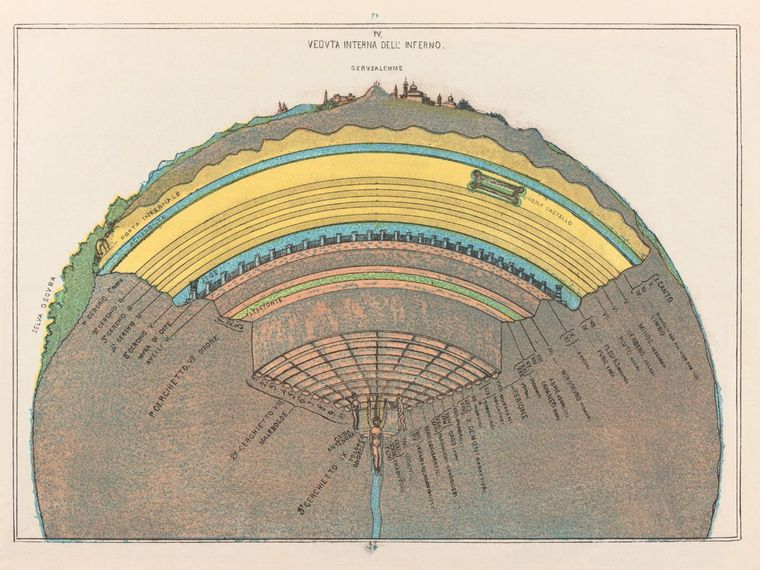
The journey transforms from geographical to mythical, in a transgression of souls wandering toward Mount Purgatory, invisible to the ancient world and created by the shifting of lands during Lucifer's fall. Here, symbolism crashes into a space reserved for spiritual ascent.
Geographically speaking, Dante's Ulysses heads toward a forbidden destination that ultimately destroys him, an experience that becomes sin.
Exploration and Transgression
The very nature of the journey changes radically between the two scripts. The Odyssey, while presenting a world fraught with danger, shows how magic and human experience can coexist.
This is because we find emotions that come from the human heart and mind, capable of overcoming barriers and emerging in a triumph of inner peace. Odysseus's abilities are shown as a tool for broadening human understanding, making the journey adventurous and instructive.
Dante's Ulysses, on the other hand, is shaped by a world that drains power and a thirst for knowledge. His rebellion is seen as a violation of divine law: he doesn't stop at simple curiosity, because desire becomes obsession.
This concept naturally leads to catastrophe. Dante uses the character of Ulysses to explain how, in medieval belief, certain forms of knowledge were dangerous if pursued without divine blessing. Faith becomes the goal, and the unknown, corruption.
The Journey’s Outcomes
Homer guides Odysseus on his return journey, finally bringing him to his dream destination, his beloved Ithaca. Here he reunites with his family, takes the reins of his kingdom, and restores the order lost in his absence.
The moral speaks of reconciliation and renewal. The many obstacles and longed-for sufferings have led him to conquer a rhythm with himself. Learning from his mistakes, he recognised his values and brought with him perseverance and a newfound loyalty.
On the other hand, the Divine Comedy reserves a tragedy for Odysseus. After embarking on the journey beyond the forbidden world of the Pillars of Hercules, a whirpool sinks his ship, and he and his crew perish before even reaching Mount Purgatory.
His death recalls the failure and damnation of Christianity resulting from the violation of an unwritten law, yet one considered crucial by its believers.
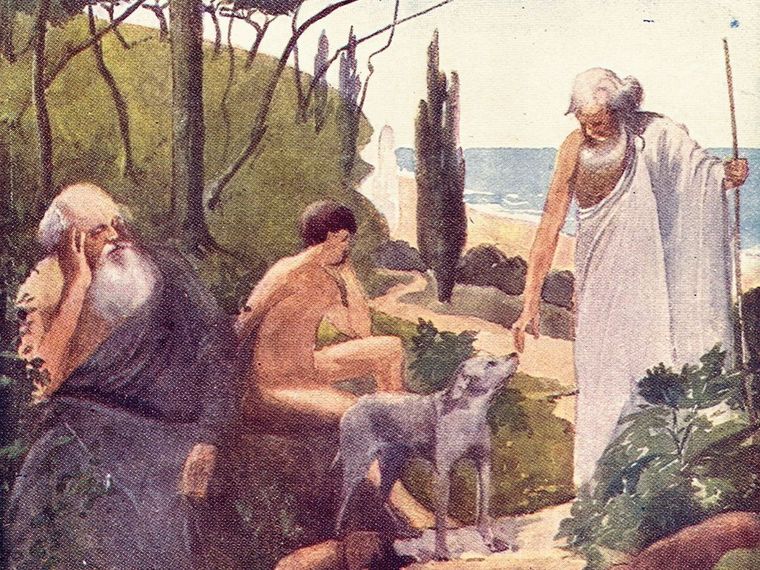
Each journey, both in the Odyssey and in the Divine Comedy, reflects the cultural values of their respective worlds. Odysseus survives despite adversity because of his human nature, his intelligence, and his determination shaped by his values, because his world rewards him for all the effort he put in without ever giving up.
In the Divine Comedy, however, Odysseus overcomes limits that weren’t meant to be overcome in his world. The conflict between the character and divine laws separates him from what should be his goal, which is divine absolution.
He falls because he seeks knowledge without humility. His world prevents him from moving freely. The message Dante wants to send to his era concerns the affirmation of christian supremacy.
Interpretation of the Myth
Although Dante's interpretation seems harsher, it serves several purposes. First, it condemns intellectual arrogance and morally allows us to reflect before acting, since unreasoning impulses don’t lead to knowledge, but rather to presumption.
The classical myth is thus reinterpreted through the faith that reigned in his time. The character is reflected in Dante himself because, as we see throughout the work, he too is in search of knowledge.
But Dante is guided by faith, and that is why he does not give in to the impulses of something that may or may not be abstract. He needs humility, not ambition, and decides to rely on his intellect to move forward.
Although this is also a fundamental theme, words also become a key to analysis.In the Odyssey, Odysseus uses his language to deceive his enemies, negotiate with the gods, and motivate his crew. Words are used as a tool for survival, which does him credit. Odysseus' speech to his crew is instead seen as manipulative, tempting and a bringer of ruin.
The climax of the Divine Comedy for Ulysses comes when he glimpses the mountain of Purgatory. This is seen as a source of salvation, a long-desired redemption of souls. Unfortunately, Ulysses fails to cross this threshold. The instant transforms from ambition to tragedy. Truth and reason merge in an action that highlights insurmountable limits.
The journeys depicted in both the Odyssey and the Divine Comedy show two completely contrasting perspectives. This is often seen in the human soul and personality, at any time and on any matter. Our views change depending on the environment in which we were raised, whether it was rich in perseverance or surrounded by faith.
One perspective teaches us how our experiences can change the course of our destiny, shaping it into something wondrous. On the other hand, we’re taught how the consequences of our impulsive actions can prove fatal, guiding a life of little prospect.
Related Topics
Curious to know more about the world that gave birth to Ulysses? Read more about the Odyssey here!