International Observe the Moon Night. How to Read the Moon: The Craters, Seas and Stories Visible from Earth
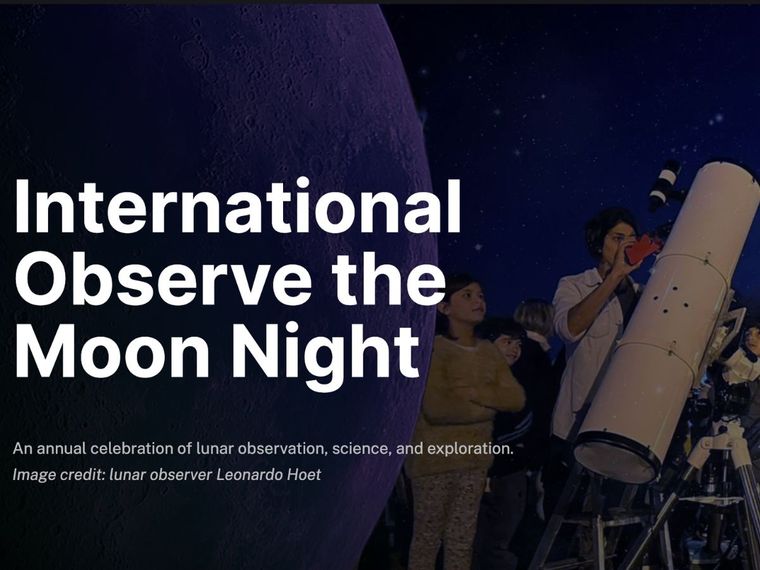
Every year, thousands of people from around the world gather to celebrate Earth's moon during International Observe the Moon Night.
In this ravishing event, we can both observe the celestial body together while also sharing our curiosity through engaging, hands-on lunar-themed activities, including music, artwork, readings, and more.
Its final purpose is to appreciate what we can witness as human beings, connecting with the present moment, which offers us a spectacular view of the moon.
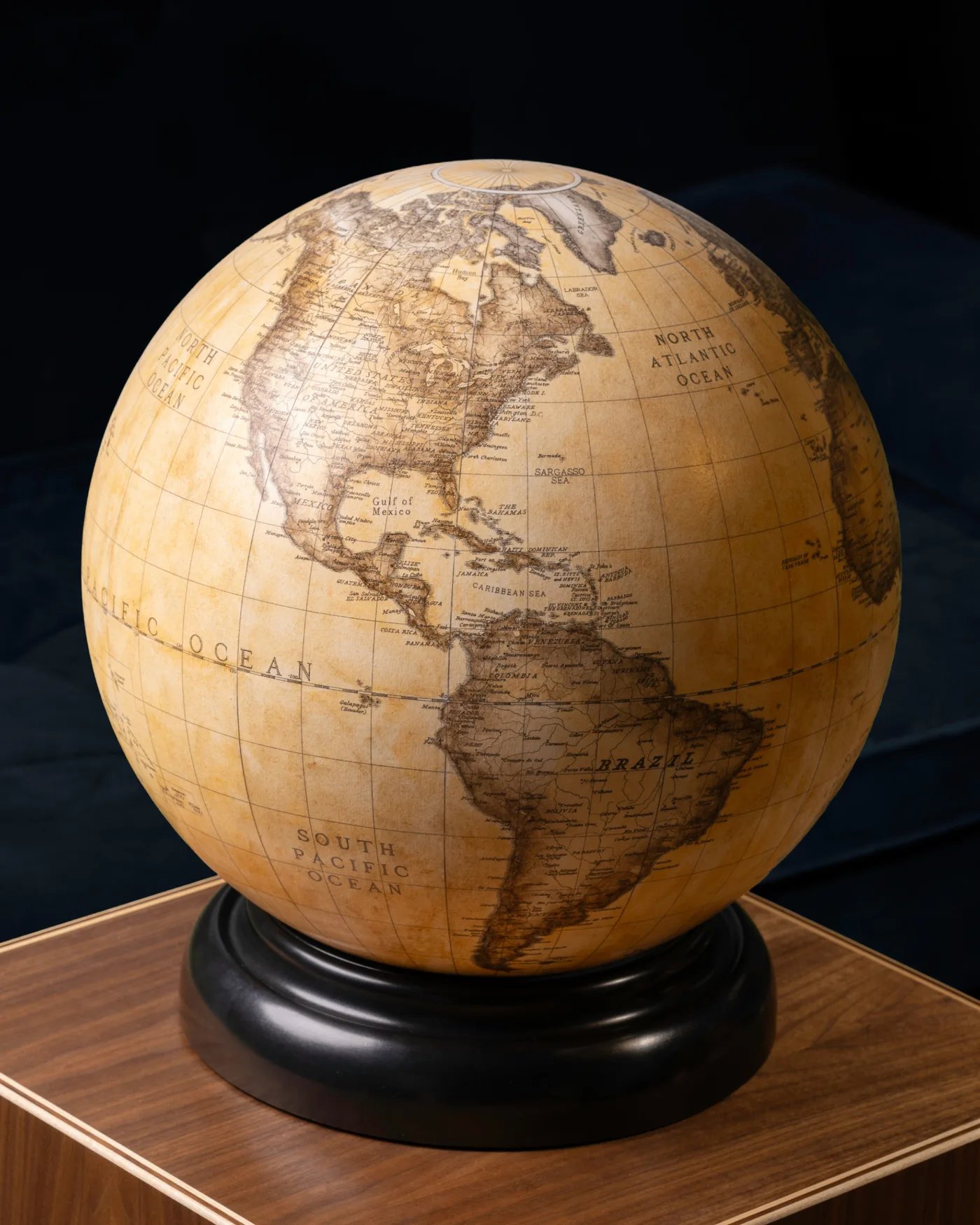
As Earth's only natural satellite, the moon is rarely observed with the same care we devote to our own Earth through maps, globes, or devices designed to discover the universe.
However, for those passionate about it, or who want to understand it at 360°, the first step is through cartography, thanks to which we can discover craters, plains, and shadows.
Across centuries, what connects us to ancient observers is the shared gaze: a characteristic that allows us to explore lunar features with the naked eye, and the Moon is the only celestial body whose surface can be studied in detail this way.
It can be seen from balconies, rooftops, or gardens, and learning to read it, only adds to our personal knowledge and history.
Viewing the Lunar Face as a Map
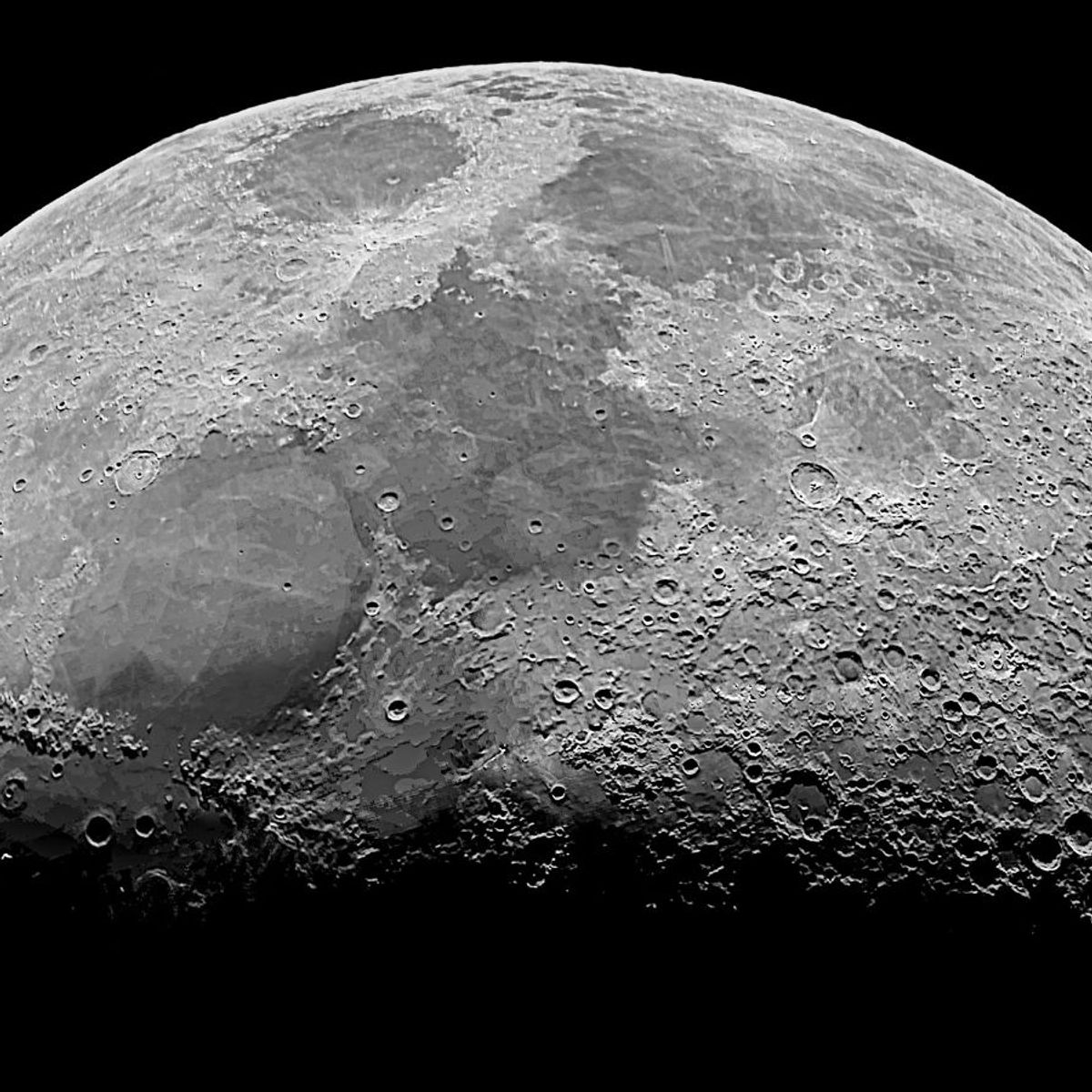
Observing the lunar surface, one first notices its darker spots. These features are now seen as natural; they’re just there, stuck to the celestial body as an everyday occurrence.
However, almost no one, excluding scientists, astronomers, and enthusiasts alike, has ever wondered what they are. As it turns out, they’re lunar seas, known as "lunar maria" in plural and "lunar mare" in singular.
Named by early telescopic observers who believed them to be oceans, in reality they’re actually basaltic plains that originated from ancient eruptions of incandescent material following the impact of massive asteroids.
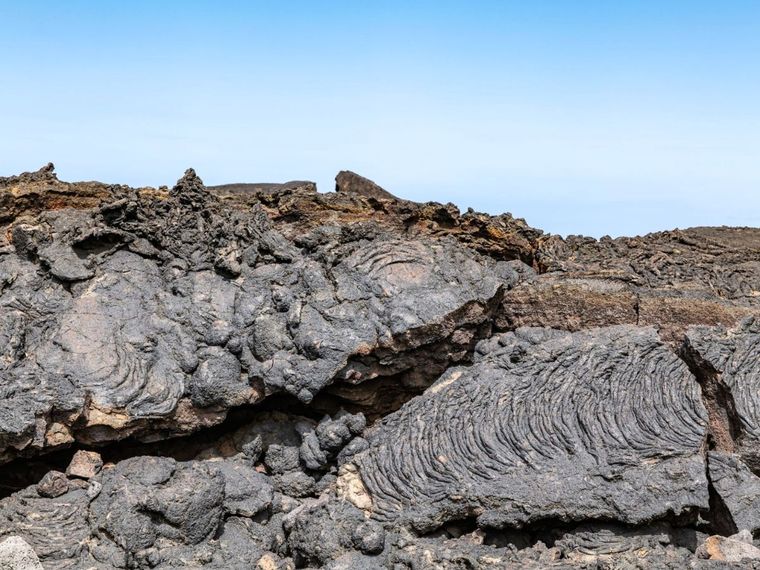
These plains are large expanses of flat land formed by the accumulation of fluid basaltic lava, a dark, hard, and dense igneous rock that forms when lava cools and pours onto the surface.
Once it escapes from fractures in the Earth's crust, basaltic lava transforms into the so-called lunar mare.
Other visible lunar components are its brightest parts, known as "highlands", with reflective surfaces and concentrated in craters, which constitute the Moon’s most ancient terrain.
To begin interpreting the Moon, it’s necessary to learn and identify its main regions; among the most significant ones is Mare Imbrium. This forms a large circular basin to the northwest of the Moon as seen from Earth.
To the east lies Mare Serenitatis, and Mare Tranquillitatis extends just below. Finally, to the south, we can see Mare Nubium.
The landing site of Apollo 11, the first lunar landing, is located on Mare Tranquillitatis, a detail that helps place human history on the lunar map.
Craters as Timekeepers
Among the Moon's most striking features, craters don’t receive enough attention. These cavities vary widely in size, ranging from small cavities to enormous basins hundreds of kilometres across.
They offer a glimpse into entire geological eras of the solar system's history. They’ve been remarkably well-preserved due to the Moon's lack of atmosphere, weather, and plate tectonics.
The medal for being one of the brightest craters, undoubtedly goes to Tycho. Located in the southern highlands, its rays, long streaks of bright material, extend across much of the Moon's visible face.
However, its most distinctive characteristic is its relative youth. Its rays are fascinating because the material ejected during the impact indicates that the crater formed quite recently.
All craters exhibit this appearance immediately after formation, but the rays tend to fade over time as exposure to the space environment darkens them, eventually causing them to blend in with the surrounding terrain.
Estimates suggest the crater formed about 108 million years ago; while this may seem like the distant past, it’s an extremely recent formation when compared to the 3.9-billion-year age of many other large lunar craters.
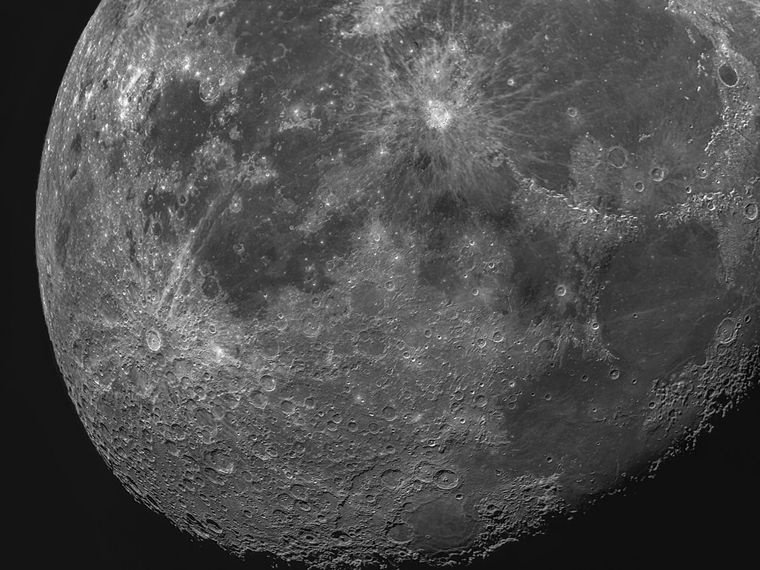
Copernicus and Plato are other noteworthy cavities: the former, located near the centre of the visible lunar face, features terraced walls and central peaks that are visible through a telescope;
The latter, situated near Mare Imbrium, has a dark floor and appears as a uniform oval, with an interior filled with basalt.
Each one has its own story, and lunar observations help reveal unexpected details that, in turn, shape our understanding of the history of the entire solar system.
But to truly appreciate lunar topography, we cannot stop here. Did you know that the line separating lunar day from night is called the “Terminator”?
It strikes the lunar surface at a specific angle, casting long shadows that highlight the relief of craters and mountains.
As the Moon waxes and wanes, features that appear flat during the full moon take on a spectacular appearance when illuminated from the side.
For instance, the Apennine Mountains stand out sharply as the terminator passes over them, and the large Clavius crater, magically reveals its chain of smaller interior craters when situated near the terminator.
In short, thanks to this line, we can see lunar geography come to life and interact with its terrain.
From Observation to Cartography
There would be no lunar maps without the observations made by early astronomers: people fascinated by the sky and its elements who, upon viewing the Moon, recorded its features using simple paper and graphite.
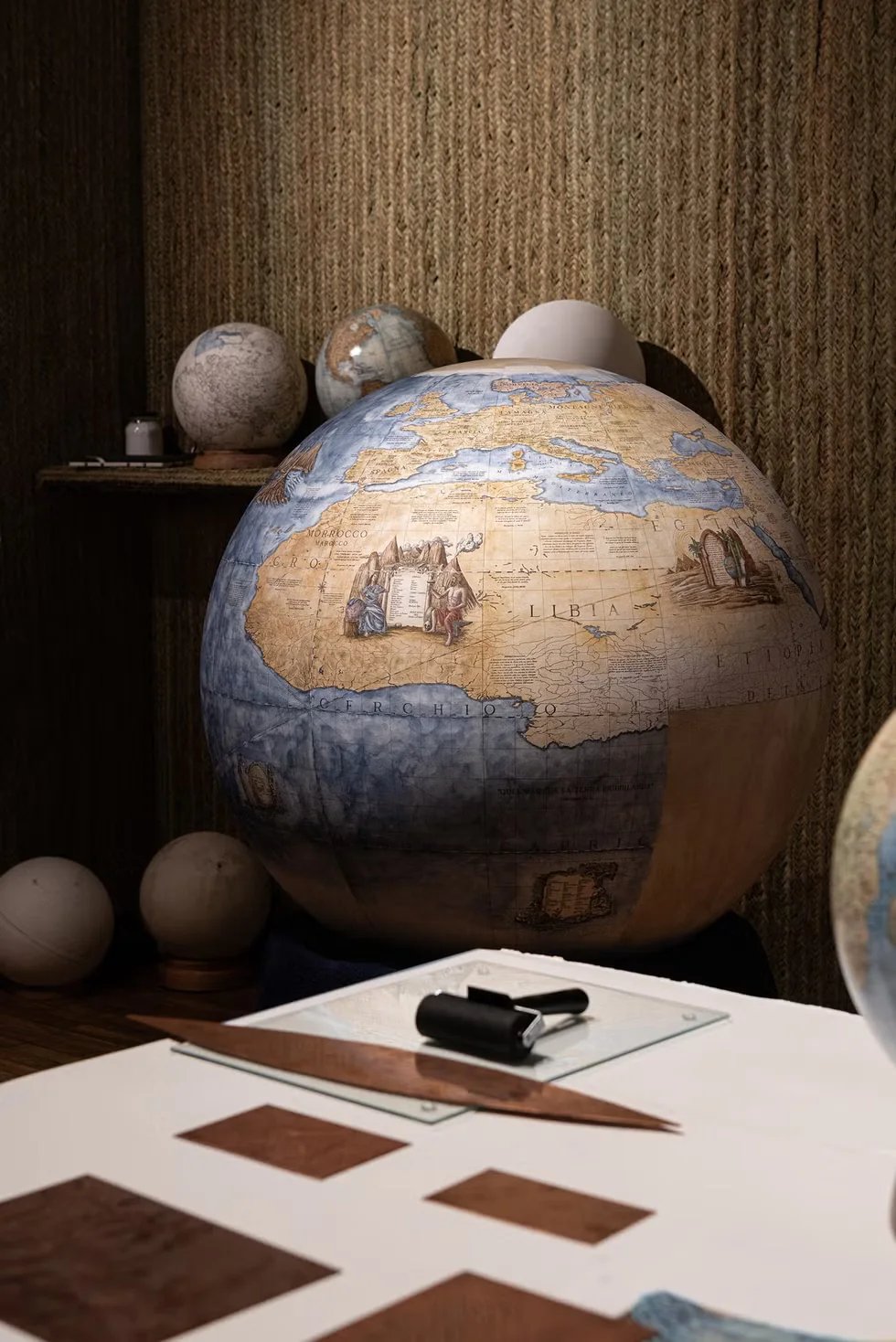
Early sketches evolved over time into detailed charts and lunar globes. The act of learning became an artistic initiative rich in interpretation, linked to the various traditions that define celestial cartography.
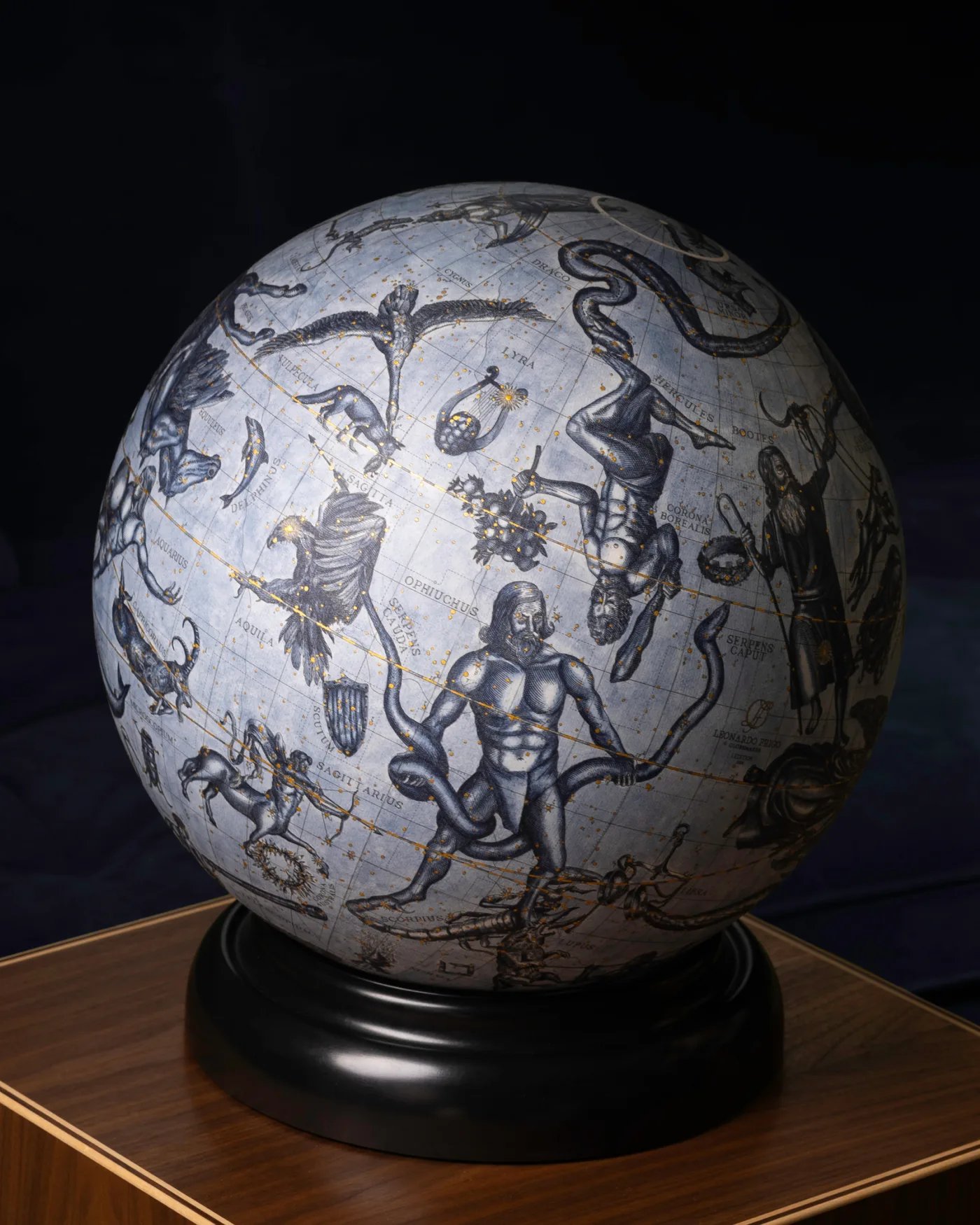
Celestial globes, in particular, share with lunar globes the ability to provide a three-dimensional representation of things we cannot touch with our own hands.
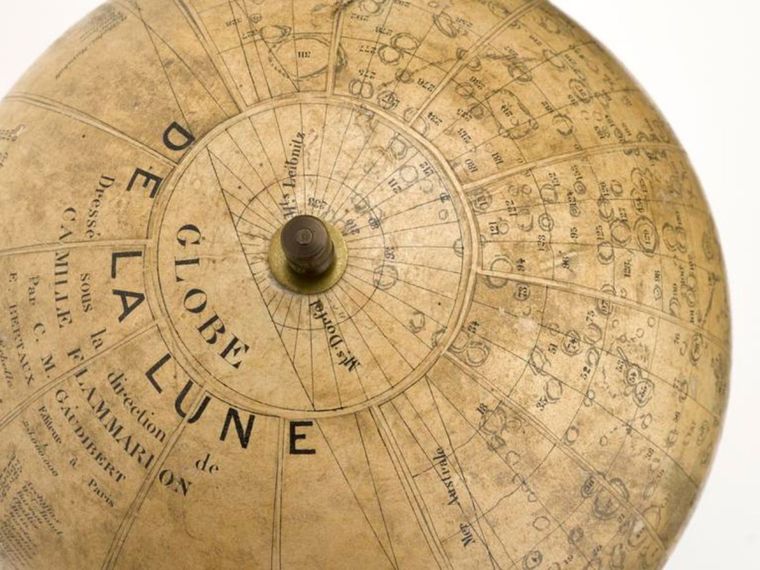
Both types of spheres originate from a two-dimensional perspective, aiming to help explorers navigate space, and enthusiasts understand it by guiding them among the celestial bodies.
Thanks to advanced scientific study, we now understand what the far side of the Moon looks like, and lunar globes reveal this to us with artistic flair.
It may seem like a simple model, but a lunar sphere offers a detailed view of its craters, Maria, mountains, and depths that are difficult to discern with the naked eye.
Astronomers have identified lunar features and given them names of great significance or poignancy, reminding us that the Moon is an object of absolute beauty and a wellspring for human imagination.
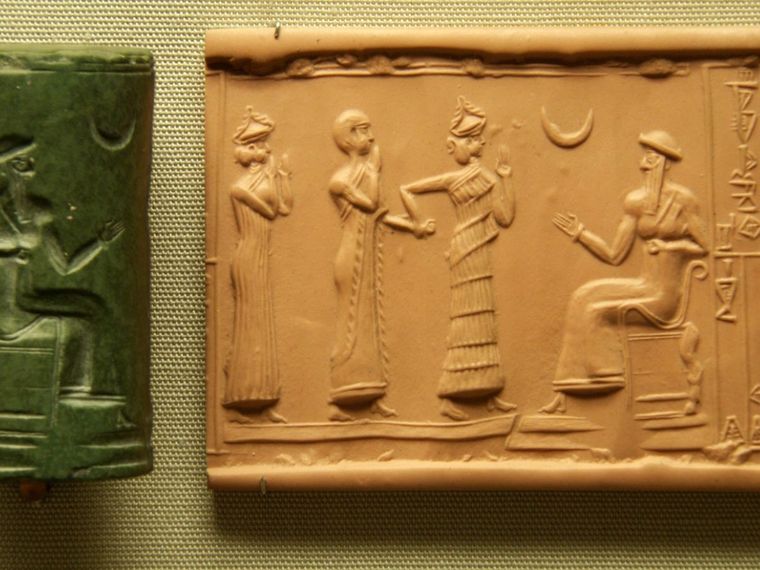
Throughout history, diverse cultures have perceived various shapes reflected on the lunar surface, many of which are quite fascinating.
While Western traditions widely recognise the "Man in the Moon," East Asian cultures have seen a rabbit busy pounding rice cakes.
These interpretations arise from the arrangement of lunar seas and highlands, which, when viewed from Earth, form recognisable silhouettes.
It is highly likely that myths and legends originated in this way, eventually spreading as beliefs and enduring as timeless stories.
How to Observe the Moon
We don’t need highly advanced technology to observe the Moon; our own eyes are sufficient to spot the main bright craters and the large Maria.
However, if you have a telescope or binoculars at your disposal, a multitude of details will come into view.
While this celestial body can be observed during any phase of illumination, the waxing or waning phases offer the best views of craters and mountains.
This is recommended because the terminator accentuates contrast. The resulting pronounced shadows on the surface help reveal details that would otherwise be lost during a full moon.
Although this one is spectacular, it can appear flat when looking for finer details, as the lack of shadow causes a loss of depth.
If you choose to view the Moon with the naked eye, you will notice white and grey areas, and it’s worth remembering that the grey regions consist of solidified volcanic lava flows.
Binoculars offer a different experience: they allow you to capture more detail. Acting much like a small telescope, they provide a reasonably clear view even with modest magnification.
Furthermore, you can begin to distinguish specific surface features; areas that previously appeared flat reveal themselves to be home to craters and massive mountain ranges.
This makes it possible to differentiate between pristine lunar regions and those pockmarked by impact craters.
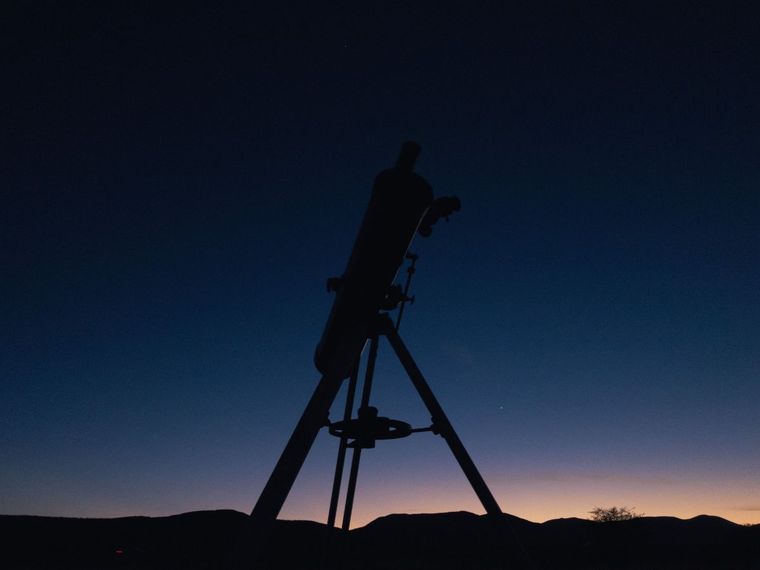
Telescopes, on the other hand, are better suited for a close-up look at the Moon's various features. Since the Moon is too vast to be looked at in a single glance, a telescope allows you to observe mountain textures, the contours of isolated craters, and the extensive chains of debris ejected during major impacts.
Even valleys and fissures (known as "rilles") formed when the lava that once filled a basin cooled and contracted, become visible.
To truly get to know our Moon, you need to choose which details to focus on first. Your exploration will naturally expand as the shadows lengthen or shorten.
You can also compare your observations with lunar maps and globes, discovering historical details along the way. Over time, you will develop an intuitive understanding of lunar geography.
The Moon as a Gateway to the Universe
Observing the Moon can lead to the discovery of planetary histories beyond our understanding, and the processes visible on its surface are crucial for uncovering other ancient stories.
“International Observe the Moon Night” encourages this kind of engagement, inviting people around the world to share their observations and thoughts. Once immersed in this initiative, one discovers that every upward glance becomes an act of exploration.
Related Topics
If this topic has sparked your interest, discover more details about the universe and its planets here!