
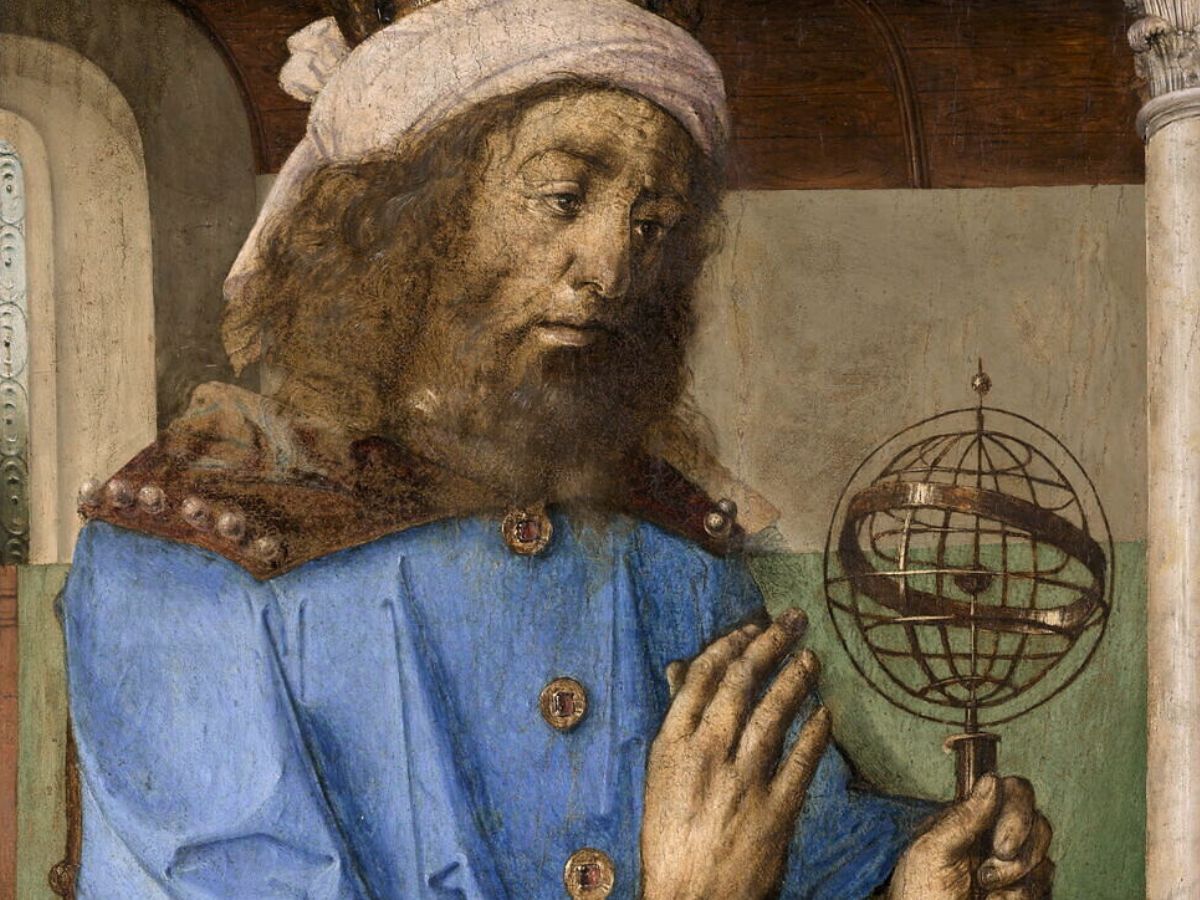
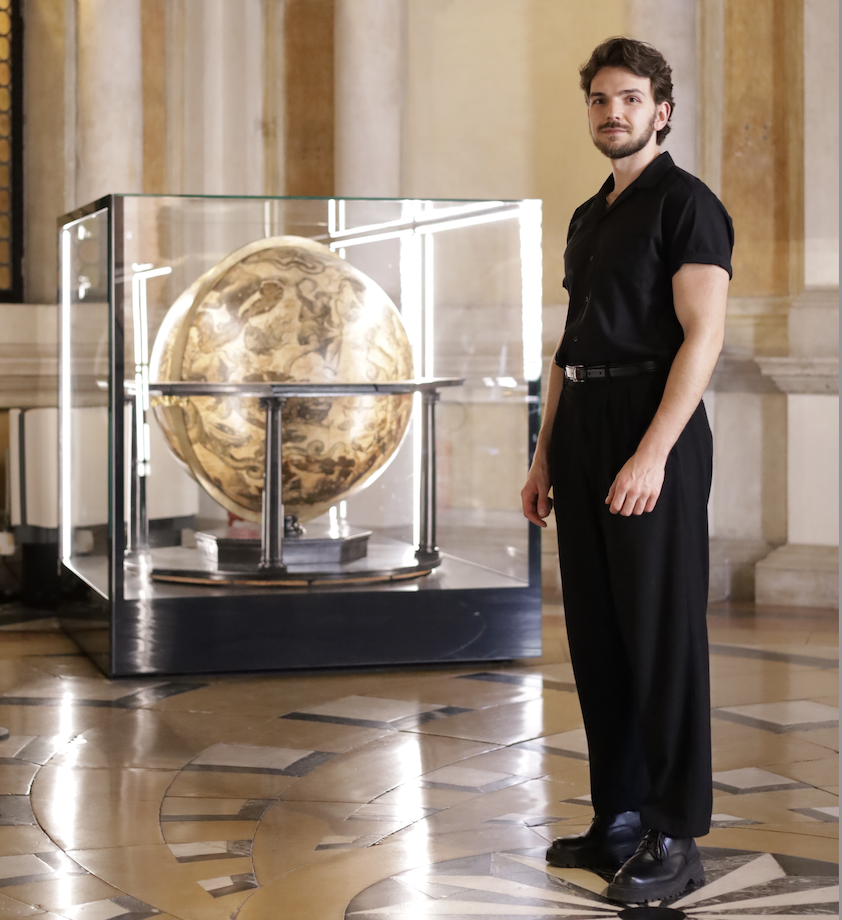
Long before astronomy apps or even telescopes, people relied on physical models to observe the sky, and one of the oldest tools used to understand the night sky was, undoubtedly, the celestial globe.
This artifact represents the stars, constellations, and celestial coordinates as they appear from Earth, offering a three-dimensional way to study the sky. While it may appear similar to a globe at first glance, its purpose, structure, and orientation are very different. Understanding how it works can make stargazing more intuitive and reveal how ancient astronomers interpreted the cosmos.
An Introduction to the Sky Orb
A celestial globe is not just a spherical model of the sky: its surface represents the celestial sphere, an imaginary orb onto which all the stars appear to be projected. This concept dates back to ancient Greek astronomy and remains a useful method for visualizing the positions of stars relative to one another.
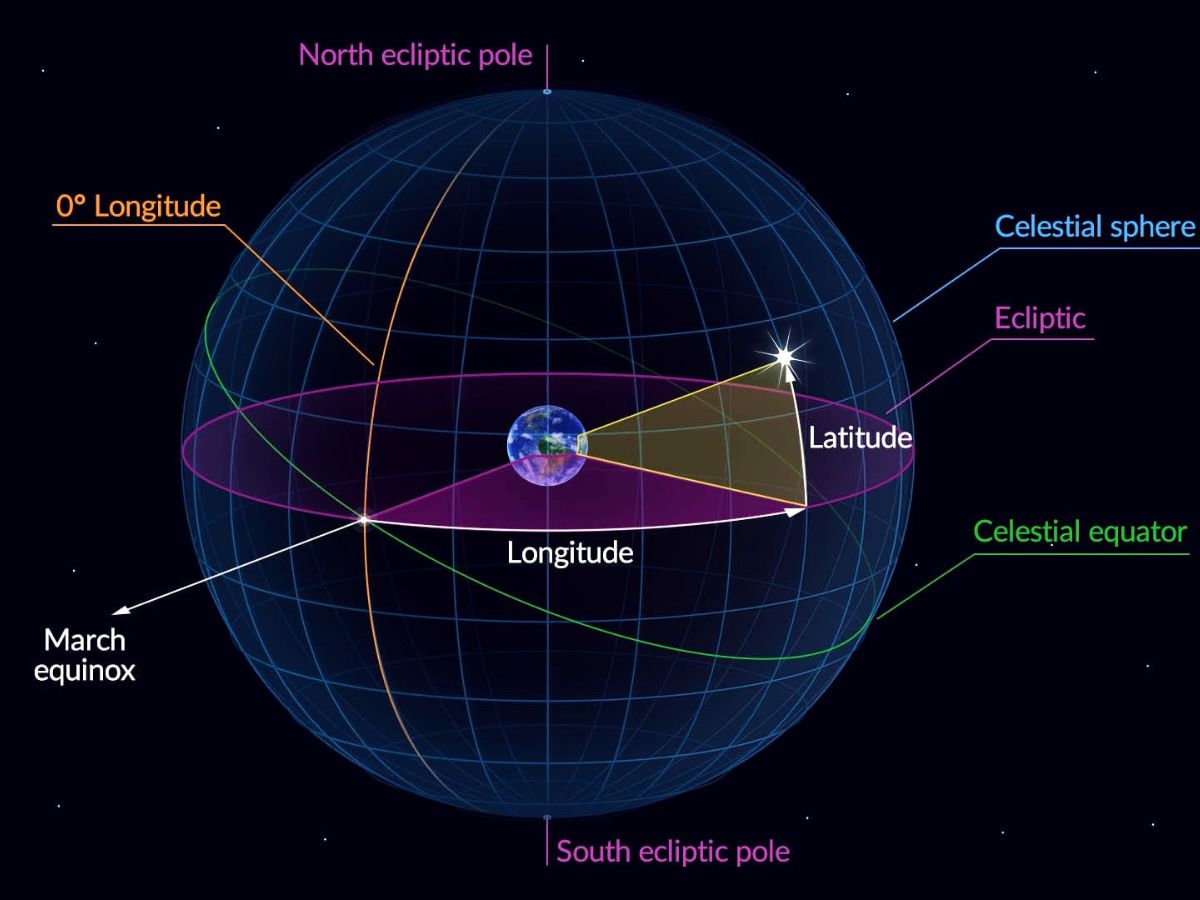
On such a globe, stars are represented according to their right ascension and declination, the celestial equivalents of longitude and latitude. These coordinates allow astronomers to precisely locate any star.
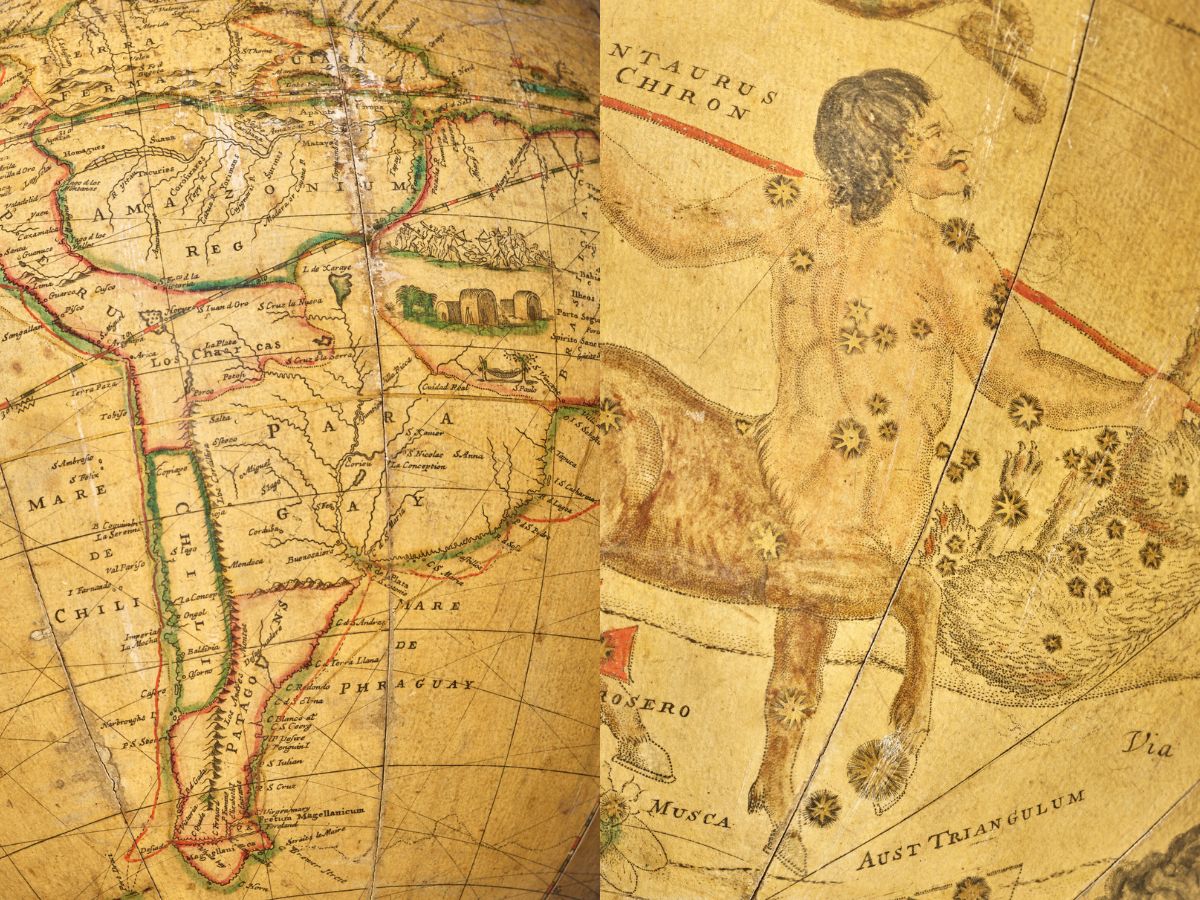
The globe also includes two essential reference lines that help make sense of the sky’s structure: the ecliptic and the celestial equator. The ecliptic represents the apparent path the Sun traces across the sky over the course of a year, which also defines the position of the zodiac constellations.
The celestial equator, on the other hand, is the projection of Earth’s equator outward into space, forming a great circle around the celestial sphere. Together, these lines allow observers to understand how the Sun, planets, and stars move in relation to one another, and they serve as the foundation for accurately reading and interpreting the globe.
An important detail is that celestial globes traditionally show the sky as if seen from outside the sphere. This means the constellations appear reversed, as if one were looking at the sky from an external viewpoint rather than from the Earth's surface. This helps maintain consistency with astronomical charts and makes it easier to understand the relationship between stars in three-dimensional space.
Key Differences Between Terrestrial and Celestial Globes
Although both types of models have the same spherical shape, they serve completely different purposes. A terrestrial globe represents the Earth showing continents, oceans, borders, cities, mountain ranges, and other geographic features. Its orientation is based on Earth's rotation, with the North Pole at the top and the South Pole at the bottom, and the equator divides the globe into northern and southern hemispheres, accompanied by lines of latitude and longitude that help locate places on the planet.
In contrast, a celestial globe represents the sky: instead of land and water, it shows stars, constellations, and celestial coordinates. Its poles correspond to the north and south celestial poles, which are the points in the sky directly above the Earth's geographic poles. The celestial equator, on the other hand, is the projection of the Earth's equator into space, and finally, the lines on a celestial globe are not political or geographical, but astronomical.
Another key difference is perspective. A terrestrial globe is observed from the outside, just as we see Earth from space. Its counterpart is also observed from the outside, but this means that the stars appear reflected compared to how we see them from Earth.
To put it more clearly, when we look at the night sky, we’re inside the celestial sphere and observe the outside. So when we look at a celestial globe, we are outside the sphere and looking inward. This inversion may be disorienting at first, but it becomes intuitive once you understand the underlying logic.
Ultimately, each globe serves a different purpose. The first is used for geography, navigation, and educational purposes about the Earth. The second is used for astronomy, to identify stars, and to understand the structure of the sky.
A Brief Overview of the Constellations
Constellations are also part of the astronomical sphere. These are star formations that humanity has identified and named throughout history. They serve to organize the sky, facilitating orientation and memorization of stars’ locations. The ones we know today derive from a combination of ancient traditions: primarily Greek, Babylonian, and Egyptian, with later contributions from other cultures.
Ancient constellations were often based on mythology. Figures such as Orion, Andromeda, Perseus, and Hercules appear both in the sky and in classical stories. These helped ancient observers track the seasons, navigate the seas, and create calendars. Many of the brightest stars received names still in use today, such as Sirius, Betelgeuse, and Vega.
But, going further back in time, we discover that in 1922, the International Astronomical Union (IAU) standardized 88 official constellations that cover the entire sky. These are clearly defined regions, similar to countries on a map. Each star belongs to one of these areas, even if it doesn't fit into a recognizable pattern.
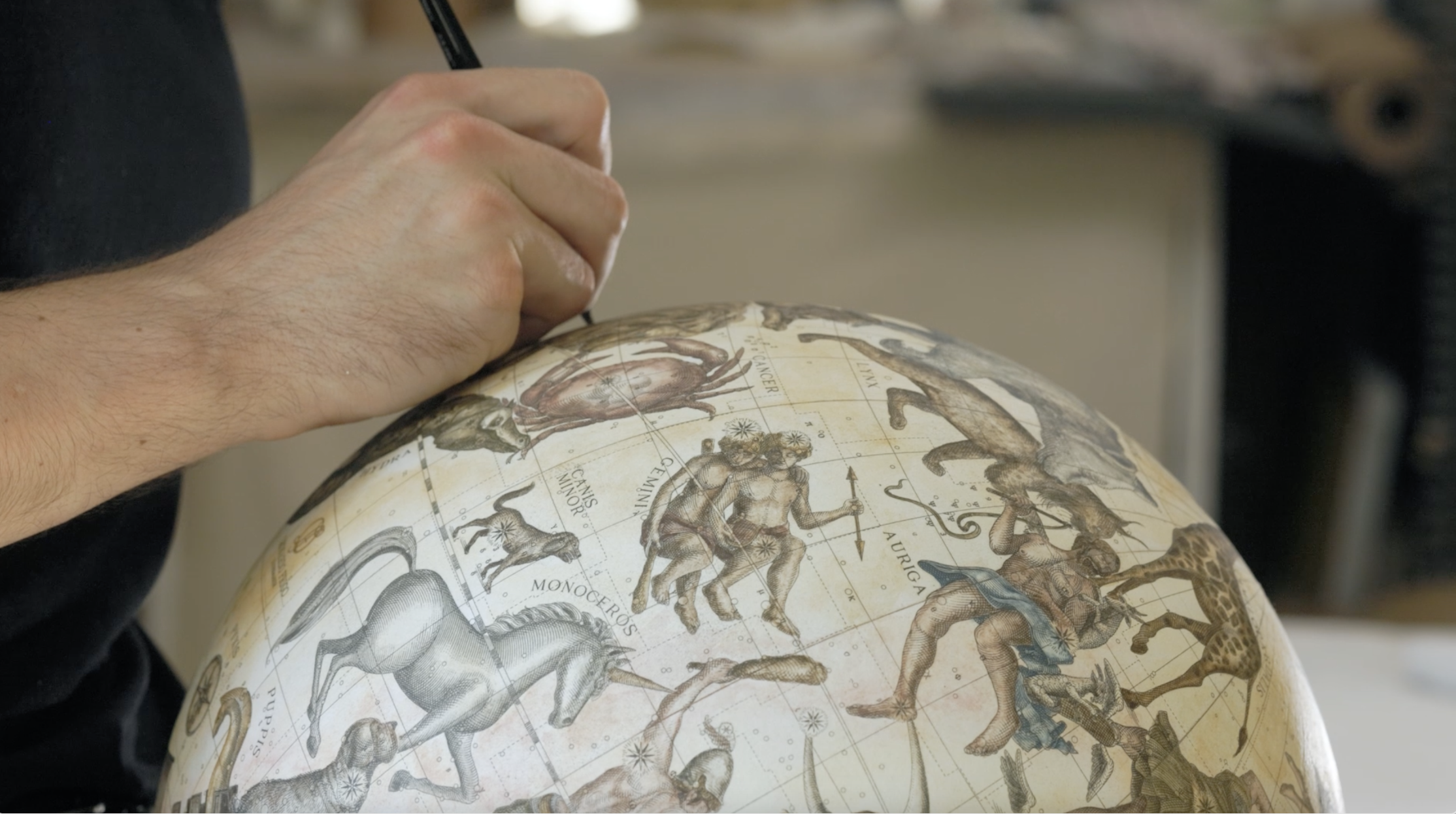
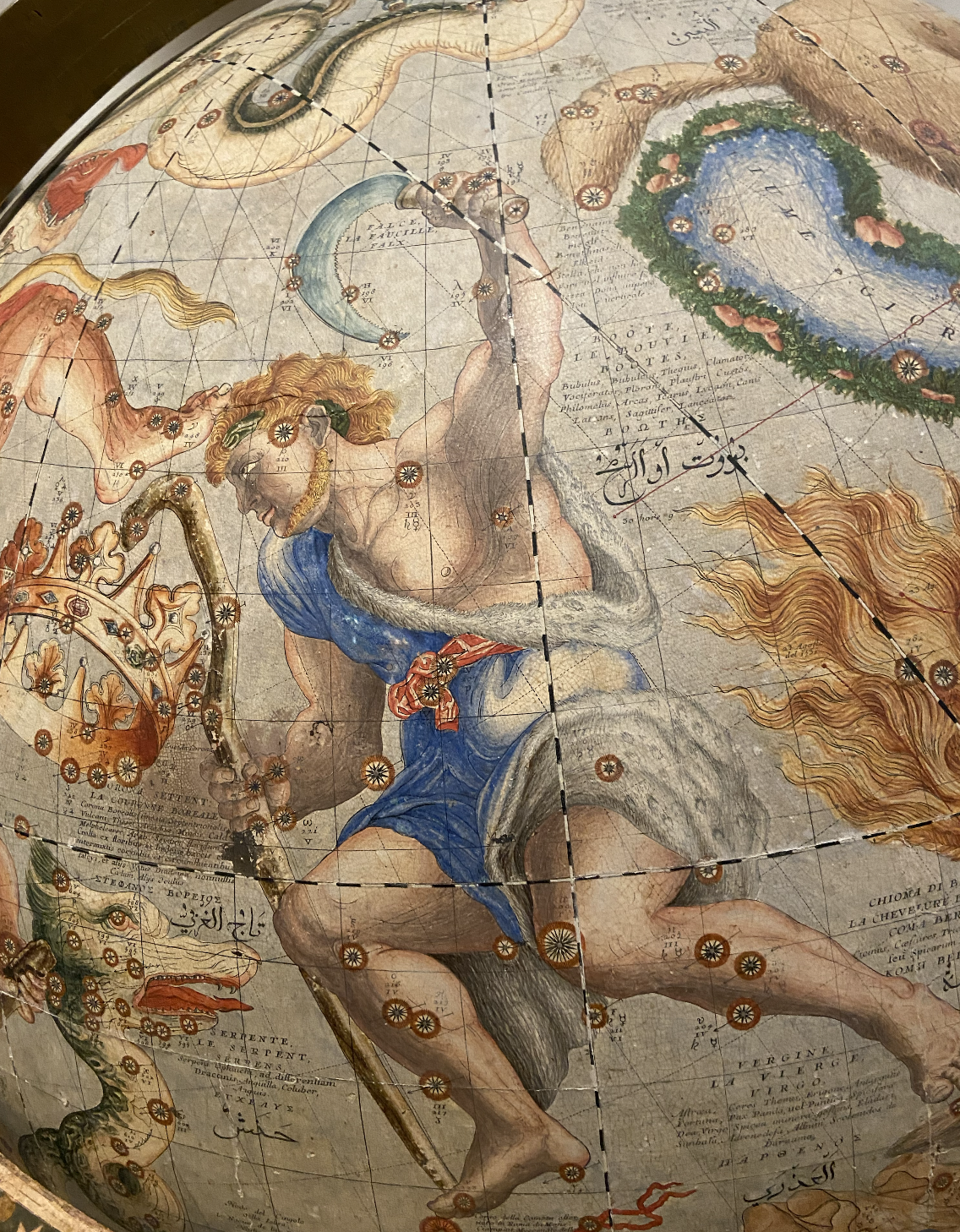
On a globe, constellations are usually represented by lines connecting the main stars, forming traditional shapes. Some also include artistic illustrations of mythological figures or animals associated with each constellation. These drawings visualize the stories behind them, although they aren’t used in scientific star charts.

Ways to Interpret a Celestial Globe
Constellations guide you when using a celestial globe, yet interpreting the sphere also involves understanding how the sky is represented on its surface. As already mentioned, the first step is to comprehend that the globe shows the sky from an external perspective; for instance, Orion's belt will appear mirrored. This reversal is intentional and helps maintain consistency with astronomical conventions.
The stars are usually marked with symbols or dots of different sizes that represent the star's magnitude, a measure of its brightness. The magnitude scale is reversed: lower numbers indicate brighter stars. A magnitude 1 star is therefore brighter than a magnitude 4 star. In most cases, brighter stars are represented by larger dots, while the fainter ones are defined by smaller dots. This visual hierarchy can help you understand their brightness at a glance.
The celestial globe also includes lines representing celestial coordinates. Right ascension is similar to longitude and is measured in hours, minutes, and seconds; declination is similar to latitude and is measured in degrees north or south of the celestial equator. These coordinates allow you to precisely locate any star, just as you would a city on a terrestrial globe.
Another essential element is the ecliptic, as the zodiacal constellations lie along this plane. The celestial equator is also marked, dividing the sky into the northern and southern hemispheres. Understanding these lines enables us to interpret the movement of the sky throughout the year.
Some celestial globes include additional features such as the Milky Way, star clusters, or nebulae. These are usually represented as shaded areas or symbols. While not all spheres include these details, they can provide a more complete understanding of the structure of the sky.
The View from the Terrestrial Perspective
When you observe the night sky from Earth, you’re inside the celestial sphere, so the stars appear in their true orientation, not inverted as on a sphere. To use a celestial globe effectively, you need to mentally reverse your perspective.
If you are in the Northern Hemisphere, you’ll see constellations such as Ursa Major, Cassiopeia, and Cygnus. The north celestial pole, near Polaris, is the point around which the stars appear to rotate; on the globe, this is situated at the top and surrounded by the northern constellations. If you are in the Southern Hemisphere, you will see constellations such as the Southern Cross, Centaurus, and Carina. The south celestial pole is the point around which the stars of the Southern Hemisphere rotate and is at the bottom.
Because the celestial globe shows the entire sky, it includes the stars visible from both hemispheres. But in reality, no observer can see the entire sky at once. Your horizon limits your view to half the celestial sphere. To simulate your local sky, you can rotate the globe so that your hemisphere is facing upward. Then imagine cutting the globe horizontally at your latitude. Everything above this imaginary plane represents the stars visible from your location.
This method explains why some constellations never rise or set, depending on where you live. In the Northern Hemisphere, the constellations near the north celestial pole are circumpolar, meaning they are always above the horizon. The same is true for the southern circumpolar constellations in the Southern Hemisphere.
By learning the differences between a terrestrial and a celestial globe, recognizing how star patterns are depicted, and understanding how to read star magnitude and celestial coordinates, we gradually built together a clearer picture of the heavens.
Whether you are a beginner in astronomy, someone who enjoys stargazing, or simply curious about how ancient observers mapped and understood the sky, a celestial globe offers a timeless and accessible way to explore the stars. It bridges the gap between historical sky lore and modern astronomical knowledge, allowing you to see the sky as past civilizations imagined it while also giving you the tools to read it with accuracy.
Related Topics
In a world filled with digital tools and apps, the celestial globe remains a physical, intuitive object that invites slow observation and discovery. Learn more about it here!
























.avif)