
The changing seasons are among the most familiar rhythms of life on Earth, yet their origin lies in a subtle astronomical mechanism: the tilt of our planet.
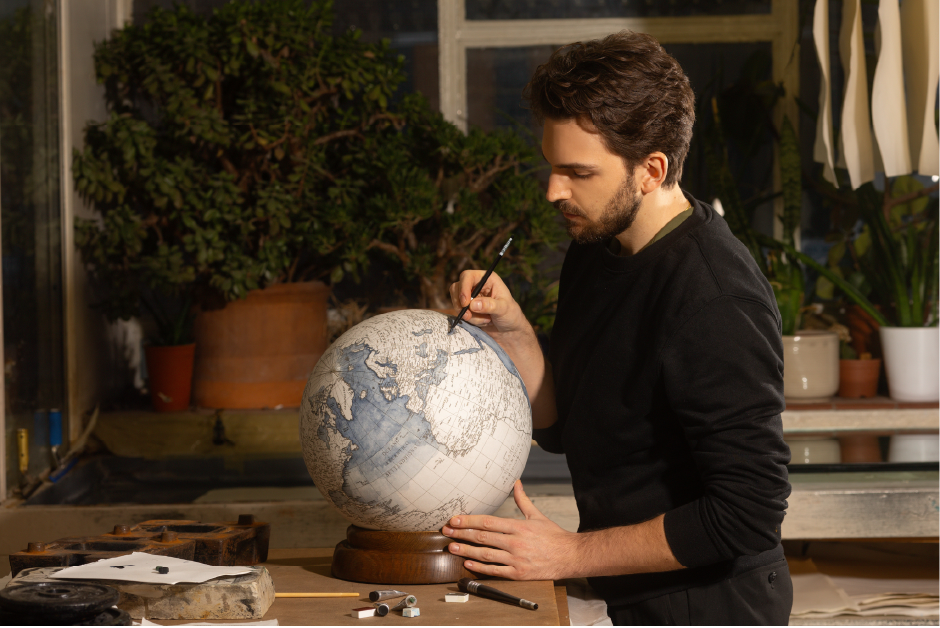
For a globe maker, this tilt is not an abstract idea, but a fundamental principle that must be translated into form.
Understanding why the seasons exist, what the tropics and solstices represent, and how the tilt of the Earth's axis governs everything, is essential both to appreciating our planet and to accurately portraying it in a handcrafted globe.
How the Earth’s Tilt Creates the Seasons
The seasons are determined by the tilt of the Earth's axis: the Earth doesn’t rotate vertically around the Sun; its axis is tilted by approximately 23.5 degrees. As our planet travels its elliptical orbit, this tilt remains constant, meaning that, throughout the year, different parts of the planet tilt toward or away from the Sun.
To better understand how this works, we can say that summer occurs when the Northern Hemisphere tilts toward the Sun, receiving more direct sunlight and longer days; at the same time, the Southern Hemisphere tilts in the opposite direction, receiving less sunlight and experiencing shorter days, giving rise to winter. Six months later, the situation reverses.
In reality, the Earth is slightly closer to the Sun during winter in the Northern Hemisphere, and what matters is the angle at which sunlight strikes the surface. A steeper angle concentrates energy, and a shallower angle disperses it. This difference in solar intensity is what warms or cools the seasons.
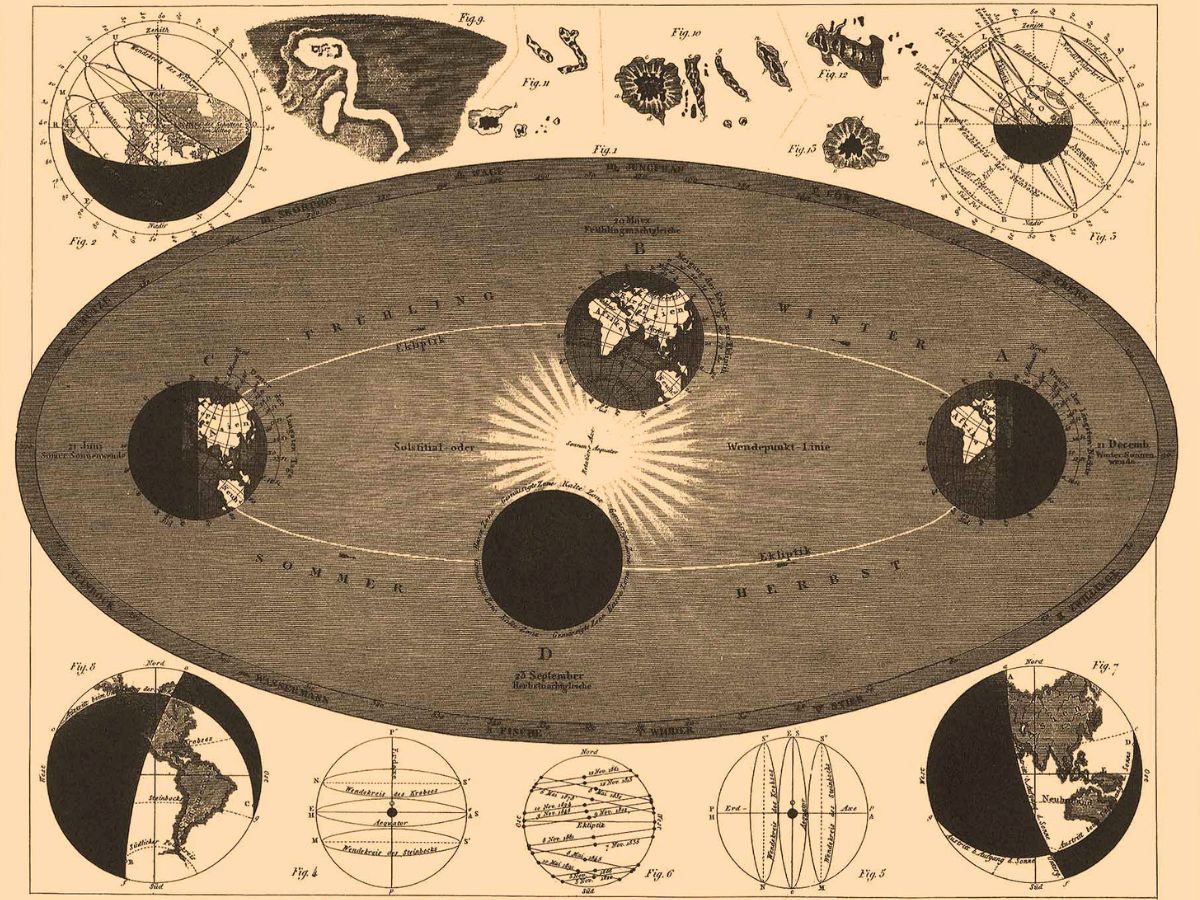
We can also say that the Earth's rotation axis is the architect of seasonality. Without it, every place on the globe would have roughly the same climate year-round, with only slight variations due to latitude.
The tilt creates contrast between hemispheres, latitudes, and different times of year, which also explains why the Sun's path across the sky varies.
In summer, the Sun rises higher, tracing a longer arc and providing more hours of daylight; while in winter, it remains low on the horizon, traveling a shorter path.
This variable solar arc is the visual representation of the tilt, which does not remain static over geological time. It fluctuates slightly over tens of thousands of years, contributing to long-term climate cycles.
But from a historical perspective, it is stable enough to define the seasons with extraordinary regularity.
Solstices and Equinoxes: The Turning Points of the Year
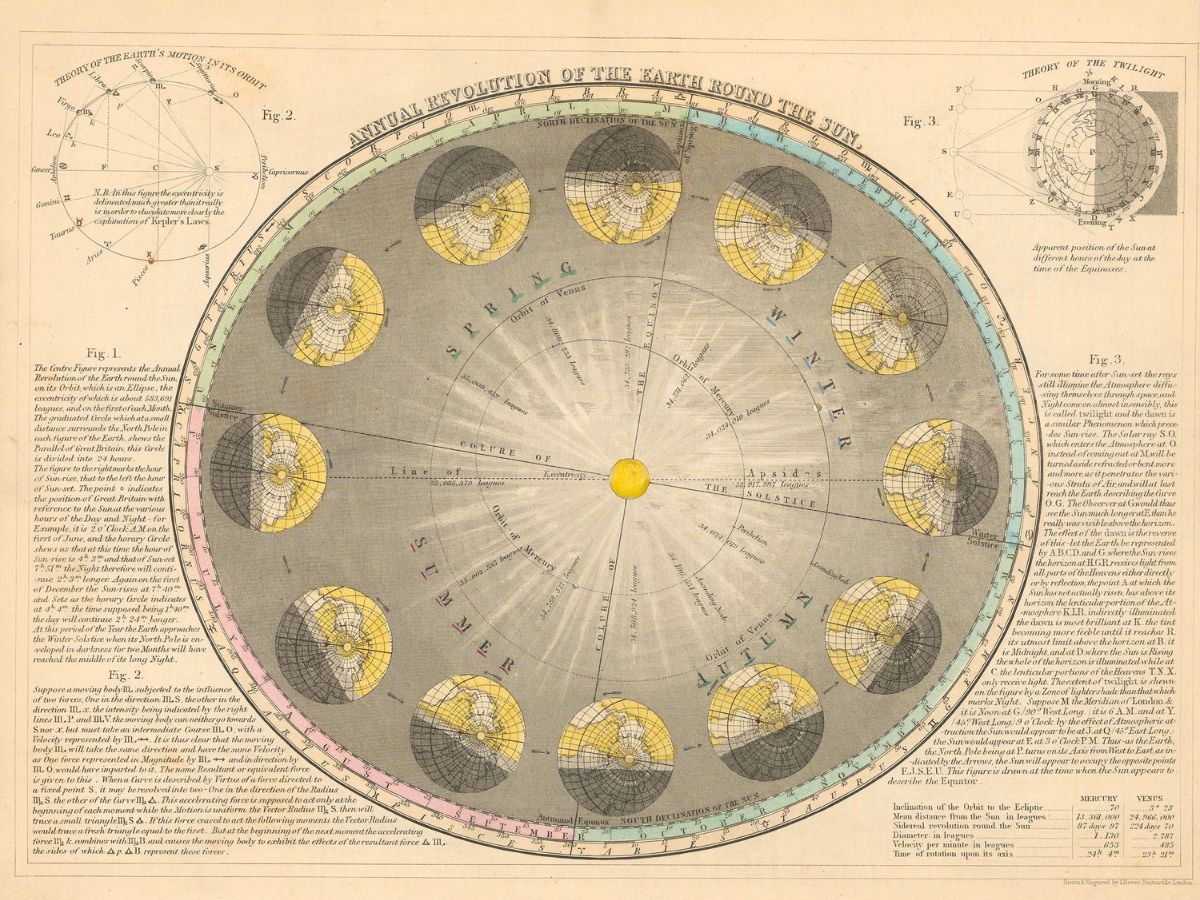
Twice a year, the Earth reaches an extreme point with the solstices, points at which one hemisphere is most tilted toward or away from the Sun, determining the longest and shortest days of the year.
The June solstice brings the Northern Hemisphere its longest day, as the Sun is directly above the Tropic of Cancer, the northernmost latitude at which it can appear directly overhead. This marks the height of summer in the north and winter in the south.
Six months later, the December solstice reverses course, with the Sun above the Tropic of Capricorn, so the Northern Hemisphere experiences its shortest day, while the Southern Hemisphere enjoys its longest.
Between these events stand the equinoxes: two moments when the Earth's axis is perpendicular to the Sun. These are quite interesting, as day and night become nearly equal across the globe as the Sun crosses the celestial equator. They mark the transition between spring and autumn, revealing the balance point of the Earth's annual cycle.
The March equinox marks the beginning of spring in the Northern Hemisphere and autumn in the Southern Hemisphere.
The September equinox reverses the roles. These transitions are smoother than the solstices, but they are equally important in understanding the rhythm of the year.
On a globe, the equinoxes are represented by the relationship between the equator, the axis, and the Sun’s position. They remind us that the seasons are a continuous cycle, not a set of isolated events.
Mapping the Sun: Tropics, Latitude, and the Structure of Light
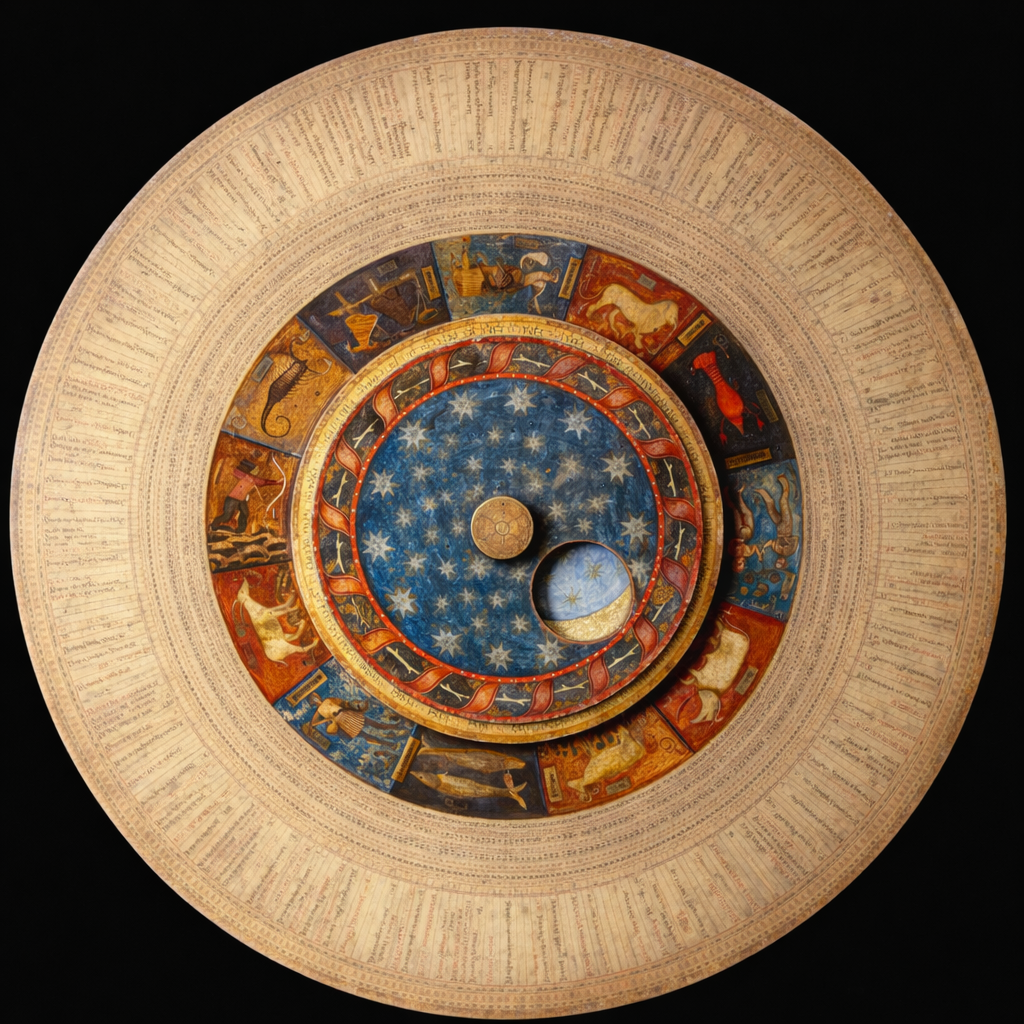
Solstices and equinoxes form the backbone of the seasonal year together. Civilizations have observed them for millennia, using them as a guide for agriculture, navigation, and rituals. Globe makers consider them geometric reference points, as they map the rhythm of sunlight that shapes life on Earth.
The Sun's highest positions during the solstices don't vanish once the moment passes; instead, each one marks a specific, enduring line on Earth. These lines form the structure of the tropical zone and show how the tilt of the Earth's axis shapes the planet not only in time, but also in space.
The Tropics of Cancer and Capricorn are two of the most significant lines because they reflect the tilt of the Earth's axis: latitudes mark the farthest points where the Sun can appear directly overhead at noon.
The tropics are defined by heat and the sun's behaviour. Here, the sun can reach its zenith at least once a year; outside this zone, it never does. This distinction influences climate, ecosystems, and human cultures.
Near the equator, seasonal temperature variations are minimal because the sun's angle remains high year-round. Seasons, however, are often defined by precipitation patterns.
As one moves toward the edges of the tropics, the influence of the Earth's tilt becomes more pronounced, and seasonal variations in light and temperature intensify.
Latitude, on the other hand, determines how intensely we perceive the seasons. Near the equator, the angle of incidence of the sun's rays varies little and temperatures remain relatively stable, while in the mid-latitudes, where most of the world's population lives, the tilt of the Earth's axis produces marked seasonal variations.
In contrast, near the poles, the effect becomes extreme: months of continuous summer light and months of pitch darkness in winter.
These variations are crucial if we want to accurately represent them on a bespoke globe, as they help show how sunlight interacts with the Earth's surface.
A Globe Maker’s Perspective: Translating Astronomy into Craft
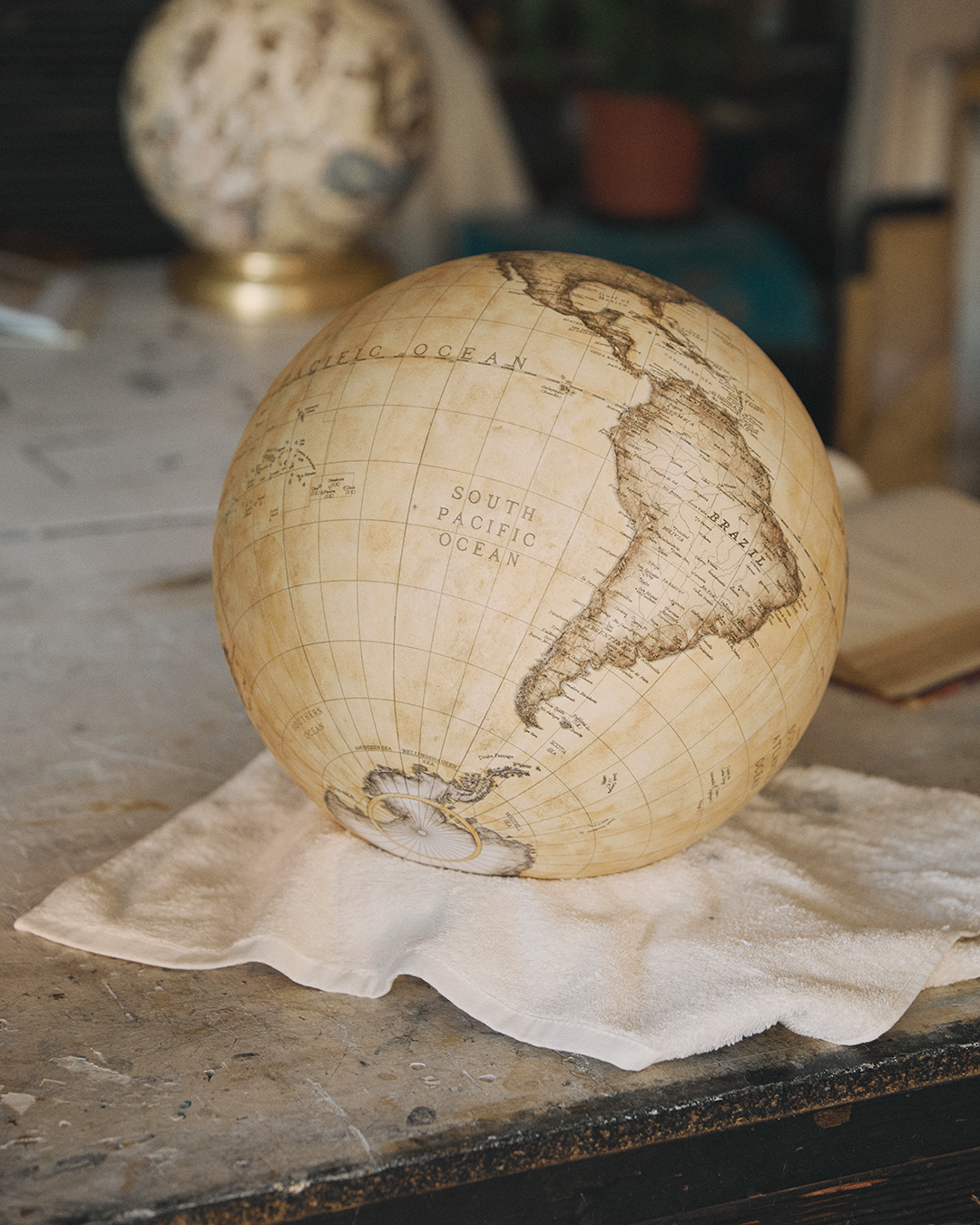
For a globe maker, the seasons are essential because every line, angle, and axis of a globe translates celestial mechanics into physical form. The axial tilt is the most crucial element: a vertical globe wouldn’t accurately represent the shape of our Earth nor the cause of the seasons.
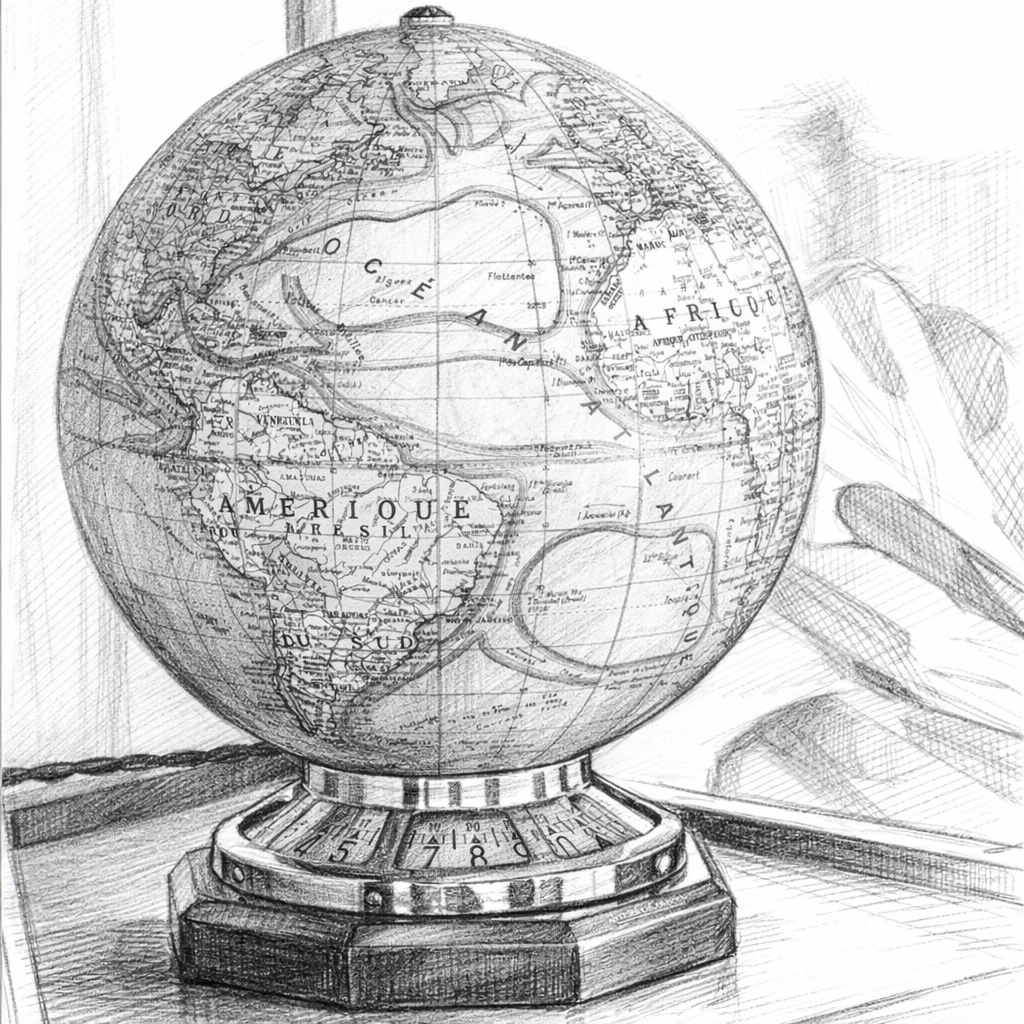
The 23.5° tilt must be integrated into the base or stand, allowing the observer to see how the Earth tilts as it orbits the Sun.
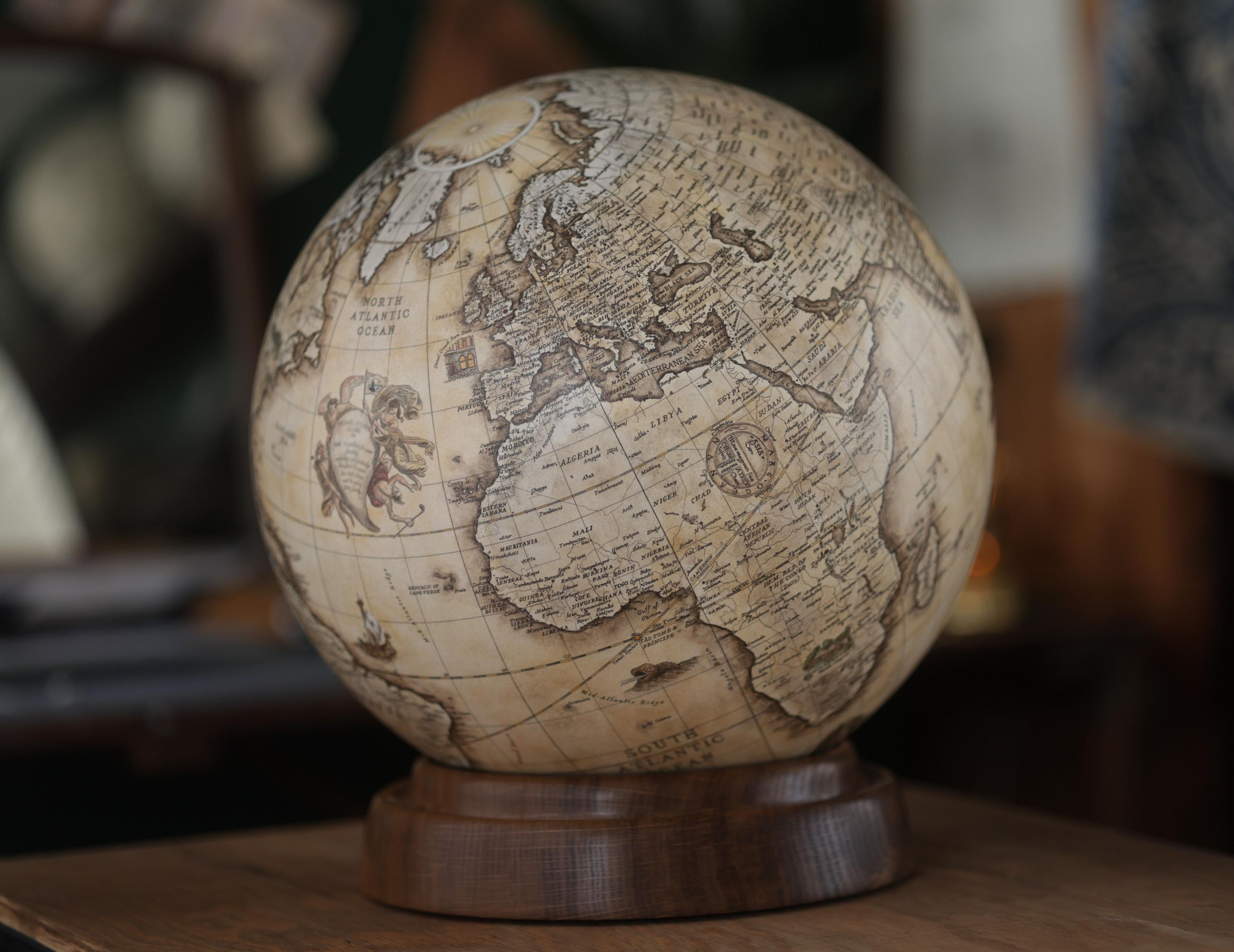
The tropics, equator, and polar circles must be precisely positioned, as they mark the limits of the sunlight’s range. When an observer sees the Tropic of Cancer, they should understand that this is where the Sun is at its zenith during the June solstice. When they see the Arctic Circle, they should recognize the limit of the midnight sun.
The solstices and equinoxes can also be illustrated through the globe's orientation. Some globes include diagrams showing the Earth's position at different points in its orbit, helping the curious visualize how the tilt interacts with the Sun's rays.
Others rely solely on physical tilt, trusting the viewer to intuitively understand the science behind it.
The challenge for a craftsman is balancing scientific accuracy with aesthetic clarity. A globe must be both beautiful and truthful. The seasons provide a narrative structure that guides this balance, reminding the craftsman that the Earth is not static but dynamic, and that a globe is a snapshot of a world in motion.
A Globe in Motion: Understanding the Seasons Through Form
The beauty of the seasons lies in their rhythm, a constant and harmonious movement. The Earth rotates daily on its axis while orbiting the Sun each year, always maintaining its constant tilt. This combination of rotation, revolution, and tilt creates the ever-changing interplay of light and shadow that defines our perception of time.
A globe embodies this and much more. It freezes the planet in a single, eternal instant, alluding to the universal movement that shapes everything. When the tilt suggests the solstices, the tropics indicate the path of the Sun, and the polar circles whisper of long nights and endless days, understanding the seasons deepens our appreciation for the sphere as an object. It transforms from a simple map into a model of Earth's dance around that warm orb, the Sun.
It's incredible to think how seasons arise from a simple inclination, yet, they shape climates, ecosystems, cultures, and daily life, while the tropics and solstices mark the limits of sunlight's reach, and the equinoxes balance day and night. Together, they form a cycle that guided humanity before humans even came into being.
As a globe maker, I admit that these concepts are as fundamental as the art that accompanies my journey. Building a globe means translating the rotations of the heavens from an abstract to a tangible form, allowing anyone who holds it in their hands to understand the Earth's rhythms.
Related Topics
If this topic sparked your curiosity, explore more wonders of the universe here. I’ll meet you there!












.avif)