Inside the Studio of a London Globe Maker: A Visit from Venice in Peril
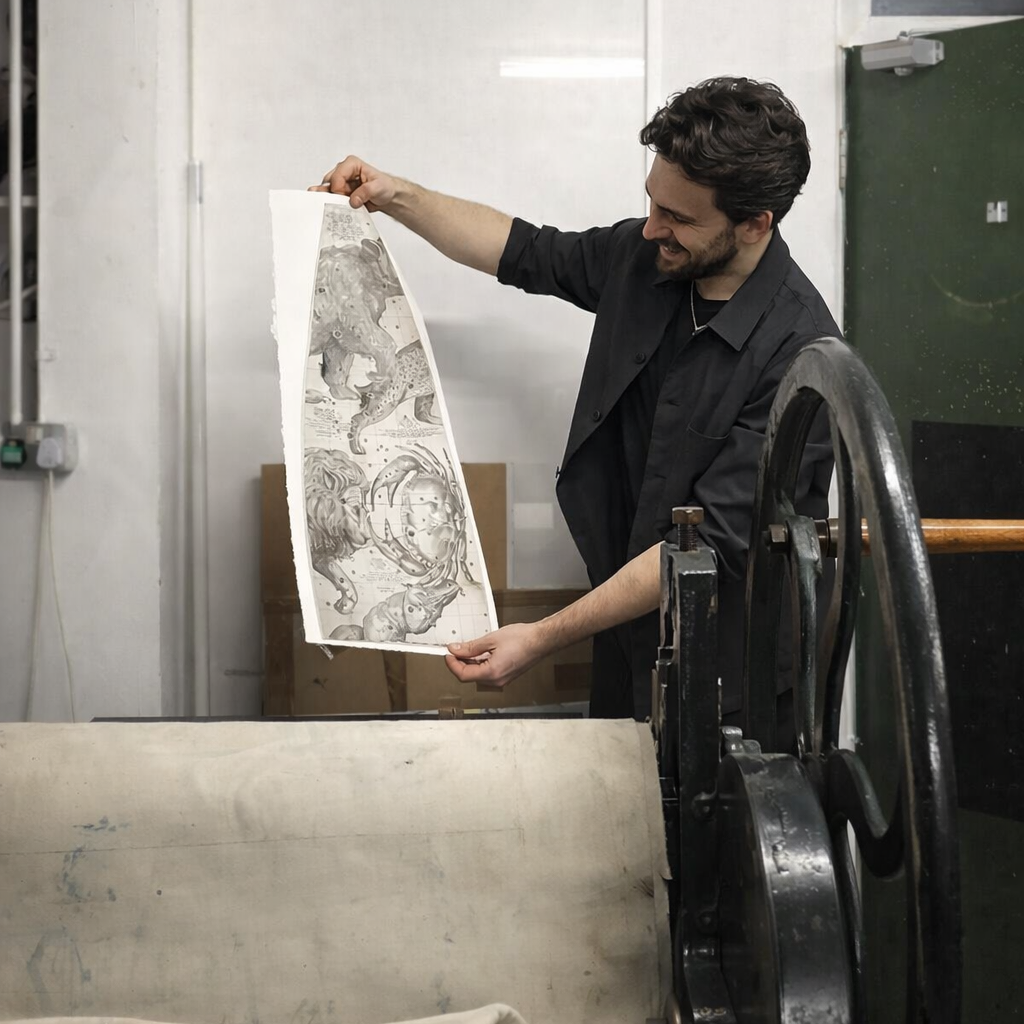
When Venice in Peril’s crew stepped into my London studio, the atmosphere shifted in a way I always recognise when Venetians, or those passionate about Venice, enter the space. There was a certain attention for craft, and an unspoken understanding that what we were about to discuss wasn’t simply technique, but roots.
As a Venetian globe maker working abroad, welcoming them felt like reconnecting two worlds: the historical globes of my city and the handmade globes I create myself today. Their visit turned into a shared reflection on the fragility of cultural memory, the importance of restoration, and the enduring legacy of Venetian cartography.
Venice in Peril's on-going mission
Venice in Peril is an international charity devoted to protecting the artistic and architectural heritage of Venice. For decades, the organisation has supported restoration projects across the city, from churches and sculptures to manuscripts, scientific instruments, and architectural details that define the Venetian background. Their work is essential in a place where beauty is abundant but constantly threatened by time and environmental change.
The charity funds conservation, research, and educational initiatives that help preserve Venice’s cultural identity. One of their most significant recent projects is the restoration of the terrestrial globe created by the 17th‑century cartographer Vincenzo Coronelli, housed at the Marciana's Library (Biblioteca Marciana).
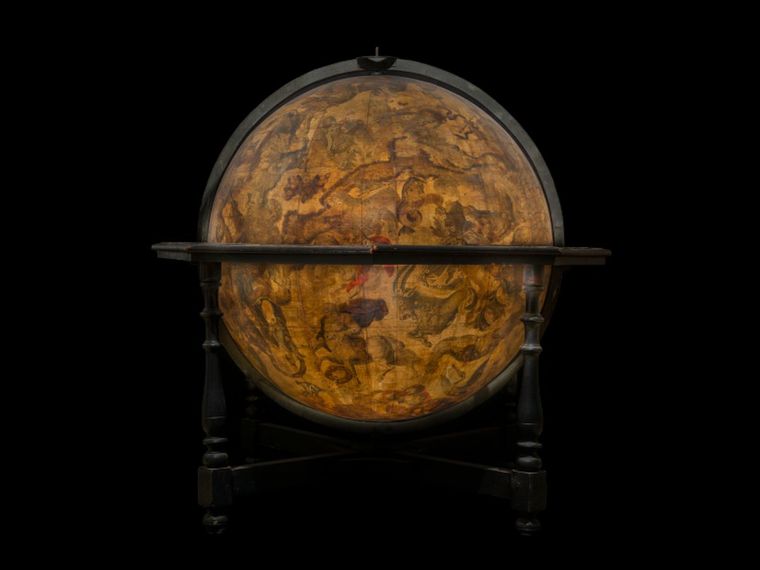
Within this magnificent library, situated on the Piazzetta San Marco, lies one of the world’s most significant collections of historical globes. Among them are the monumental works of Coronelli, masterpieces that combine scientific knowledge, artistic imagination, and extraordinary craftsmanship. Over the centuries, these globes have inevitably shown the marks of time, with pigments fading, paper growing fragile, and structural elements beginning to weaken.
The restoration supported by Venice in Peril aims to stabilise and preserve these globes so they can continue to be studied and admired. Restoring a historical globe is a delicate process that requires deep knowledge of materials, historical techniques, and the intentions of the original maker. This is because every line, every cartouche, every decorative flourish carries meaning.
For me, as a contemporary artisan globe maker, seeing Coronelli’s work restored is profoundly inspiring. It reminds us that globes are not just scientific instruments; they are cultural artefacts that reflect the worldview of their time.
Coronelli and the value of Historical Globes
Born in the 17th century, Vincenzo Coronelli was a Venetian Franciscan friar, cosmographer, and one of the most celebrated globe makers in history. His spheres were, and still are, admired throughout Europe for their precision, artistry, and monumental scale. He created bespoke globes for royalty, scholars, and institutions, including the famous pair commissioned by Louis XIV for the palace at Marly.
Coronelli’s career stands at the intersection of science and art. His creations are filled with detailed cartography, mythological records, and finely engraved illustrations. They represent the world as it was understood in the 17th century, an era defined by exploration, curiosity, and expanding horizons. For Venetian artisans like myself, Coronelli is not simply a historical figure, but a symbol of the city’s long tradition of craftsmanship.
Historical globes hold a unique place in the history of knowledge since they embody scientific understanding, artistic expression, and cultural identity all at once. To preserve them, is to preserve the stories, discoveries, and imagination of past generations. Paper gores can detach, pigments can fade, and wooden spheres can warp; without careful conservation, these objects risk disappearing.
This is why the work of Venice in Peril’s charity is so vital. Its support ensures that masterpieces like Biblioteca Marciana’s globes remain accessible to scholars, artisans, and the public. Restoring them means safeguarding a part of Venice’s intellectual and artistic legacy.
Welcoming the Charity to my globe‑making studio
As an artisan globe maker in London, I hoped Venice in Peril’s visit to my studio would allow them to follow the entire process of creating a handmade globe today, using many of the same traditional techniques that Coronelli himself would have recognised.
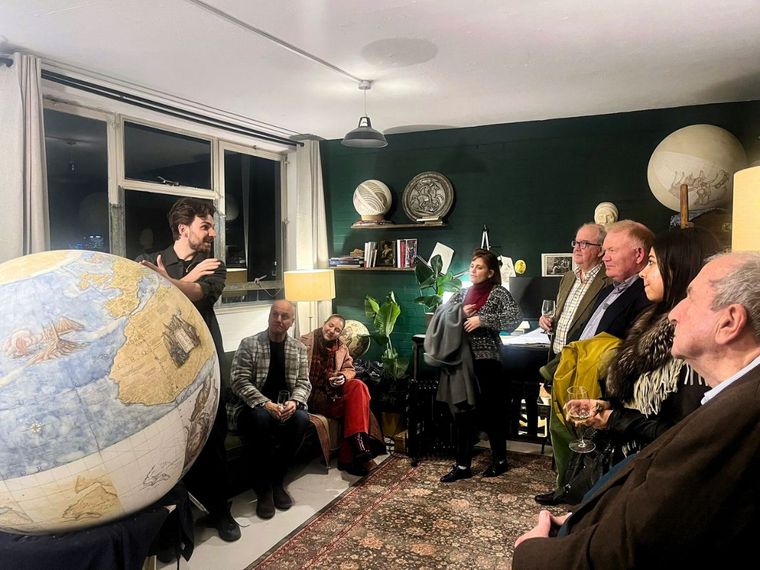
Ink, paper, and the soft murmur of tools filled the studio, surrounded by globes progressing through their different stages. A few were modest and finely detailed, others more expansive, but each one was poised for the work still to come.
The group gathered around the etching press as I began to demonstrate the printing process, the first step in bringing a globe to life. I began by showing them the copper plates I use to print the map gores. Each plate is engraved by hand, a slow and meditative process that demands precision and patience. The carved lines must be clean and consistent because once printed, they will form the surface of the globe.
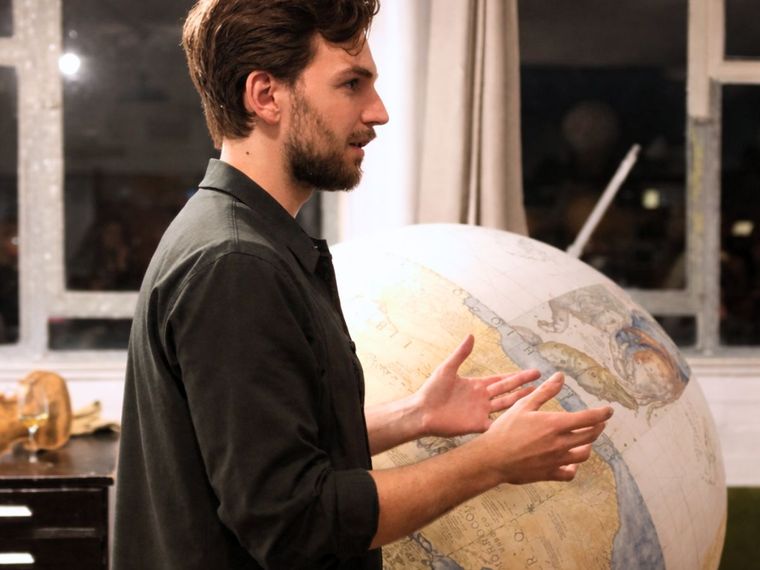
Using a traditional etching press, I inked the plate, wiped it carefully, and placed a sheet of moistened paper on top. As the press rolled over the plate, the guests leaned in, watching the moment when the map emerged crisp, detailed, and full of character. This centuries‑old technique connects my work directly to the artisans of the past.
How a handmade globe is created
After printing, the paper gores must be cut, shaped, and applied to a sphere. I explained how each gore is positioned with precision so that the longitude and latitude lines align perfectly: the process requires both technical skill and a steady hand. Once the gores are applied, the globe is left to dry before being coloured.
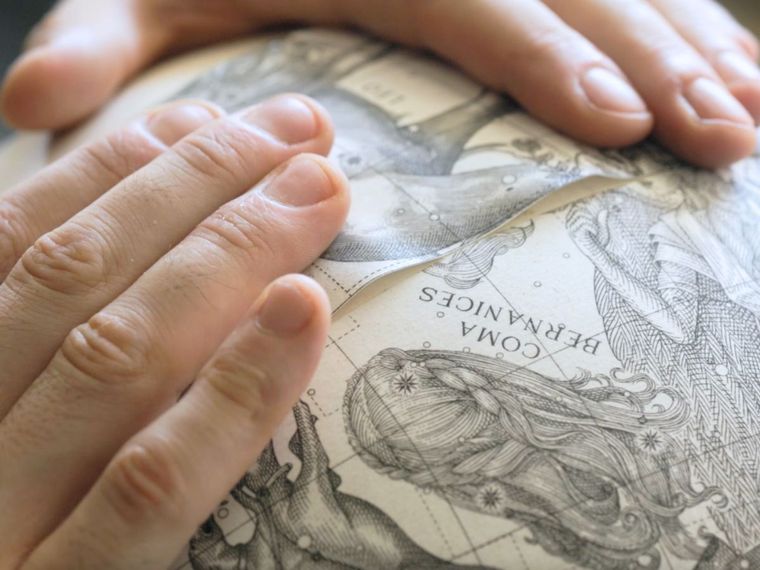
I use watercolours and natural pigments, building layers slowly to achieve depth and luminosity. Decorative elements such as cartouches and illustrations are added with fine brushes. Ultimately, the globe is varnished and mounted on a stand, completing its transformation from raw materials into a finished object. As I described each step, the guests asked brilliant questions about the craft, the tools, and the historical techniques. Their curiosity made the demonstration feel like a shared exploration of Venetian cartography and traditional globe making.
During the visit, we also discussed the possibilities of creating bespoke globes for collectors, institutions, and private clients. Handmade globes can be personalised in countless ways, from customised cartouches and inscriptions, to illustrations inspired by historical maps or references to family history and personal journeys.
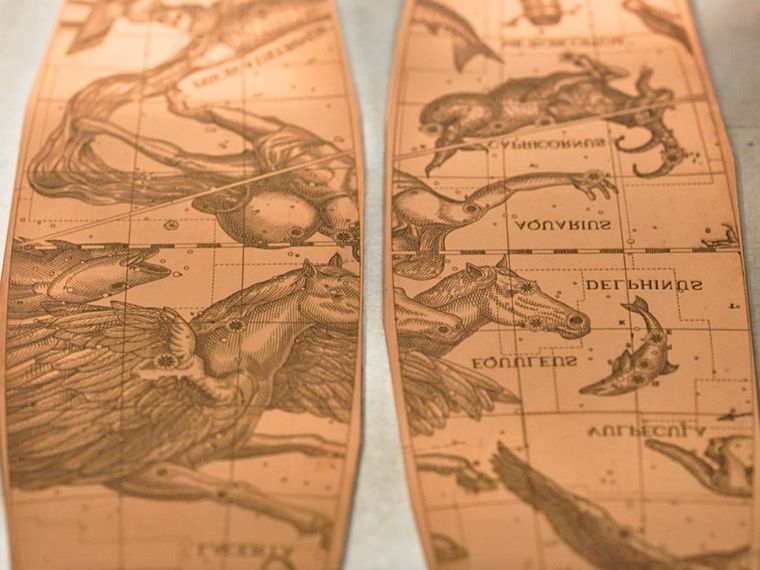
Some clients request globes inspired by medieval cosmography, such as my Dante Globe project, which reinterprets the structure of the universe described in the Divine Comedy. Others prefer classical Venetian globes that echo the style of Coronelli. Each commission becomes a collaboration between crafter and collector, a way of creating a unique object that blends tradition with personal meaning.
Supporting the preservation of Venetian heritage
As the visit drew to a close, we returned to the reason that brought Venice in Peril to my studio: the shared commitment to preserving Venetian heritage. Being Venetian, I feel a deep responsibility to support initiatives that protect the city’s cultural legacy. Venice is a living archive of art, science, craftsmanship, and history.
The restoration of historical globes, like those of Coronelli, ensures that future generations can continue to learn from them. My collaboration with Venice in Peril is a way of giving back to the city that shaped me. Through my work as an artisan globe maker in London, I try to keep alive the traditions of Venetian cartography and traditional globe making. And through their work, Venice in Peril ensures that the masterpieces of the past remain part of our shared future.
Their visit reminded me that craftsmanship and conservation are two sides of the same mission: to honour what we have inherited and to pass it on with care.
Related Topics
Want to know more? Read about my techniques and studio work here!