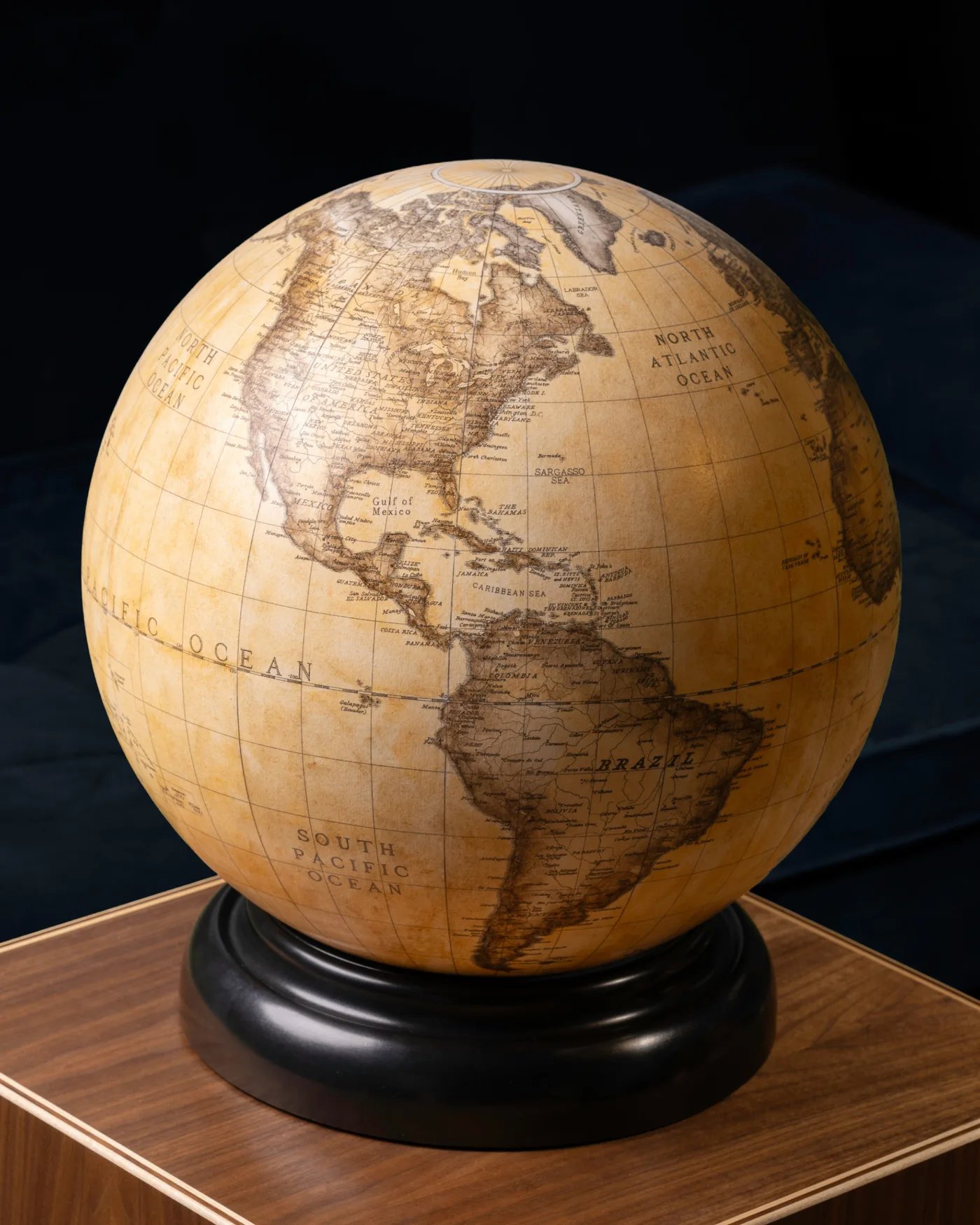
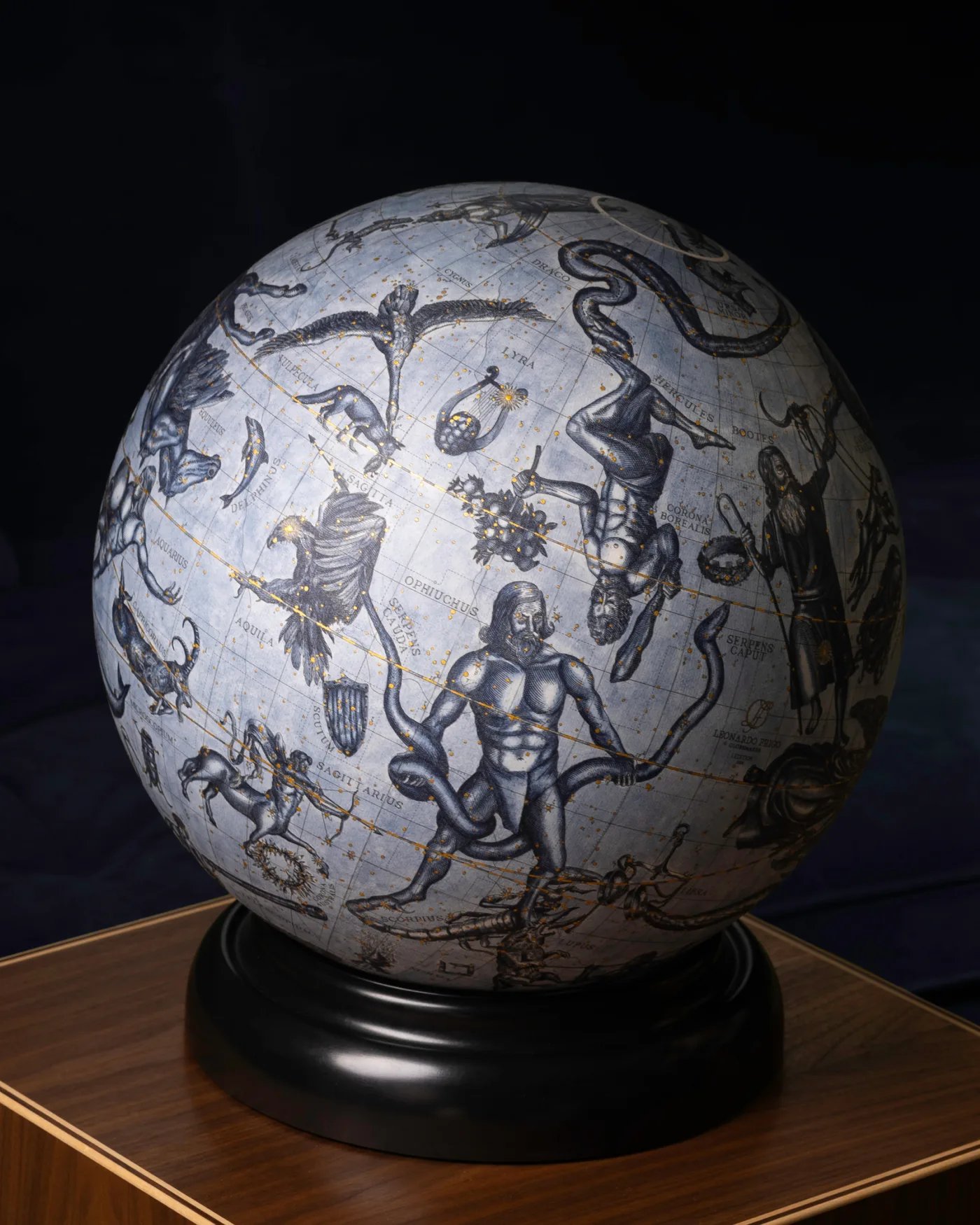
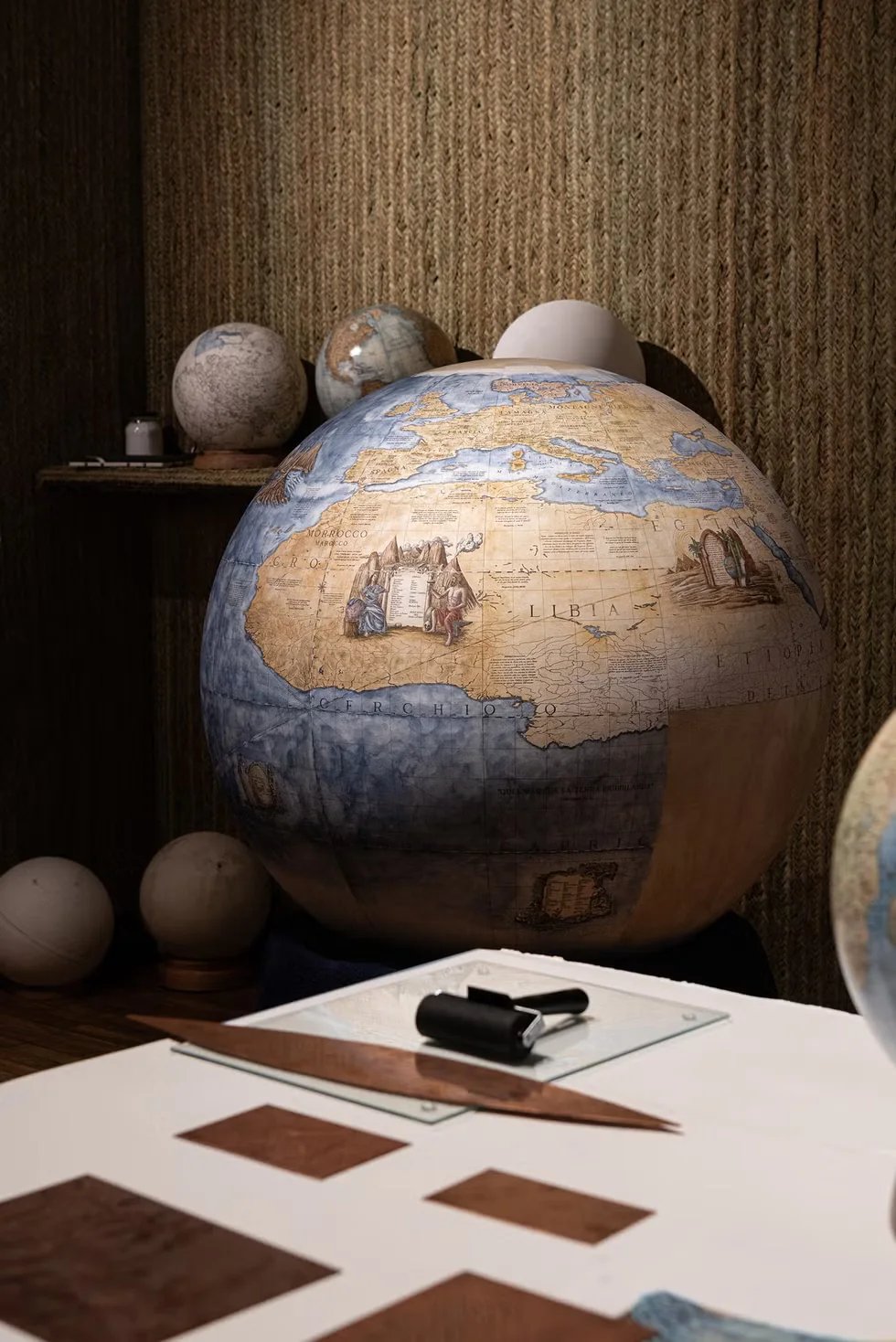
Inside a Globe Maker’s Workshop at the Poldi Pezzoli Museum
On 21 February 2026, I arrived at the Poldi Pezzoli Museum before its doors opened, carrying with me the familiar mixture of anticipation and silent concentration that always precedes a workshop. Globe making is a slow and patient art, yet when it’s shared, it radiates a remarkable lively energy.
Ready to reveal the secrets of my craft, this session, part of the “A Regola d’Arte” series organised by the Fondaione Cologni celebrating Italian artisanal excellence, had sold out weeks earlier. The museum halls, usually silent at that early hour, already seemed to vibrate with the promise of eager hands prepared to cut, glue, paint, and, above all, discover.
As I prepared the copper plates, the wooden spheres, the Fabriano paper, and the pigments, I thought back to a question I’d been asked during a recent interview with “Il Giorno” newspaper: «Has being Leonardo, as well as Frigo, sealed your fate as the only globe maker in the world today?» I smiled at the time, because the truth is more nuanced.
There are companies that produce globes industrially or semi‑industrially, even micro‑enterprises scattered across the world. My exceptionality lies elsewhere. I’m the only one left who makes handcrafted globes according to the great Venetian tradition brought to us by Vincenzo Coronelli, the cosmographer friar of the Serenissima Republic. That lineage is not a burden, but a compass of legacy and magnificent artistry.
Kicking Off Together
By the time the participants began to arrive– young people, adults, students, artisans, the simply curious, the room had transformed into a small atelier. The workshop would last 150 minutes, but I knew from experience that time behaves differently when one works with a sphere. It stretches and contracts, it becomes circular and loops back on itself. Many of the attendees had never touched an engraved plate or handled a spindle before, yet their enthusiasm was immediate and contagious.
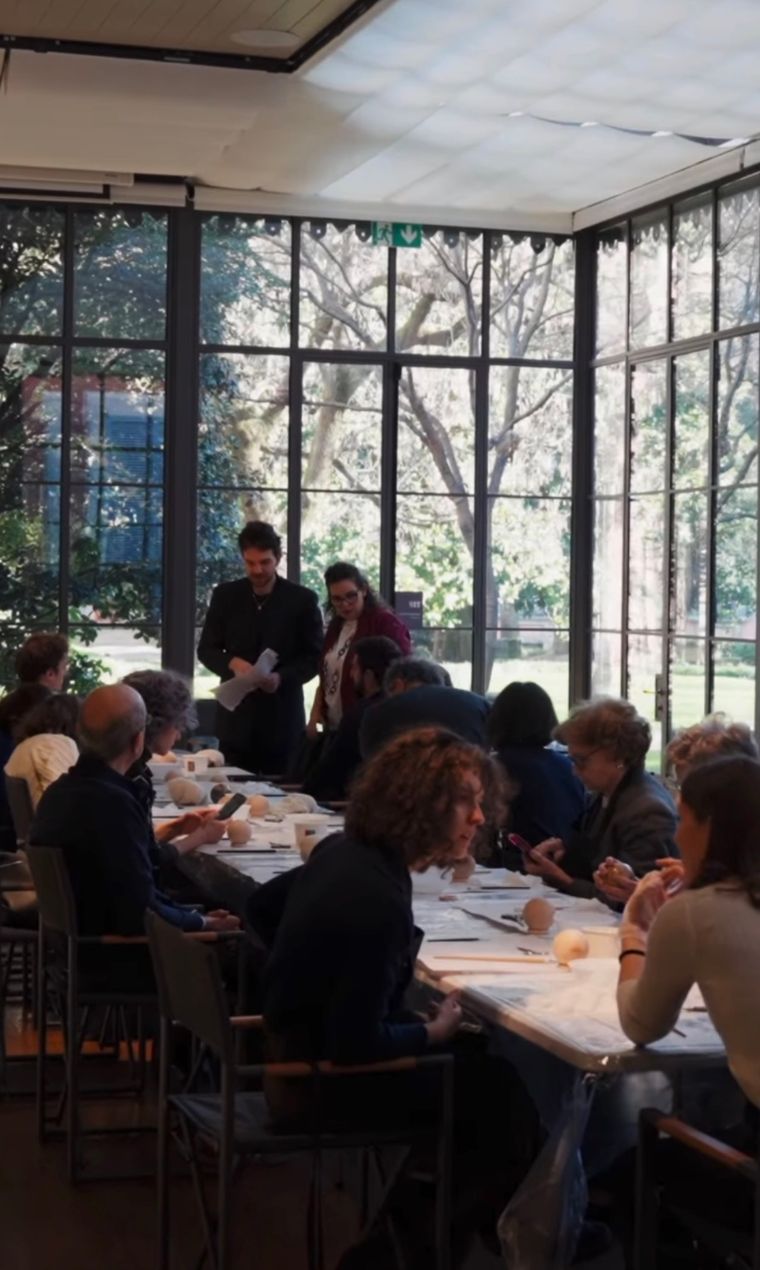
Workshop Museo Poldi Pezzoli (@museopoldipezzoli)
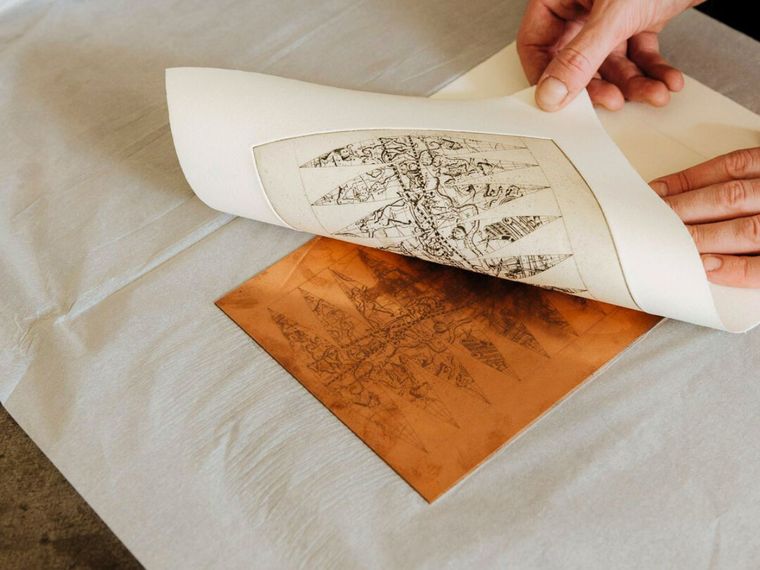
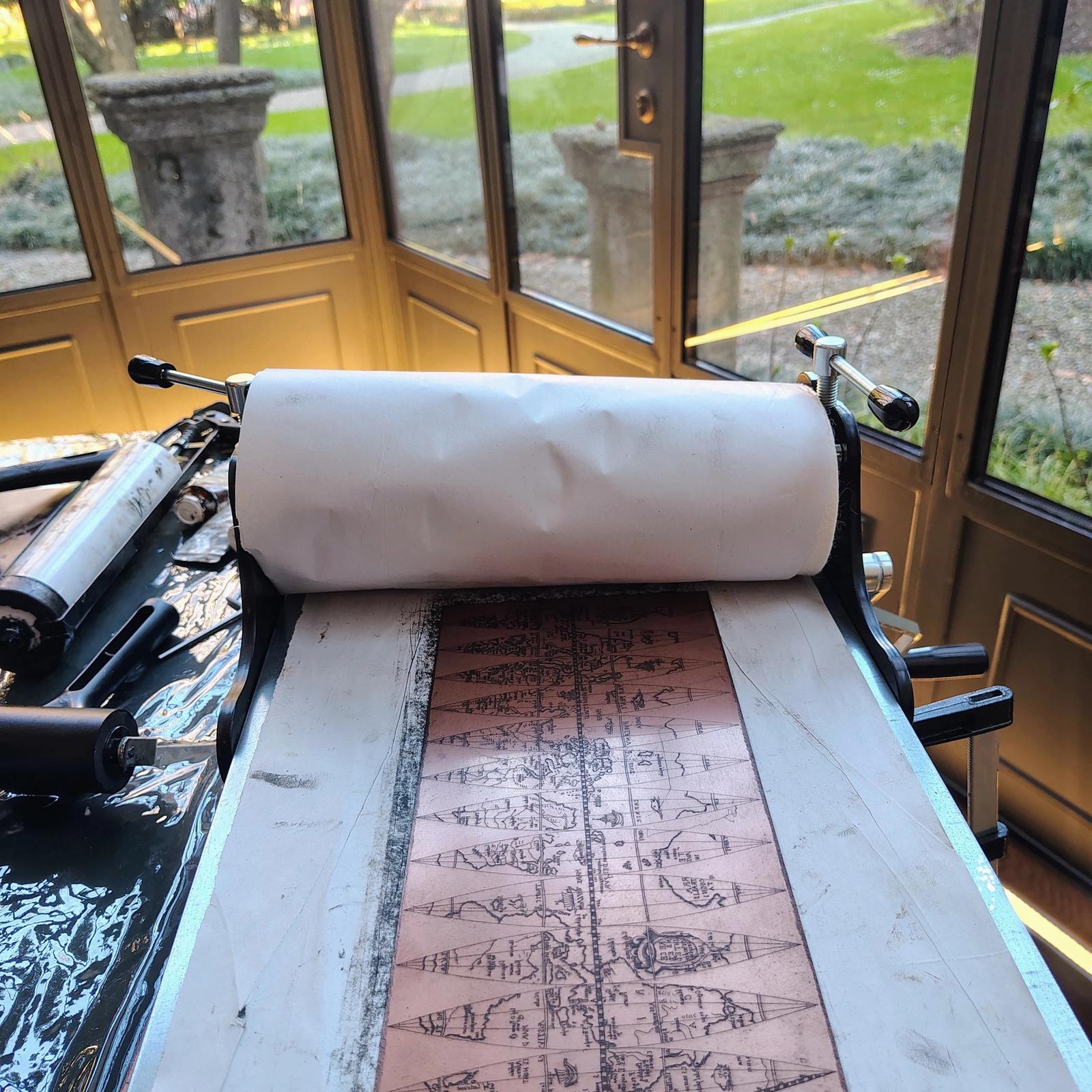
The moment when the engraved design first becomes visible
We began with the printing of the copper plates. The sound of the press, rhythmic and steady, filled the room with fervor. Each participant watched as the map emerged, reversed and delicate, carrying centuries of cartographic tradition. I explained how Coronelli himself would have used similar tools, how his globes, masterpieces of engineering, navigational instruments, and emblems of power, were intended for doges, princes, and even the well-known Louis XIV, also called the “Sun King”. Art combined with science, I told them, has always boasted a genius.
Coronelli’s Shadow and Light
As we worked, I shared the story of the two monumental globes Coronelli created for the Sun King, celestial and terrestrial, four meters in diameter. They had disappeared for a time, only to reappear recently in the Department of Maps and Plans of the Bibliothèque Nationale de France in Paris. I still remember the first time I saw them, standing before their vast surfaces, overwhelmed by their precision and their poetry.
Commissioned by Cardinal Cesare d’Estrées, a patron who understood the value of such objects. Even for a contemporary globe maker, I told the group, financial resources remain essential. Patronage, in its modern forms, still shapes what can be created.
Someone asked me how I’d begun this journey. I recounted the origins of my story: born in Asiago, studying Art Restoration at the International University of Art in Venice, and discovering the Coronelli globes preserved at the Marciana Library. They became objects of desire, obsessions almost, guiding me toward a craft that I had not yet imagined for myself.
Music, Dante, and the Shape of the World
I really loved the interactions with the people at the workshop: I also had the chance to talk about my relationship with music that predates my career as a globemaker. I explained how, at a certain point, I had stopped playing but began painting musical instruments instead. Embellishing with ink thirty‑three violins and a cello, mirroring the thirty‑four cantos of Dante’s Inferno.
Dante captivated me through Ulysses, the hero of the mad flight, the seeker of knowledge who sails beyond the limits. Dante the geographer, who narrates the King of Ithaca heading toward the unknown, astonished me. His measurements of the Earth’s circumference were imprecise, but his vision was immense.
When asked how a globe maker avoids such errors, I shared my own anchor: Coronelli’s Epitome Cosmografica, a theoretical and practical synthesis, a manual for understanding how to build a globe. «It’s quite literally my Bible,» I said, and I meant it.
Hands at Work
The workshop progressed from printing to cutting. My students carefully trimmed the spindles, aligning coastlines and tracing meridians, while discovering how the world must be divided before it can be reassembled. Then came the gluing, the moment when the flat becomes curved, when the map begins to embrace the sphere. The wooden globes, covered with layers of treated plaster, slowly transformed under their hands.
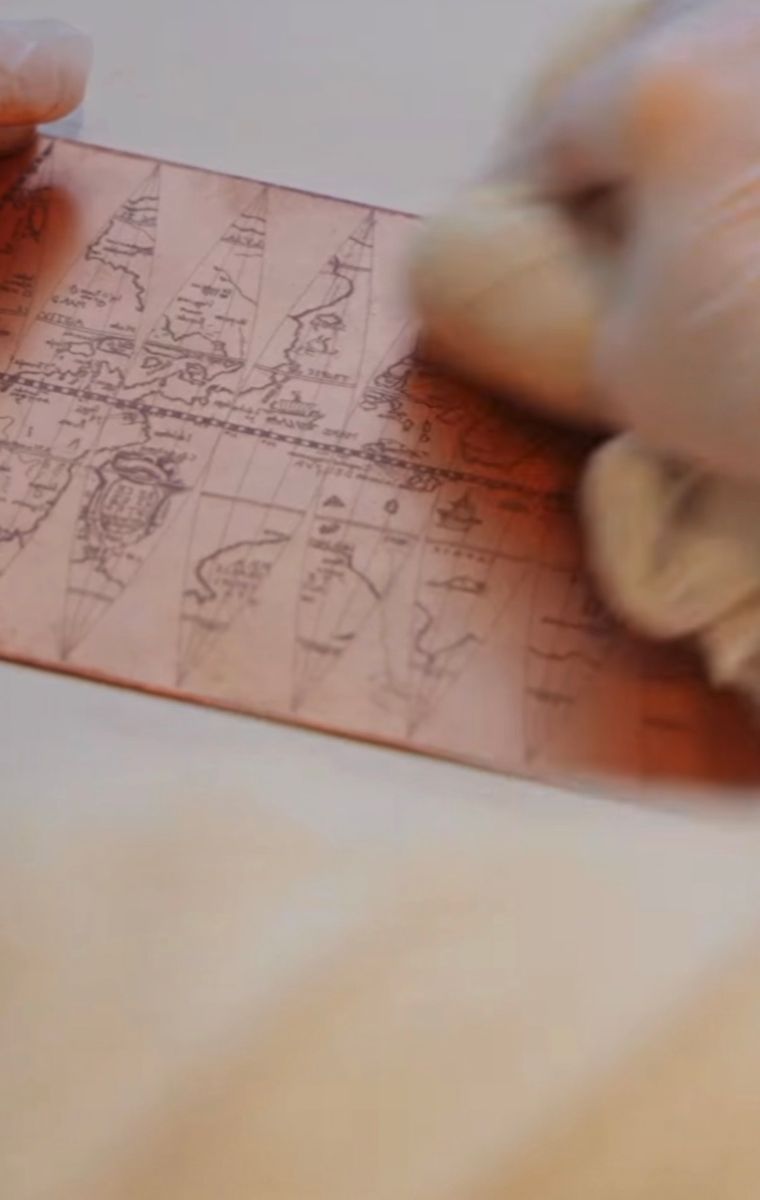
Copper Plate Etching
Finally, we reached the painting stage. Watercolors, delicate and transparent, allowed each person to add their own interpretation, their own story. Some chose soft tones, others bold contrasts. I moved from table to table, guiding, encouraging, and adjusting. The room was filled with concentration, but also with smiles. There is something profoundly human about shaping a world, even a small one, and the satisfaction that one's art brings can be seen in the results and in people's looks.
A Tradition That Lives
As the globes dried, I spoke about the materials that define my work. Thanks to a Scottish client who once commissioned a globe representing Heaven and Purgatory on the outside and Hell on the inside, I had undertaken rigorous research. Conversations with the restorers of Coronelli’s globes led me to Fabriano paper and to pigments made in Assisi, Italy– natural colors derived from earth, flowers, and stones. These materials, I told them, can only be found in my home country. And only there is Venice, a city that a cartographer once made the heart of a universal policy.
Many asked whether I planned to return to Venice. I admitted that it remains a dream, but for now, my studio in London offers the conditions I need. Still, every time I return to Italy, especially for workshops like this one, I feel the power of my roots.
Closing the Circle
When the workshop ended, each participant held a small globe in their hands, a world they had shaped from start to finish. Art and know‑how are eternally valid, power can redefine geography, renaming gulfs and borders, but craftsmanship preserves a deeper truth.
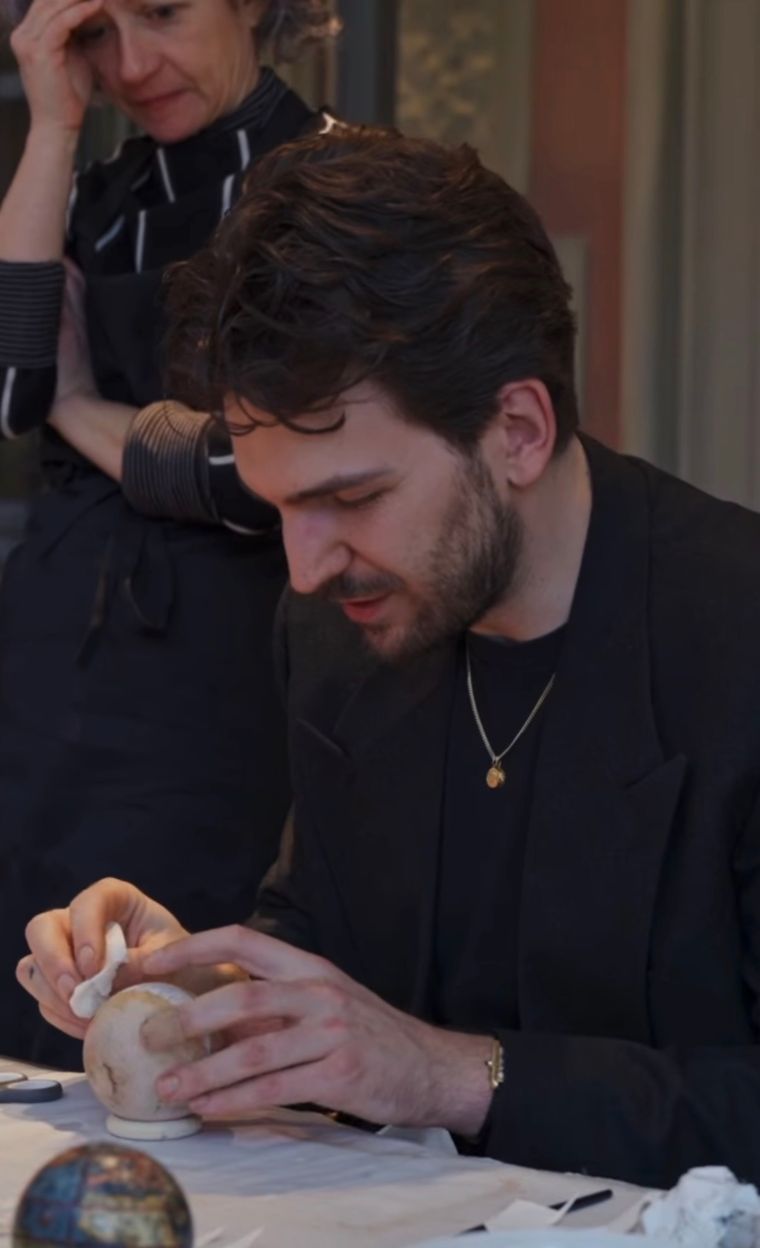
Pocket globe (@MuseoPoldiPezzli
As the room emptied and the museum quieted again, I felt the gratitude that follows these encounters. Globe making is a solitary craft, but sharing it transforms it. It becomes a dialogue, a journey, a collective exploration of the world and its stories.
And so I closed the day with the same thought that had accompanied me before: that the ancient Venetian tradition is not a relic, but a living practice. And that every time someone touches a spindle, glues a map, or paints a coastline, even if it’s just for fun, that practice continues its voyage.