Library, Home or Studio – How to Choose a Globe for Your Space
If you're reading this, it means globes have caught your interest. Whether you're considering buying one or simply learning how to select the right piece for you, a friend or an organisation, I'm pleased to assist you in navigating this journey with clarity and insight.
Understanding the Role of a Globe in Your Space
Choosing a globe is a decision that combines aesthetics, functionality, and personal identity. Whether decorating a home, a library, a studio, or another area, the right sphere can transform your environment and communicate something meaningful about the people who inhabit it.
As a craftsman, I specialise in creating custom-made globes, designed to fit different rooms and meet various needs. This guide will help you understand how to choose the right size, style, and level of customisation, so that your globe becomes a lasting and meaningful element of your space.
Before choosing a globe, it helps to define what you want it to represent. Some people look for a functional object to consult regularly, while others want a decorative piece that becomes a focal point. In professional or institutional contexts, a bespoke globe can express identity, heritage, or diplomatic presence.
This magnificent object can serve as a study tool, a design element, a collector’s item, or a symbolic object that reinforces the character of a room. Understanding this purpose is the first step toward choosing the right one.
The Right Size & Environment
Size is a key aspect to consider when picking a globe, as its scale determines how it interacts with its surrounding space and how it’s used. When creating worlds of various sizes, from small desktop ones to monumental pieces inspired by the historical works of Vincenzo Coronelli or Dante's Divine Comedy, I'm always asked to adapt the sphere to the future owner's story, or something that adds value to their life, work or environment.
This is precisely why size matters: small globes are ideal for desks, coffee tables, or compact shelves; they will mostly serve as cherished or decorative objects, sometimes even functional, given their small dimensions. They’re easy to position and handle, making them perfect for personal use in a home office, a student's bedroom, or a reading nook. A small globe adds elegance without dominating the space and is often preferred by those seeking a daily companion for study or inspiration.
Medium-sized orbs, on the other hand, measuring approximately 35 cm in diameter, strike a balance between presence and versatility. They’re large enough to showcase the detail and craftsmanship, yet compact enough to fit on a bookshelf or stand, making them ideal for display. This size is popular in private libraries, studios, and professional offices, but who says they can't also be kept at home? This type of globe is a practical choice for those seeking a decorative object that is both functional and legible, a must-have for anyone who approaches and captivates their attention.
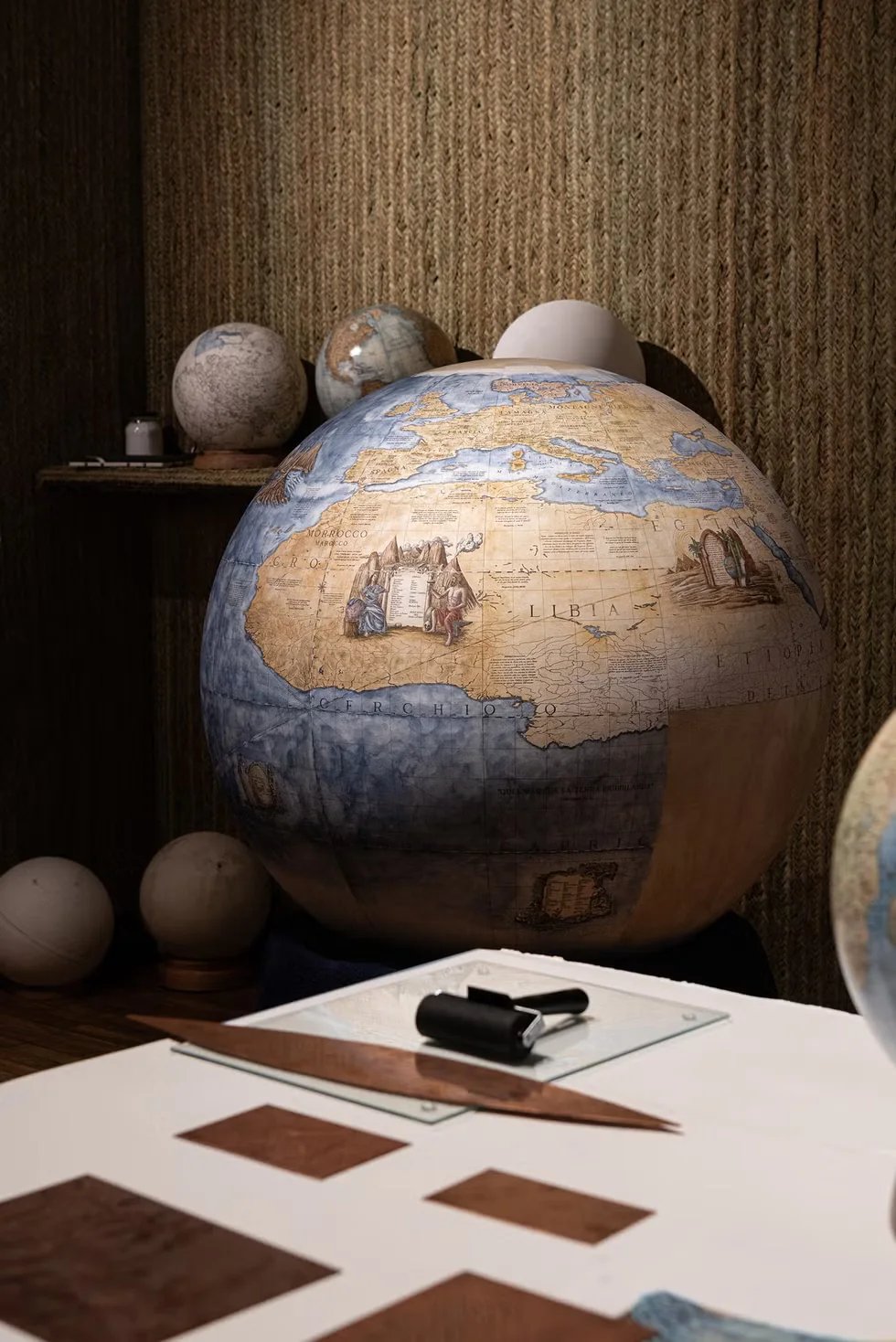
Large and monumental globes, measuring up to 108 cm in diameter, create an immediate visual impact instead. These pieces are inspired by Coronelli's monumental globes and are often chosen by institutions, museums, embassies, and collectors seeking a custom globe that reflects history, artisanal, and cultural significance. A large sphere thus becomes a central element, a starting point for conversation, and a symbol of historical and cultural identity.
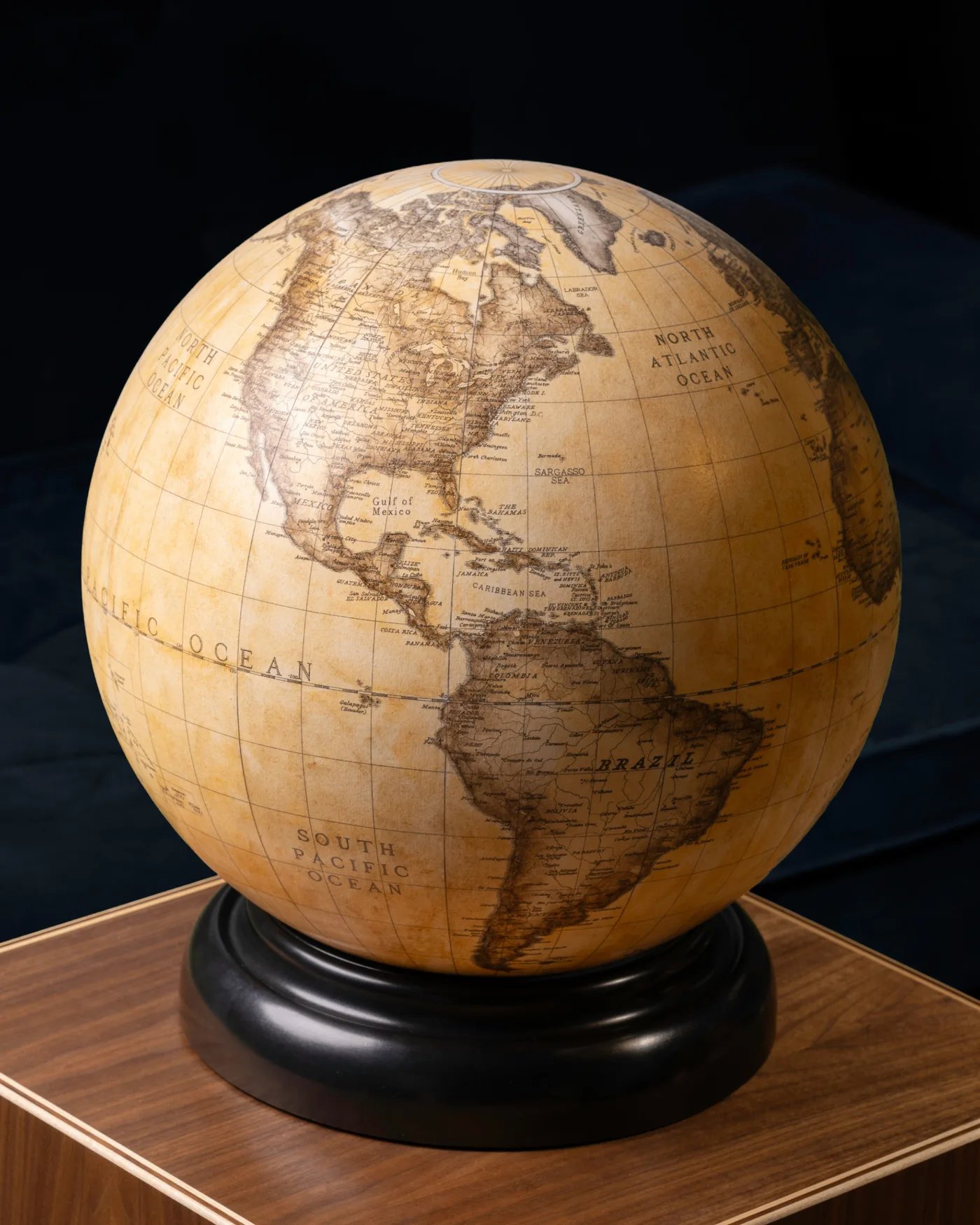
Regardless, a globe should feel naturally integrated into its surroundings. The style, colours, and atmosphere of the room influence which type of planet will work best. Within a home setting, a globe can add warmth, sophistication, or a sense of exploration. A neutral-toned orb blends well with minimalist interiors, while a richly colored or antique-style one complements classic or vintage décor. In a personal workspace, it can serve as both inspiration and decoration, creating a sense of focus and curiosity.
Globes often become sources of imagination in studios and creative areas. Artists, designers, and writers may choose handmade globes with visible brushstrokes or unique cartographic details. Custom colours or thematic designs can reflect personal interests or professional identity, turning the world into a creative companion.
Libraries, whether private or public, are natural residences for globes. A medium or large piece placed on a pedestal can anchor a reading room or study area. Its presence reinforces the idea of knowledge, discovery, and cultural heritage, thus becoming part of the intellectual landscape of the room.
Embassies and institutions often require orbs that communicate authority and identity; in these contexts, customisation becomes especially significant. A bespoke globe can incorporate national colours, historical routes, or thematic cartography that reflects the mission of the institution. In diplomatic environments, this object evolves into a figurative being.
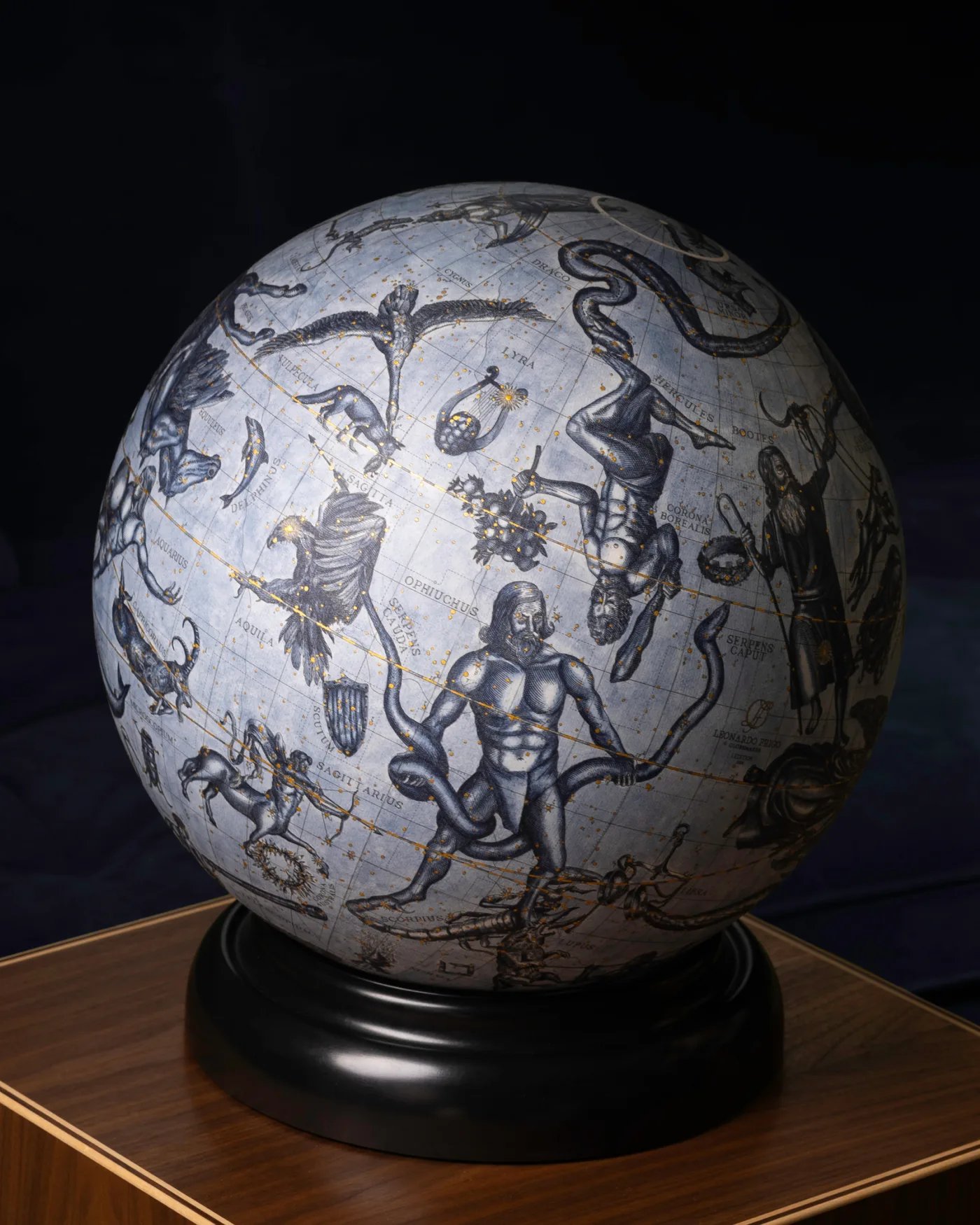
Museums benefit from monumental works that attract attention and invite interaction; in this setting, the sphere can replicate celestial maps, highlight specific eras, or present contemporary cartography in a visionary form. These pieces become part of the visitor experience and contribute to the narrative of the exhibition.
Selecting a Style – Antique, Contemporary, or Artistic
A globe's style influences how it interacts with the room and its spectators. Selecting an antique style evokes the age of exploration complemented by warm tones, classic typography, and historical elements; ideal for traditional interiors, libraries, and spaces that value tradition.
A contemporary globe with clean lines, minimalist colours, and updated cartography can fit well into modern homes, studios, and headquarters. Such a piece can be discreet or bold depending on its colour palette and composition, and is often chosen by those seeking a fresh, modern look.
Artistic pieces, on the other hand, blend cartography with visual storytelling. As a globe maker, I create works that incorporate hand-painted textures, allegorical details, or thematic designs, often suited to collectors, creative professionals, and institutions seeking a unique object with personality; a world with character becomes a unique expression of identity.
A handmade globe is fundamentally different from a mass-produced one: each work bears the marks of the artisan's hand, the texture of the materials, and the individuality of the design. By selecting a handcrafted world, you choose an object with character and authenticity.
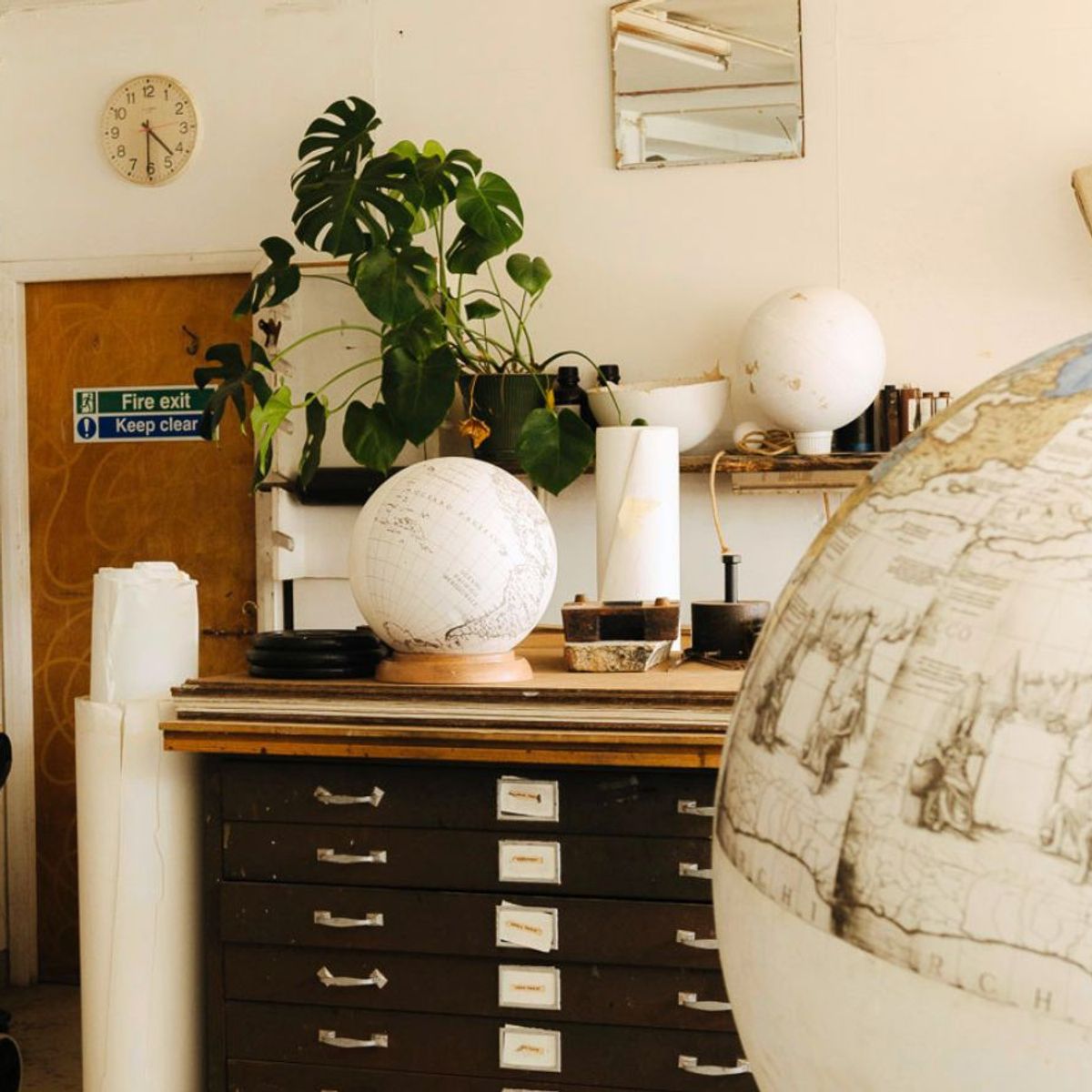
In my London studio, I produce spheres using traditional techniques inspired by ancient craftsmen, with hand-painted surfaces and customizable details. This allows each one to come to life, becoming a personal or institutional emblem, rather than a simple decorative object.
The craftsmanship offers high-quality materials, unique textures, customizable cartography, bespoke colours, and long-lasting durability. A handmade globe in my hands becomes a work of art that takes on even greater meaning over time.
Customisation and Creation
Customisation allows you to create a globe that reflects your identity, your space, or your mission. A bespoke planet can be designed with specific colour palettes, custom typography, thematic maps, personal routes, meaningful locations, or desired constellations. Even the stand or pedestal can be created to match the architecture or style of the room.
For embassies, museums, and cultural institutions, customisation is often essential. A globemaker can make its orb become part of the institution’s visual language, representing values such as diplomacy, knowledge, and global connection. For private clients, customisation transforms the globe into a personal heirloom that celebrates a journey, a family story, or a passion for geography.
The materials used for the stand and structure influence both the aesthetic and the durability: wood adds warmth and tradition, while metal creates a modern, clean look. A custom-designed base can turn the world into a sculptural object.
When choosing materials, consider the long-term environment: a globe placed in a sunny room may require UV-resistant finishes, and a sphere in a public space may need a more robust structure.
Placement affects how the object is perceived and used. A small piece works well on a desk, where it can be touched and rotated, a medium one fits naturally on a bookshelf or a dedicated stand, and a large one needs open space, ideally where it can be viewed from multiple angles.
In institutions, a monumental globe is often placed in an entrance hall, a central reading room, or a gallery. In homes, a large globe can become the centrepiece of a living room or workspace.
Why Globes Still Matter
In a digital world, physical objects possess a special power, inviting slow exploration and sparking curiosity. They remind us of the vastness of the world and our place within it. For children, it undoubtedly becomes a learning tool, and for adults, a symbol of perspective. For organisations, it represents a global identity: a globe is timeless and never becomes obsolete, evolving with the person or place that hosts it.
Choosing a globe is a personal and meaningful decision. Whether you want a small desktop orb, a medium-sized one to display on a bookshelf, or a monumental work, this will become your sphere, enriching your space and reflecting your identity.
As a craftsman, I create customizable works designed for homes, studios, libraries, embassies, museums, and institutions. Each globe is crafted to be both functional and beautiful, a lasting object that connects people to the world.
If you're considering a custom globe or need guidance in choosing the right size and style, I'm always available to help you explore the options, and I hope you’ll find a piece that’ll add value to your environment.
Related Topics
If you'd like to continue exploring the world of globes, you’ll find more details, inspiration, and practical guidance on this previous article.